Any me you take your boat out, make sure that there is at least one other passenger aboard who is
familiar with the operaon of your boat.
Ensure that all passengers are properly and securely seated in appropriate seang locaons to avoid
falling or falling overboard.
While the engine is running, and while the boat maneuvering, all occupants should be properly seated.
DO NOT stand while the boat is moving.
DO NOT sit on the engine box, seat backs, transom seang, sunpad, boarding plaorm or gunnels while
the boat is underway. You could fall overboard and be hit by the propeller, or another boat.
DO NOT allow objects, arms or legs, or any other body parts to hang over the bow or gunnels. Stay
within the boat.
Passengers should not sit in locaons that obstruct the operator’s visibility.
Persons and gear should be stowed in a way that distributes weight appropriately and in a manner that
trims the boat properly (pitch angle). Excessive weight at either the bow or the stern relave to one
another can cause trim problems leading to reduced driver visibility, errac steering, loss of control, or
bow submergence and ooding/swamping.
Passengers should be well aware of emergency equipment and instructed in its use.
Passengers should assist with lookout dues and nofy the operator of any approaching watercra or
potenally unsafe condions to provide assistance with collision avoidance.
Carbon Monoxide (CO) is a deadly, colorless and odorless gas produced by all engines and fuel-burning
appliances. Even with the best boat design and construcon, plus the utmost care in inspecon, operaon
and maintenance, hazardous levels of carbon monoxide may be present in or near the boat under certain
condions. The boat owner, operator, as well as all boat occupants, must understand the dangers of carbon
monoxide and must comply with all safety recommendaons/requirements. For boats with cabins, always
venlate the boat interior and avoid boang situaons which cause increased exposure.
Carbon monoxide (CO) can cause brain damage or death. Engine
and generator exhaust contains odorless and colorless carbon
monoxide gas. Carbon monoxide will be around the back of the
boat when engines or generators are running. Move to fresh air, if
you feel nausea, headache, dizziness, or drowsiness.
• Do not allow people to be on or near the swim plaorm or in the water near the swim plaorm while the
engine is running. Carbon monoxide will exist around the back of the boat when engines are running.
• Do not operate the engine in a conned space or while the boat is tethered to another vessel.
• Do not go under the boat cover while the engine is running or shortly aer the engine has been running.
Carbon monoxide may be trapped under the cover. It is important to remove the cover and/or venlate
the area before going under the boat cover.
• Do not “plaorm/teak” surf or plaorm drag. Carbon monoxide will exist in high concentraons in
the vicinity of the swim plaorm near the water while the engine is running. The USCG has deemed
plaorm dragging as a dangerous and hazardous acvity which should be prohibited, as it can result in
injury or death.
• In the event that someone exhibits the symptoms of carbon monoxide exposure (nausea, headache,
dizziness, or drowsiness), have them breathe fresh air and, if necessary, immediately seek medical
aenon.
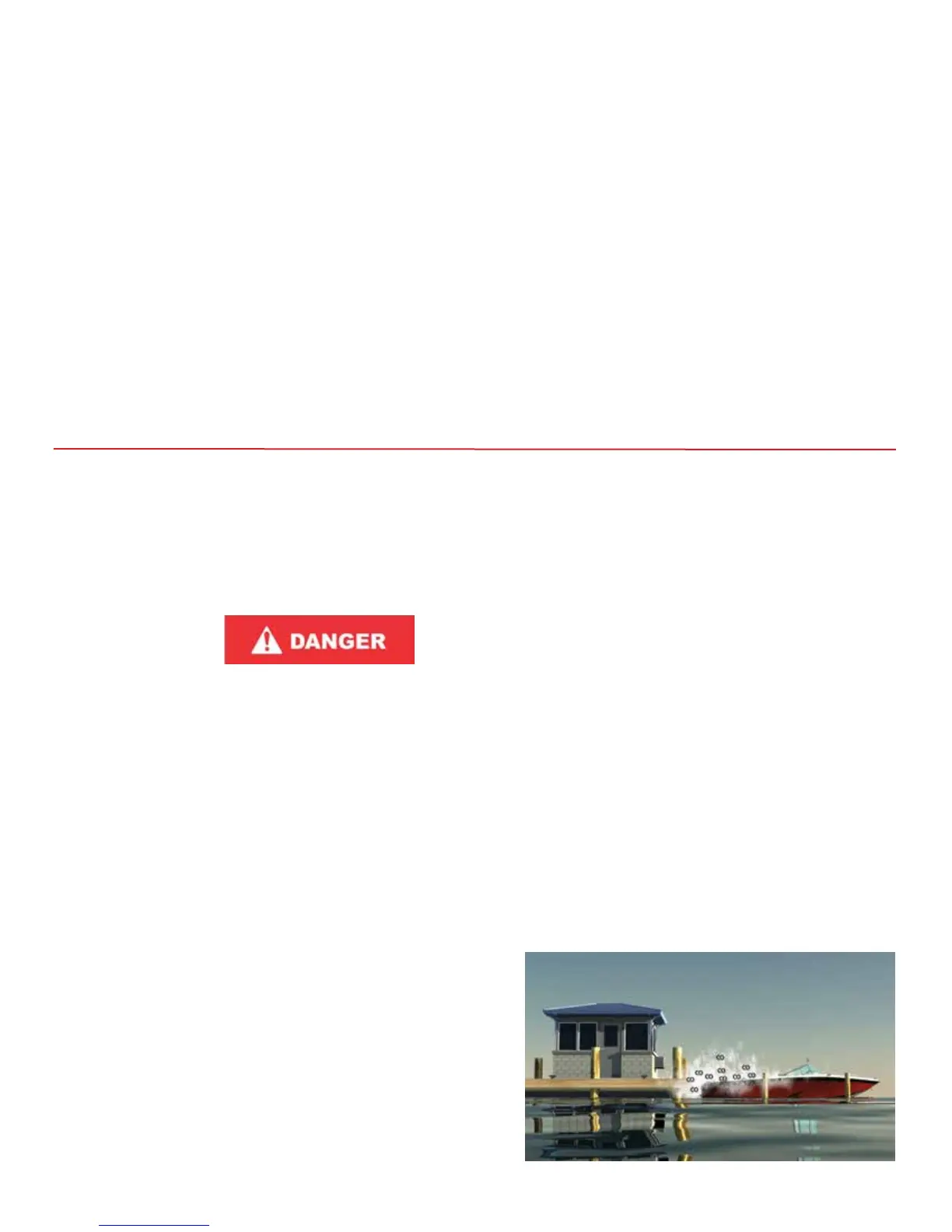
Hazardous boang situaons involving
carbon monoxide include:
Blockage of boat
exhaust by obstruction.
CARBON
MONOXIDE
SAFETY
2016 Axis Wake Research Owner’s Manual . . . Page 1-12



 To Next Page