green and operated from a switch on the dash panel. On a pickle fork bow, there is a green light on the
starboard side and a red light on the port side.
Models: All models.
Bow lights get hot during use, which could result in burns if touched. The light can remain hot for an
extended period of me aer it has been turned OFF.
Docking Lights: These are an opon that oer addional visual assistance. The lights are located around
the bow area, two per boat, and provide white light to the front of the boat. The docking lights are operated
from a switch on the dash. Please note that boat operators are not allowed to operate docking lights while
the boat is underway.
Models: (Oponal) All Axis models.
Courtesy Lights: The courtesy lights vary from model to model and are found in all areas of the deck
from bow to stern, as well as inside storage compartments. Most lights provide white light, but colored
lights are an opon on some models. These lights are LED and therefore bright without excessive heat.
However, leaving them on for extended periods of me shorten the life of the bulb and can become warm to
the touch. Axis recommends leaving the lights o unless they are needed. The lights operate from a switch
on the dash.
Models: All models.
Tower Lights: All boats equipped with towers will also have a 360-degree light on top for use at anchor.
This white light provides addional visual assistance ahead of the bow; however, note that this light cannot
be used while the boat is underway as it could impair other boaters’ vision. Tower lights also include
forward and a-facing lights, which can get hot with use. All tower lights are controlled through a toggle.
Models: All Axis boats are equipped with towers. If the standard tower has been deleted, there is a
covered, two-pronged connector found on the top of the transom of boats without a tower. The all-around
light is plugged into this connector when needed and stored under the rear passenger seat when not in use.
Underwater Transom Lights: Some boats may be equipped with oponal underwater transom lights,
which are located under the swim plaorm and add considerable brightness underwater. This is an added
safety feature, parcularly when swimming in shallow water. Note that these lights are not allowed to
be ON while the boat is underway. As the lights are very bright, do not look directly into them when they
are ON. If the lights overheat, such as can happen when the lights are le on while out of the water, the
lights will automacally dim. They can be very hot to the touch at this me and burn skin. The lights are
controlled by a switch at the transom.
Models: (Oponal) All models.
Several methods of securing boats to shoreline and docks are available.
Although Axis does not sell or provide rope for e-ups, many excellent marine aermarket suppliers
oer a wide range of rope for sale. Axis recommends a two-strand nylon rope. (Three strand may stretch too
much and allow the boat to bump other objects.)
There are several dierent knots and hitches to secure boats to docks or shoreline. Axis recommends
making the eort to learn these marine-intended knots and hitches. Consult with your authorized Axis
dealer to determine which ones will work best in the e-up applicaon you will be using. Some hitches
are intended for only short-term docking, while others work beer for longer periods of inacvity. Always
bear in mind that wave acon may cause the boat to bump the shoreline (and scratching the hull, which is
not covered under warranty), or bumping against a dock, or even potenally other boats (also not covered
under warranty), when selecng the appropriate method to secure the boat.
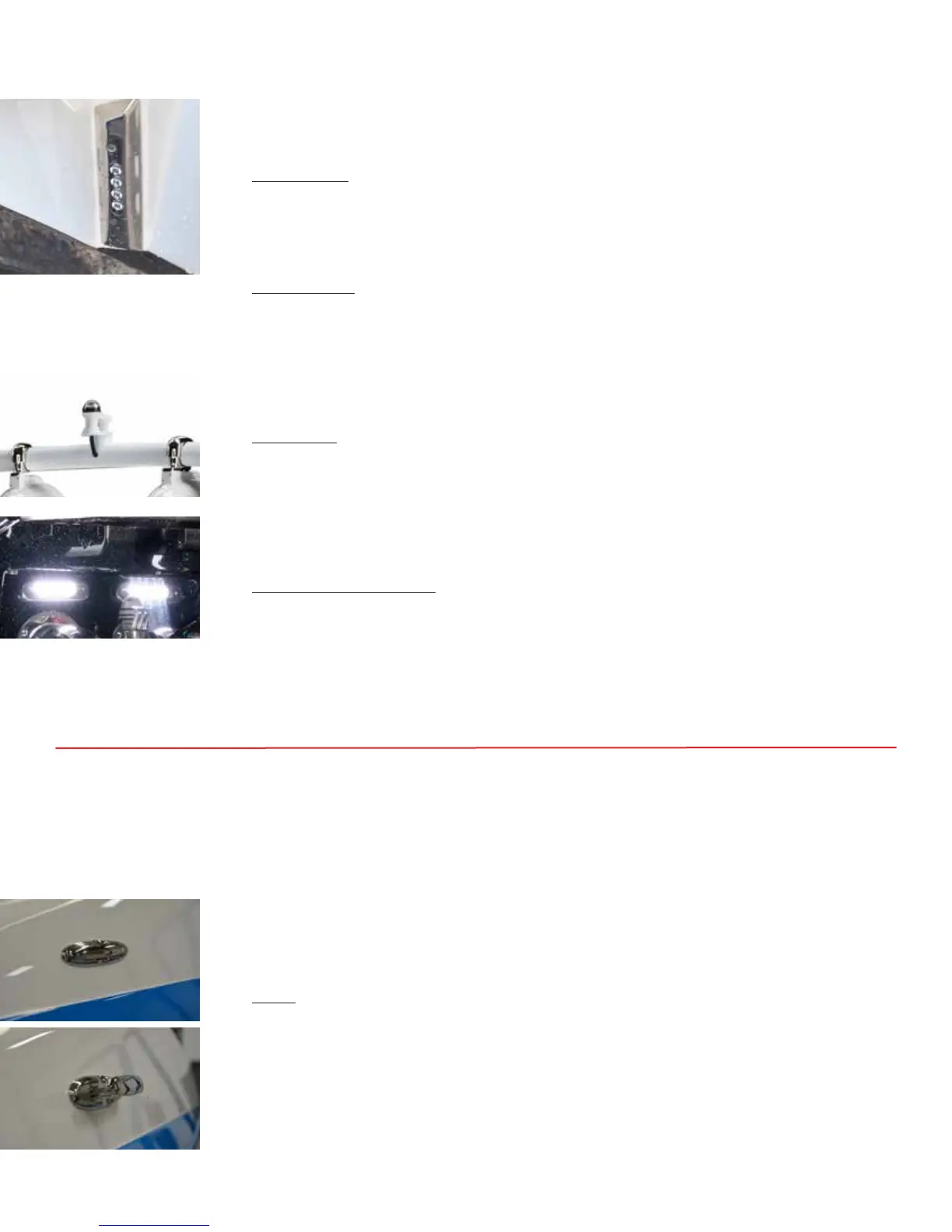
Cleats: All boat models oer oponal pop-up cleats. Where equipped, the cleats will be located below
the windshield on each side of the deck, and also near both rear sides.
Although there are mulple marine knots, the cleat hitch is a special knot used to the rope to a cleat. If
a line is not correctly secured on the cleat using a cleat hitch, it can work itself loose.
Both the standard and pop-up cleats have two “horns” around which the line is ed. Begin by bringing
the line past the center of the cleat on the outside beneath, and wrap it around under both horns. Then
bring the line across and back under the rst horn again in a gure-eight. Make another gure-eight loop
around the second horn.
The pop-up cleats operate by pulling on the cleat. If it is ush with the deck, the cleat will pop up for
2016 Axis Wake Research Owner’s Manual . . . Page 2-28
TIE-UPS



 To Next Page