160
BARRETT PRC-4090 TACTICAL HF SDR TRANSCEIVER - INSTALLATION
Power Supply
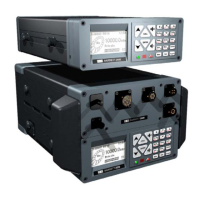
When 24 V DC is supplied to the PRC-4090 transceiver, the PEP Voice output
power will achieve 150 W. This is only available with the PRC-4090 Sytem Dock-
ing Station.
Power output regulation is performed automatically based on the DC voltage
presented to the transceiver DC input connector. The Barrett 4022 Power Sup-
ply is available in the BC402201 (24 V DC) version. This power supply version is
capable of operation with AC mains input voltage between 88 and 256 V AC.
In base station installations where no mains supply is available, various Barrett
solar power supply solutions are available depending on the system congura-
tion requirement.
Note: Some installations use an AC battery charger to oat charge the supply bat-
tery. Battery chargers can produce electrical noise from the rectier diodes. This
noise causes a static type of interference in the receiver. It may be necessary, there-
fore, to switch off the battery charger whilst the transceiver is in use. If oat charg-
ing of batteries is required for installations with unreliable AC power supply, it is
recommended that BC402201 be used as it provides a three stage charge facility to
maintain a battery without the noise problem described above.
Voltage Drop
The average current consumption of the transceiver is low but during transmis-
sion of voice peaks, high current is needed for short intervals. This means that
the power supply cable must be heavy enough to supply these short duration
current peaks without excessive voltage drop. Preferably, only use the power
cable supplied with the transceiver. If extra cable is required, use a cable with a
conductor square area of no less than 8 mm
2
. Unwanted voltage drop will also
occur if incorrect wiring techniques such as poor choice of connection points
and incorrect use of terminal lugs are used.
Protection Fuse
The transceiver is provided with adequate internal protection from over-current
or short-circuit. The tting of an additional external fuse is still considered nec-
essary for both the protection of the transceiver and to ensure that in the event
of damage to the cable, a re does not occur. The fuse used must be installed in
the active wire as close as possible to the battery, and must be of a type which
has a low voltage drop at the peak currents expected.
Note: In-line 3AG glass fuses are not suitable. An ATC automotive blade type fuse
rated at 25 A with a suitable high current ATC fuse holder rated at 30 A or more
should be used. These type of fuses and holders are contained in our standard instal-
lation kit (P/N BCA40004) or are available individually (P/N BCA20021).


 To Next Page