M-3 Rev F
care & maIntenance
M-3
Meter Quality Assurance
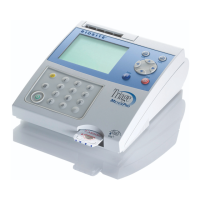
The Self-Test Mode is initiated each time the meter is turned ON. In the self-test mode the
meter scans an Internal Calibration Chip. Each calibration chip scan is used to validate
and adjust, if necessary, the meter calibration. In the self-test mode, the available memory
for patient results is checked. When the capacity is below a pre-set limit, the remaining
capacity is related via a screen message. The software program is evaluated and is
terminated if corrupted. Software test results and Code Chip module data are verified for
integrity before each use.
A QC Device is provided with each meter to allow the user to further check the integrity of the
meter. The simulator contains six fluorescent zones of varying intensity that are measured by
the meter. There are pre-programmed acceptable ranges for the six zones. In addition, the
zones allow the meter to check for horizontal and vertical alignment of the zone measurement
to verify laser alignment and device transport. The QC Device also confirms laser stability.
A Bar Code is printed on the bottom of every test device to identify the reagent lot number
and to prevent the use of expired reagents.
Software Quality Assurance
The software QA is controlled through a variety of software features, some of which can
be optional depending on the environment in which the assay is performed. In a Point-
of-Care location, a designated supervisor can select program parameters to ensure
adherence to quality standards. In a central laboratory location selected parameters can
be bypassed, if desired.
A Supervisor Code Chip module is provided with each meter. This Code Chip module
allows access to meter functions not available to the routine user. The additional functions
are selection of parameter settings and downloading and deletion of results from the
meter memory.
A User ID can be assigned in the software to limit access to the patient testing mode to
only those individuals who have been properly trained and have demonstrated testing
proficiency. A User ID and expiration date are programmed into the meter memory and
are subsequently associated with all patient results generated by the user. This allows the
supervisor to review users’ testing frequency, and in the event of frequent test failures, to
identify potential problems in training.
An additional security feature of the User ID is the partial masking of the ID on displays and
printouts. This prevents unauthorized individuals from detecting and using an existing User ID.
This feature is overridden when the Supervisor Code Chip module is installed
A Patient ID is required for all patient tests performed. All QC sample and patient results
are stored in the meter’s memory and can be downloaded to a laboratory information
system (LIS) or an external data management software program for further viewing and
printing of quality control reports.


 To Next Page