12 EMC
120 Operating Manual ARC 350 900-351_IFU_V2.0.0_20221-S0-20150520-EN
12. EMC
12.1. Guidelines and manufacturer’s declaration in
accordance with IEC 60601-1-2 Section
6.8.3.201
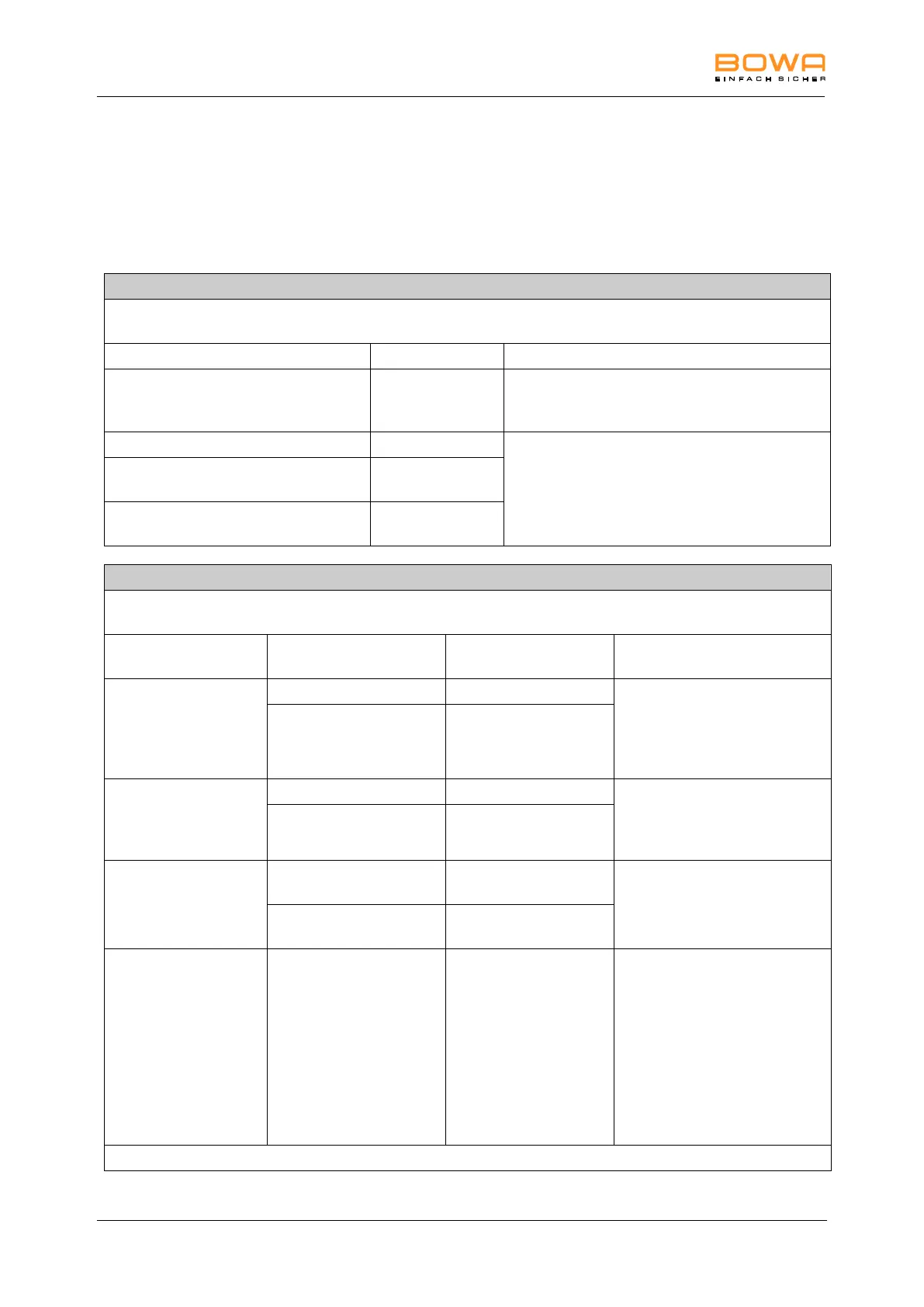
Emission of electromagnetic interference (IEC 60601-1-2, Table 201)
The ARC 350 is intended for operation in an electromagnetic environment as described below. The customer or
user of the ARC 350 should ensure that it is operated in such an environment.
Interference emission measurement
Electromagnetic environment guideline
HF emissions according to CISPR 11
The ARC 350 must emit electromagnetic energy in
order to perform its intended function. Nearby
electronic devices may be affected.
HF emissions according to CISPR 11
The ARC 350 is suitable for use in facilities other
than those suitable for a residental environment or
those connected directly to the public power grid,
which also supplies power to buildings used for
residential purposes.
Emission of harmonics according to
IEC 61000-3-2
Emission of voltage fluctuations and
flickere according to IEC 61000-3-3
Immunity to electromagnetic interference (IEC 60601-1-2, Table 202)
The ARC 350 is intended for operation in an electromagnetic environment as described below. The customer or
user of the ARC 350 should ensure that it is operated in such an environment.
Interference immunity
test
Electromagnetic environment
guidelines
Electrostatic discharge
(ESD) according to
IEC 61000-4-2
Floors should be wooden or
concrete or finished with ceramic
tiles. If the floor is finished with a
synthetic material, the relative
humidity must be at least 30%.
Fast transient electrical
noise or bursts
according to IEC 61000-
4-4
The quality of the AC power
should correspond to that of a
typical business or hospital
environment.
±1 kV on input and output
lines
±1 kV on input and
output lines
Surges according to
IEC 61000-4-5
±1 kV between external
conductors
±1 kV between external
conductors
The quality of the AC power
should correspond to that of a
typical business or hospital
environment.
±2 kV between external
conductor and ground
±2 kV between external
conductor and ground
Voltage dropouts, brief
interruptions and supply
voltage fluctuations
according to
IEC 61000-4-11
< 5% U
T
for one half-cycle
(> 95% dropout)
40% U
T
for 5 cycles
(60% dropout)
70% U
T
for 25 cycles
(30% dropout)
< 5% U
T
for 5 s
(> 95% dropout)
< 5% U
T
for one half-
cycle
(> 95% dropout)
40% U
T
for 5 cycles
(60% dropout)
70% U
T
for 25 cycles
(30% dropout)
< 5% U
T
for 5 s
(> 95% dropout)
The quality of the AC power
should correspond to that of a
typical business or hospital
environment. If the ARC 400
user requires it to continue
operating in the event of a power
dropout, it is recommended to
power the ARC 400 from an
uninterruptible power supply or a
battery.
Note: U
T
is the AC supply voltage before the test level is applied.


 To Next Page