Cirrus Design Section 7
SR20 Airplane and Systems Description
P/N 11934-004 7-73
information is displayed on the MFD and indicates the relative range,
bearing, and altitude of intruder aircraft. The Traffic Advisory System
consists of a Transmitter Receiver Computer installed under the
copilot’s seat just forward of the spar tunnel and a directional antenna
installed on the airplane exterior. The system utilizes inputs from the
secondary Integrated Avionics Units via the primary Air Data
Computer and is controlled via the MFD or Flight Management System
Keyboard.
28 VDC for Traffic Advisory System operation is supplied through the
5-amp TRAFFIC circuit breaker on AVIONICS BUS. Refer to the
Perspective Integrated Avionics System Pilot’s Guide for a general
description of the system and its operating modes. Refer to the L-3
Skywatch Pilot’s Guide for a detailed discussion of the Traffic Advisory
System.
L-3 Stormscope WX-500 Weather Mapping Sensor
The L-3 Stormscope WX-500 Weather Mapping Sensor detects
electrical discharges associated with thunderstorms and displays the
activity on the MFD. The system consists of an antenna located on top
of the fuselage and a processor unit mounted under the aft baggage
floor. The antenna detects the electrical and magnetic fields generated
by intra-cloud, inter-cloud, or cloud to ground electrical discharges
occurring within 200 nm of the airplane and sends the “discharge” data
to the processor. The processor digitizes, analyzes, and converts the
“discharge” signals into range and bearing data and communicates
the data to the MFD every two seconds via the secondary Integrated
Avionics Unit.
28 VDC for Stormscope System operation is supplied through the 3-
amp WEATHER circuit breaker on AVIONICS BUS. Refer to the
Perspective Integrated Avionics System Pilot’s Guide for a general
description of the system and its operating modes. Refer to the L-3
Stormscope WX-500 Weather Mapping Sensor Pilot’s Guide for a
detailed discussion of the system.
Bendix/King KR 87 Automatic Direction Finder (ADF)
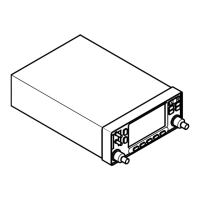
The KR 87 ADF System is used as a means of identifying positions,
receiving low and medium frequency voice communications, homing,
tracking, and for navigation on instrument approach procedures. The
system consists of an antenna installed on the airplane exterior and
the KR 87 receiver which communicates with the Integrated Avionics
System via the secondary Integrated Avionics Unit. The HSI Bearing
Needle may be configured to indicate ADF tracking and homing
Original Issue


 To Next Page
 Loading...