cate. We call this procedure status editing. You can status edit each
individual decoder (see Section 22) or you can change the DCS50’s
system default by setting the DCS50’s Option Switches 21-23 and
run all of your decoders with fewer speed steps to accommodate
these decoders (see Section 27).
2. If you can’t control the operation of the lights in your decoder
equipped locomotive with the DCS50, be sure that the decoder itself
is programmed to run in 128 speed steps.
What’s Next?
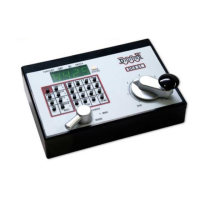
Now that you have successfully set up your Zephyr Set, it’s time to learn more
about the features and options it has to offer. Read the manual and take time to
understand and master each topic. Your Zephyr Set is the gateway to all the
possibilities and options offered by Digitrax and LocoNet so the best advice is
to take it step by step and don’t try to do everything at once. The Digitrax Big
Book of DCC is an excellent resource available to you as you expand your lay-
out. The Big Book is full of examples that show you how you can have even
more fun with your layout.
13.0 Decoder Programming
Your DCC Decoders have many different configuration variables (CVs for
short) that let you set up a different set of characteristics for each decoder
installed in each locomotive. When you want to change a loco’s address, set up
how its lights work, change its momentum characteristics, etc. you will pro-
gram new CV values into the appropriate CVs to set it up just the way you
want.
Each CV controls a characteristic of the decoder. See your decoder manual for
a list of the most commonly used CVs and their meanings. Each decoder
comes pre-programmed with factory settings that will let you run it right away.
We recommend that you use the factory settings until you are comfortable with
running your layout with DCC.
The factory set address for all Digitrax decoders is 03. This is the first CV you
will want to change because it is not very useful to have all of your locos
respond to the same address.
Decoders are programmed when the command station sends programming
information to them through the rails. Your DCS50 supports two types of pro-
gramming:
Service Mode Programming is done on an electrically isolated programming
track. Using this mode, the command station broadcasts programming informa-
13


 To Next Page