Parameterisation
Page 34 of 45 MSM-BSM2G-BA-UK-001
Response delay
The response delay delays a debounced and defluttered alarm before it is displayed,
forwarded or deleted. This time span is considerably longer than the debouncing time
and can be set from 0 ms … 9h in steps of 1 ms.
The checkboxes _|¯ and ¯ |_ for rising and falling edge define for which signal edge
the alarm delay is active.
_|¯ checked: delay is active for coming alarm
¯ |_ checked: delay is active for receding alarm
The defluttering prevents alarms from being triggered and reset permanently e.g. by
a loose contact. The defluttering acts after the response delay (debouncing). If an
input changes more often than the defined number of edges within the fluttering time,
the defluttering comes into effect and the alarm channel is marked as faulty.
This information is only relevant for IEC communication and does not affect
the local display of the annunciator!
Number of edges: 0 … 255
Fluttering time: 0 ms … 65535 ms, ~1 min., in steps of 1 ms
Default settings: 5/100
Assignment to collective reports
The alarm triggers the collective report which is checked here. Multiple allocations are
possible. All alarms that are assigned to one collective report from a group. This
assignment takes effect for acknowledgement and reset.
Horn triggering
None: Alarm does not trigger horn
With horn lock: Horn acknowledgement only possible after lamp acknowledge
No horn lock: Horn acknowledgement always possible
Activation of the alarm channel
If this checkbox is unticked, the channel will not be processed. The alarm will be
ignored within the complete system.
Default setting: channel activated
Table 6.1b: Parameters of reporting channel
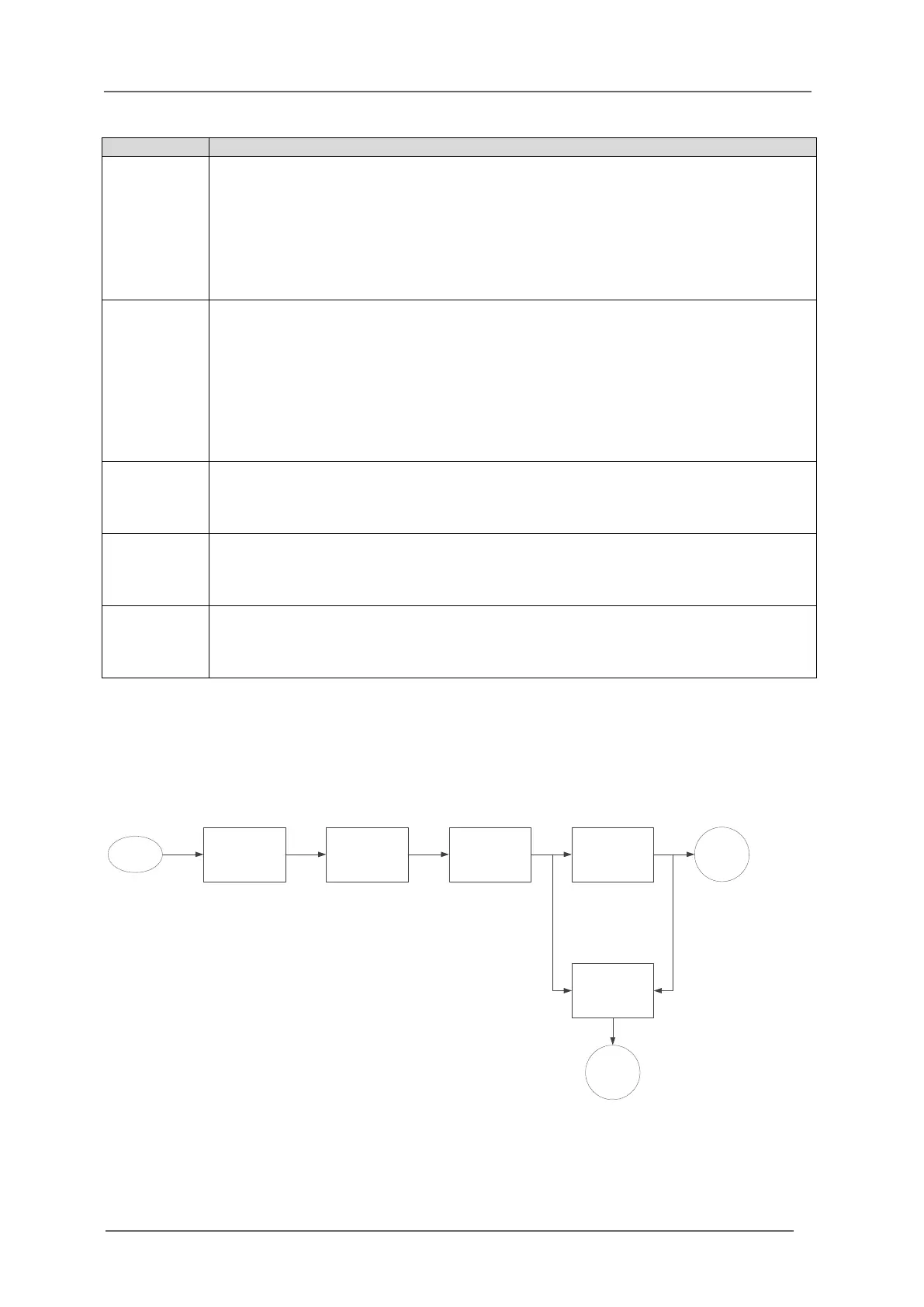
The following drawing illustrates the mode of operation of the two delay times and the defluttering.
The options for triggering of the optionally integrated repeat relays is displayed as well ( section
“repeat relays”).
Fig. 6.14: Schematic illustration of the alarm processing in the BSM
Debouncing
Defluttering
(Supression of
fluttering inputs)
Raising / falling delay
(Alarm response delay)
Reporting sequence Alarm
Triggering of repeat
relays
Relay
activated
Signal input
Input-parallel
Output-parallel


 To Next Page