76
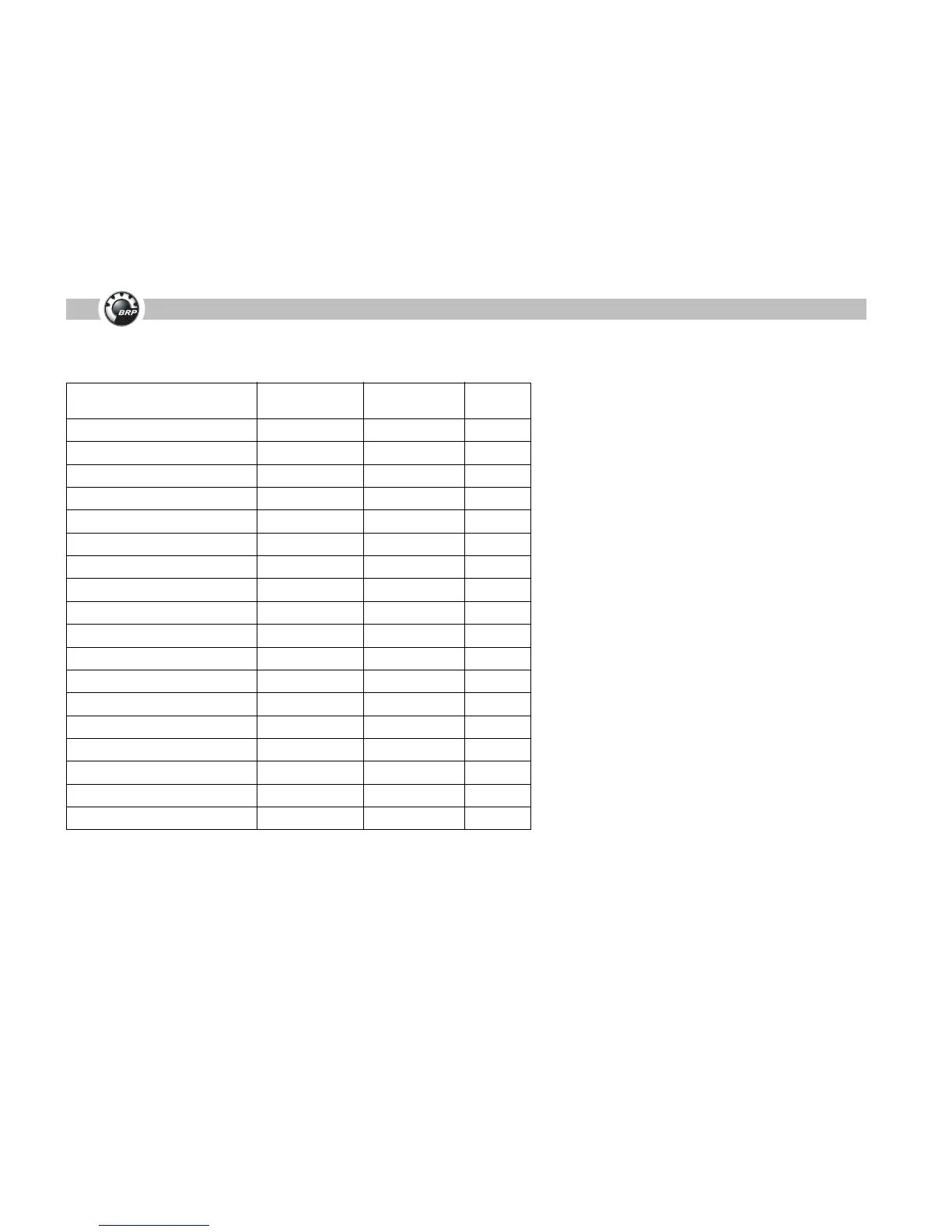
2011 RPM QUICK REFERENCE CHART
Model
Recommended
Operating Range
Optimum
RPM Range
RPM @
Rated HP
15 H.O. 5500 – 6100 5400 – 5800 5800
25 HP 5500 – 6100 5400 – 5800 5800
30 HP 5500 – 6100 5400 – 5800 5800
40 HP 5000 – 6000 5400 – 5600 5500
50 HP 5500 – 6000 5600 – 5750 5750
60 HP 5500 – 6000 5600 – 5750 5750
65 HP Commercial 5500 – 6000 5600 – 5750 5750
75 HP 4500 – 5500 5000 – 5200 5000
90 HP 4500 – 5500 5000 – 5200 5000
115 – 130 HP 60° V4 5500 – 6000 5500 – 5750 5750
150 HP/150 H.O. 60° V6 4850 – 5850 5500 – 5600 5350
175 HP 60° V6 4850 – 5850 5500 – 5600 5350
200 HP 60° V6 4850 – 5850 5600 – 5850 5350
200 H.O. 90° V6 (3.3L) 4500 – 5800 5500 – 5700 5150
225 HP/225 H.O. 90° V6 (3.3L) 4500 – 5800 5500 – 5700 5150
250 HP 90° V6 (3.3L) 4500 – 5800 5500 – 5700 5150
250 H.O. 90° V6 (3.4L) 4500 – 6000 5500 – 5850 5250
300 HP 90° V6 (3.4L) 5000 – 6000 5500 – 5850 5500
How to Use the RPM Quick
Reference Chart
When selecting a propeller for an outboard and boat
application, refer to the recommended wide open
throttle operating range for the outboard model.
When determining propeller selection, choose a pro-
peller that will best suit the customer’s needs. For
example:
• choose a higher pitch propeller for low-to-mid rpm
for light load cruising.
• choose a lower pitch propeller to attain top rpm for
water skiing or other high load applications.
For best overall performance choose a propeller that
allows the outboard to run in the optimum rpm range,
which is usually the point of peak horsepower.
Remember, only a thorough water test will determine
which propeller works best for a particular application.



 To Next Page