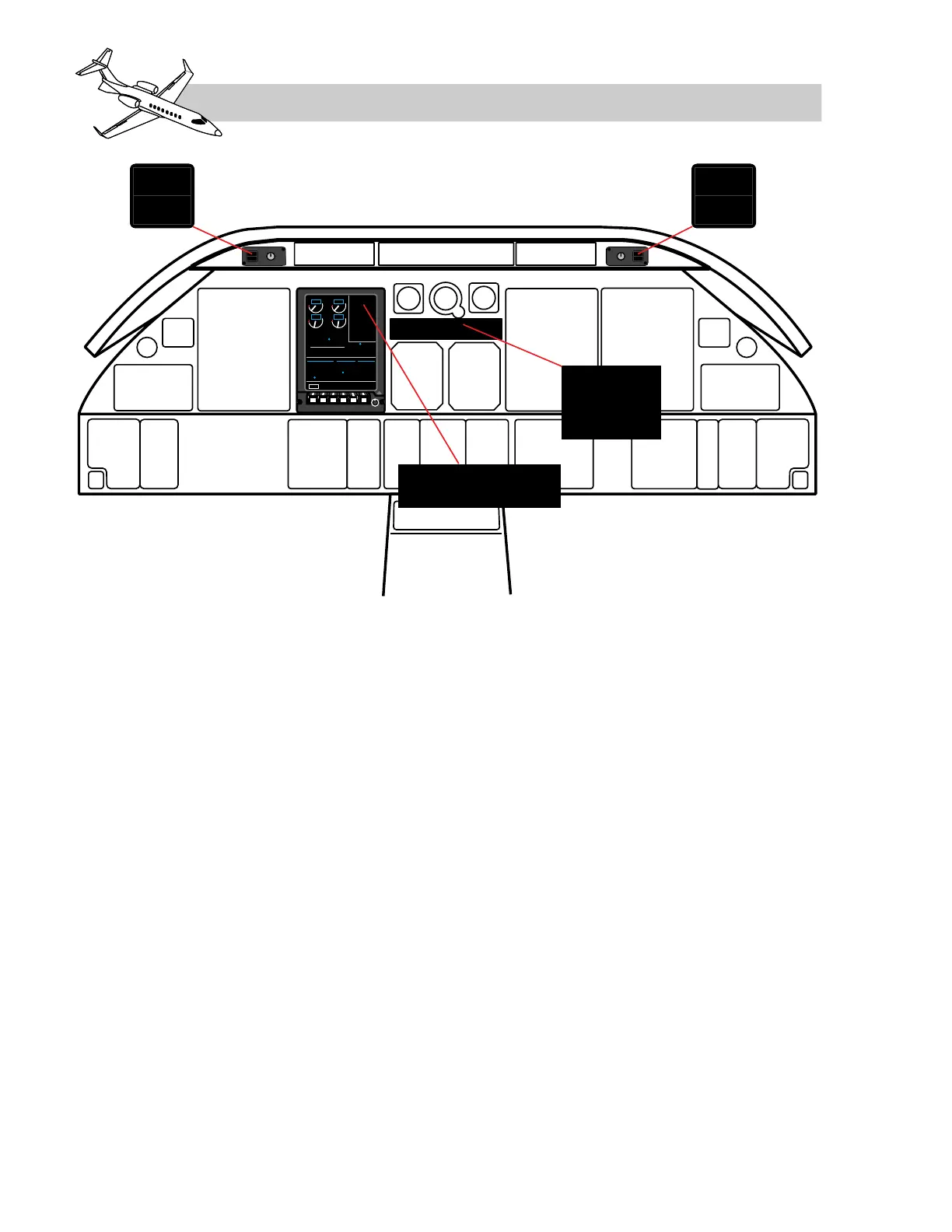
EMERGENCY BRAKES
In the event of normal brakes failure, emer-
gency airplane braking is provided by the
brake accumulator and is activated by pulling
the emergency/parking brake handle aft to
apply braking action. The accumulator has a
precharge of 776 psi of nitrogen or dry air and
is pressurized to approximately 3,000 psi by
the auxiliary hydraulic pump. The accumula-
tor is sized to provide at least 6 brake appli-
cations. Inflight, the brake accumulator
pressure may change as a result of tempera-
ture. In this case there is no need to turn the
auxiliary pump on to recharge the accumula-
tor. The emergency brakes do not provide dif-
ferential braking and there is no anti-skid
protection.
PARKING BRAKE
The brake accumulator also provides pressure
for the parking brake. The parking brake is set
by pulling the emergency/parking brake han-
dle, located on the center pedestal (Figure 14-
18), aft and rotating it left or right to the locked
position. This action holds the emergency/
parking control valve open, and hydraulic
pressure is maintained to the brakes for air-
plane parking. When the parking brake is set,
the white advisory CAS message
“EMER/PARK BRK” is displayed. This mes-
sage will turn red if the takeoff configuration
monitor is activated as a result of this message.
14-22
FOR TRAINING PURPOSES ONLY
LEARJET 45 PILOT TRAINING MANUAL
FlightSafety
international
LEARJET 45 PILOT TRAINING MANUAL
FlightSafety
international
BRAKES FAIL, . . ."



 To Next Page