26
3.5. Cavitation (Details)
Cavitation (see definition – paragraph 2.4.1.2 on page 10) can occur while pumping from draft,
in relay, or from a hydrant. The operator must be aware of the warning signs and correct the sit-
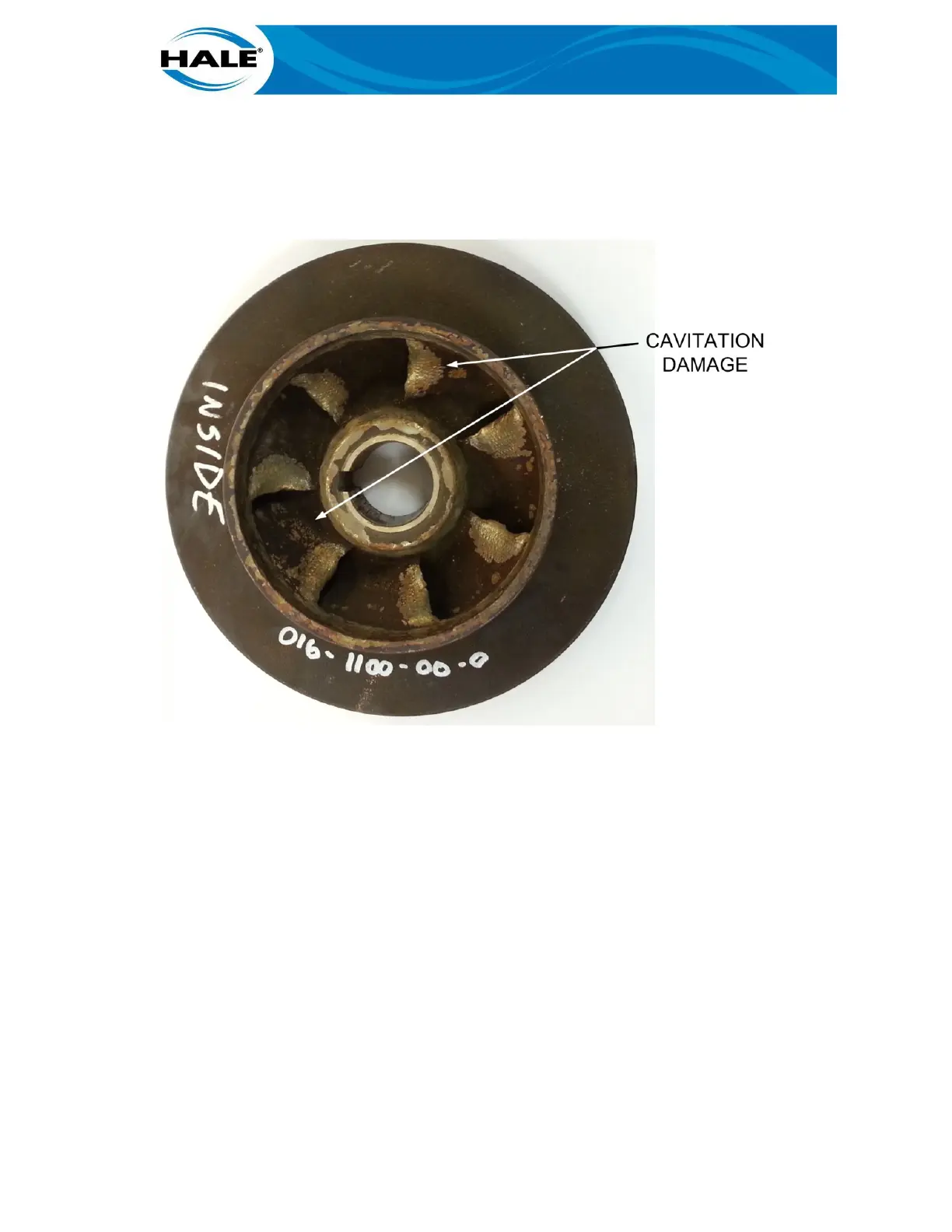
uation, or serious damage to the pump and impeller will occur. Figure 9 shows the results of cav-
itation.
Figure 10. Results Of Cavitation
Cavitation can damage the impeller and other sensitive components, impair pump performance,
and reduce flow capacity. The damage done during any one period of cavitation is not great, but
the effects are cumulative. Implosions occurring during cavitation break away or erode tiny piec-
es of metal from the internal parts and the pump casing. When enough metal has been chipped
away, the impeller becomes unbalanced causing a strain and vibration on bearings, bushings
and shafts.
The way to eliminate cavitation is to increase the flow to the pump, decrease the amount of wa-
ter being discharged from the pump, or reduce the pressure in the pump by decreasing engine
speed.
3.5.1 Process Of Cavitation
Cavitation occurs when a centrifugal pump is attempting to discharge more water than it is re-
ceiving. It is often referred to as the pump running away from the supply.
A. When increased discharge demand exceeds the intake, bubbles form in the
low pressure region (eye) of the impeller. See Figure 10.



 To Next Page