28
When pumping from a hydrant, a soft sleeve has an advantage over a hard sleeve because it will
partially collapse providing an immediate indication to the operator that cavitation is imminent. A
hard sleeve indicates problems only at the intake gauge which is not the best or most reliable
indicator.
3.5.3.1 General Considerations
Consider the following to generally avoid conditions that lend themselves to cavitation.
• Regularly inspect discharge and suction hoses to check for air leaks as these can also cause
cavitation.
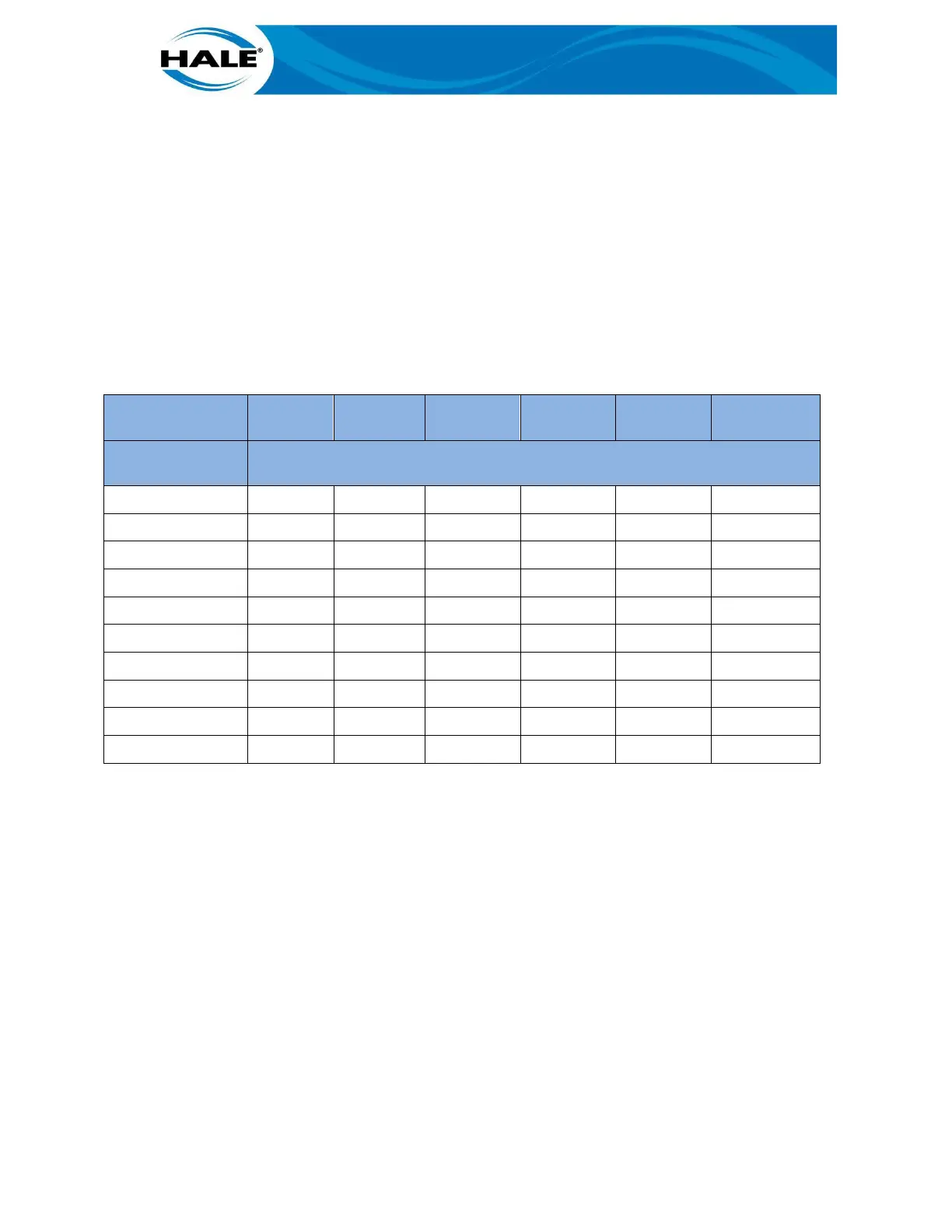
• Consider the size of the suction hose: Table 4 shows the NFPA pre-selected hose sizes for
each pump rating capacity. Using the appropriate-sized hose will minimize the occurrence of
cavitation.
Table 4. Hose Sizes For Pump Rating Capacity
Lift Loss In
Head Ft (Head M)
250 (946) 5.2 (19.7)
350 (1325) 2.5 (9.5)
500 (1893) 5.0 (19.0) 3.6(51.5)
750 (2839) 11.4(43.0) 8.0 (30.0) 4.7 (17.8) 1.9 (7.2)
1000 (3785) 14.5 (55.0) 8.5 (32.0) 3.4 (12.9)
1250 (4732) 13.0 (49.0) 5.2 (19.6)
1500 (5678) 7.6 (28.7) 1.9 (7.2)
1750 (6625) 10.4 (39.4) 2.6 (9.8)
2000 (7571) 3.4 (12.9)
2500 (9464) 5.2 (19.6)
• Consider the piping within the truck: Further suction losses may result from additional suc-
tion piping added to the fire pump during assembly by the manufacturer.
• Follow the maintenance and inspection procedures.
• Cavitation can occur with large nozzle tips. Solve this problem by reducing flow.
• Cavitation can also occur when air enters the pump. The pump may be primed, however, air
leaks can cause rough operation and an increase of engine speed without an in- crease in
pressure or flow. If an air leak is suspected, discontinue pumping and refer to Section IV.



 To Next Page