Periodic Maintenance
3-15
Checking the Front and Rear brake
pads
Remove the wheel
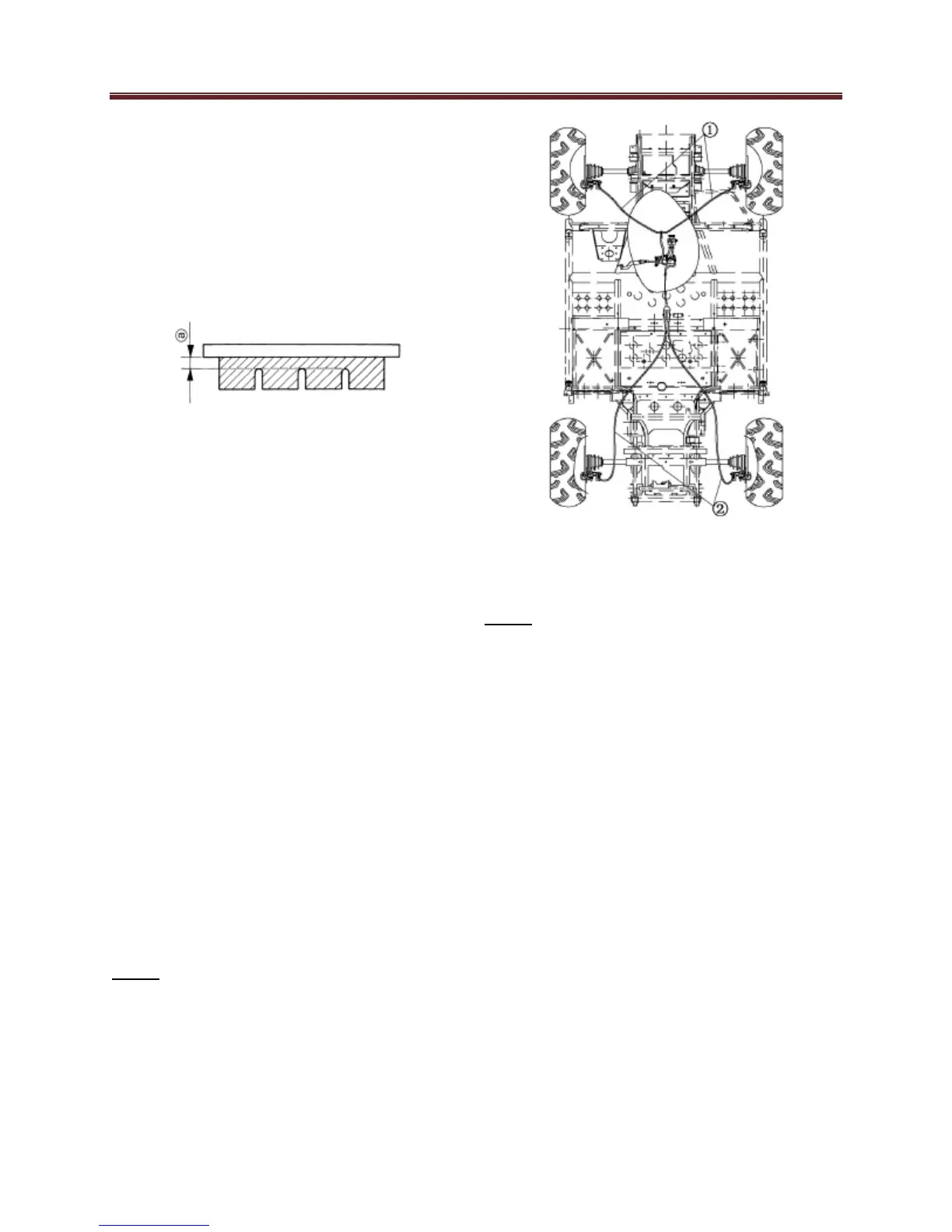
Inspect the brake pad indicator groove (a),
if it has almost disappeared replace the
pads as a set. Both Front or Both Rear.
Brake pad wear limit (a)
1.5 mm (0.06 in)
A small c-clamp is handy for pushing the
piston back into the caliper and installing
new Pads.
After any work on the brakes be sure to
pump the brake pedal several times to
seat the new pads before operating the
vehicle.
Inspecting the Brake lines
Remove the Roll-over protection system,
the hood assembly, the trunk assembly,
the driver’s seat, the passenger’s seat,
and the console.
Look for leaks, or damage.
Applying pressure to the brake pedal can
assist in locating possible leaks.
Note:
Any time a brake line has been
loosened or removed you will need to
bleed the brake system.
Bleeding the Brake system
Fill the brake reservoir.
Note:
While bleeding the brakes it is
necessary to keep the reservoir full so
that no air is drawn back into the
system.
Place a hose onto the bleed screw and
into a suitable catch container.
Pump the Brake pedal and hold pressure
on the pedal while loosening the bleed
screw. This will allow the pedal to depress
toward the floor. Tighten the bleed screw
before the pedal reaches it’ maximum
travel. Fill the reservoir up and repeat the
process until all air bubbles have been
removed from the system.
Repeat this process for all four wheels.
Front brake caliper bleed screw
6 Nm (0.6 m · kg, 4.3 ft · lb)
Rear brake caliper bleed screw
5 Nm (0.5 m · kg, 3.6 ft · lb)


 To Next Page