Using Syslog
A - 29
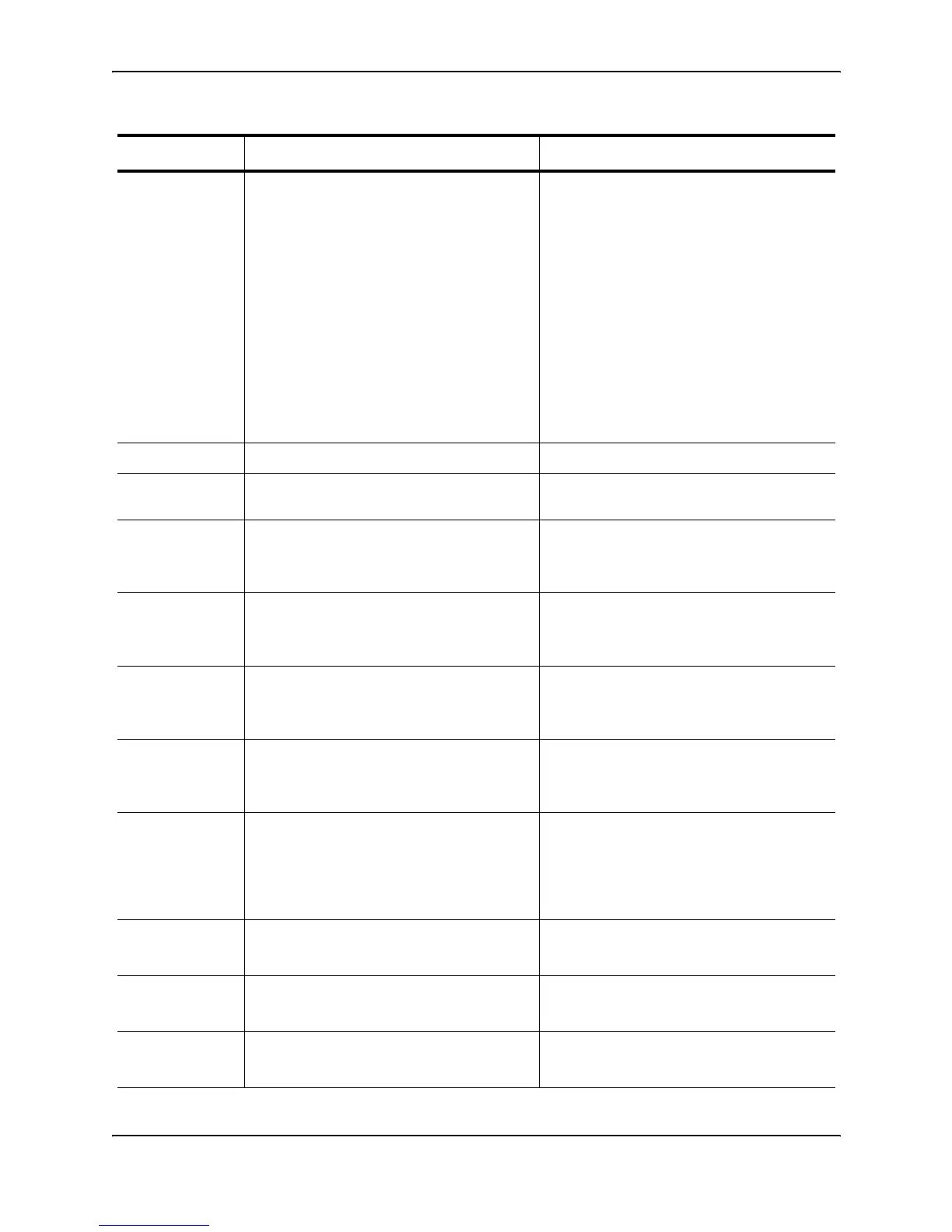
Notification Transit TCP in interface <portnum> exceeds
<num> burst packets, stopping for <num>
seconds!!
Threshold parameters for TCP transit
(through) traffic have been configured on an
interface, and the maximum burst size for
TCP packets on the interface has been
exceeded.
The <portnum> is the port number.
The first <num> is the maximum burst size
(maximum number of packets allowed).
The second <num> is the number of
seconds during which additional TCP
packets will be blocked on the interface.
Note: This message can occur in response
to an attempted TCP SYN attack.
Informational Cold start The device has been powered on.
Informational Warm start The system software (flash code) has been
reloaded.
Informational <user-name> login to USER EXEC mode A user has logged into the USER EXEC
mode of the CLI.
The <user-name> is the user name.
Informational <user-name> logout from USER EXEC
mode
A user has logged out of the USER EXEC
mode of the CLI.
The <user-name> is the user name.
Informational <user-name> login to PRIVILEGED mode A user has logged into the Privileged EXEC
mode of the CLI.
The <user-name> is the user name.
Informational <user-name> logout from PRIVILEGED
mode
A user has logged out of Privileged EXEC
mode of the CLI.
The <user-name> is the user name.
Informational SNMP Auth. failure, intruder IP: <ip-addr> A user has tried to open a management
session with the device using an invalid
SNMP community string.
The <ip-addr> is the IP address of the host
that sent the invalid community string.
Informational Interface <portnum>, state up A port has come up.
The <portnum> is the port number.
Informational Interface <portnum>, state down A port has gone down.
The <portnum> is the port number.
Informational Interface <portnum>, line protocol up The line protocol on a port has come up.
The <portnum> is the port number.
Table A.2: HP Syslog Messages (Continued)
Message Level Message Explanation


 To Next Page