1.
ASSEMBLY
LANCUAGE
AND
PROCESSORS
INTRODUCTION
Almost every line
of
source coding
in
an
assembly language
~ource
program translates directly into a machine
instruction for a
pdrticular processor. Therefore, the assembly language programmer must
be
familiar with
both
the assembly language and the processor for which
he
is
programming.
The first
part
of
this
chapter
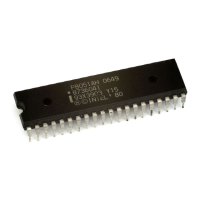
describes the assembler. The second part describes the features
of
the
8080
micro-
processor from a programmer's point
of
view. Programming differences between the
8080
and the 8085 micro-
processors are relatively minor. These differences are described
in
a short section at the end
of
this chapter.
WHAT
IS
AN ASSEMBLER?
An
assembler
is
a software tool
-~
a program designed to simplify the task
of
writing
computer
programs.
If
you have ever written a
computer
program dil-ectly
in
a machine-recognizable form such
as
binary or hexadecimal
code, you
will appreciate the advantages
of
programming
in
a symbolic assembly language.
Assembly language operation codes (opcodes) are easily remembered (MOV for move instructions, IMP for jump).
You can also symbolically express addresses and values referenced
in
the operand field
of
instructions. Since you
assign these
names, you can make them
as
meaningful
as
the mnemonics for the instruction5. For example,
if
your
program
rrust manipulate a date
as
data, you :an assign it the symbolic name DATE. If your program contains a
set
of
in5tructions used as a timing loop
(a
set of instructions executed repeatedly until a specific
amount
of
time
has passed), you can name the instruction grcup TIMER.
What
the Assembler Does
To use the assembler, you first need
a source program. The source program consists
of
programmer-written
assembly language instructions. These instructions are written using mnemonic opcodes and
labels
as
described
previously.
Assembly
language source programs must be
in
a machine-readable form when passed to the assembler. The
Intellec development system includes a text editor that will help you maintain source programs
a~
paper tape
files or diskette files. You can then
pa~s
the resulting source
program
file
to the assembler. (The text editor
is
described
in
the ISIS-II System User's Guide.)
The dssembler program performs the
clerical task
of
translating symbolic code into
object
code which can
be
executed by the
8080
and 8085 microprocessors. Assembler
output
consi<.ts
of
three
po~sible
files: the
object
file
containing your program translated into object code; the
list
file
printout
of
your source code, the assembler-
generated object code, and the symbol table; and the symbol-crass-reference file, a listing
of
the symbol-cross-
reference records.
1-1




 To Next Page