Safety features of your vehicle
383
Child restraint system (CRS)
Systems can only be used rear
-
ward-facing. Convertible and 3-in-1
Child Restraint Systems typically
have higher height and weight limits
for the rearward-facing position,
allowing you to keep your child rear
-
ward-facing for a longer period of
time.
Keep using Child Restraint Systems
in the rearward-facing position as
long as children fit within the height
and weight limits allowed by the
Child Restraint System's manufac
-
turer.
Forward-facing Child Restraint
System
A forward-facing Child Restraint
System provides restraint for the
child's body with a harness. Keep
children in a forward-facing Child
Restraint System with a harness
until they reach the top height or
weight limit allowed by your Child
Restraint System's manufacturer.
Once your child outgrows the for
-
ward-facing Child Restraint System,
your child is ready for a booster
seat.
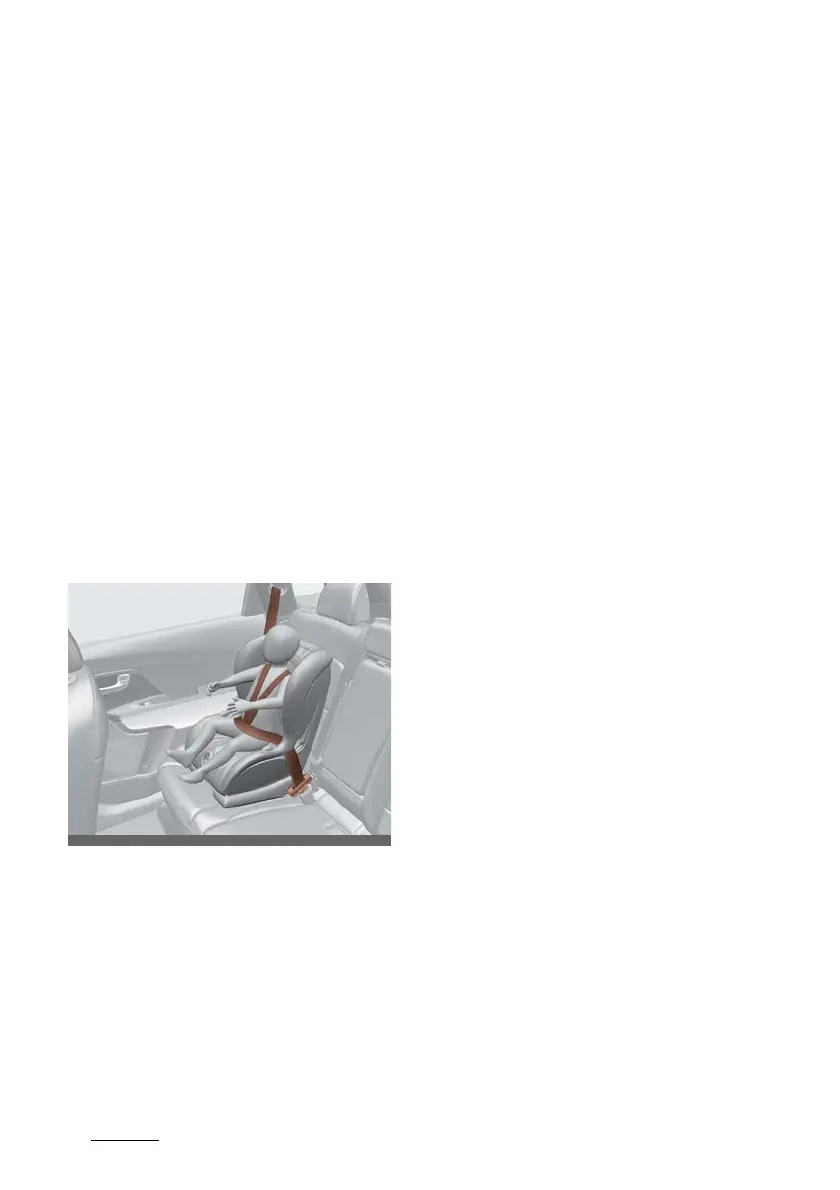
Booster seats
A booster seat is a Child Restraint
System designed to improve the fit
of the vehicle's seat belt system. A
booster seat positions the seat belt
so that it fits properly over the
stronger parts of your child's body.
Keep your children in booster seats
until they are big enough to fit in a
seat belt properly.
For a seat belt to fit properly, the
lap belt must lie comfortable across
the upper thighs, not the stomach.
The shoulder belt should lie com
-
fortable across the shoulder and
chest and not across the neck or
face. Children under age 13 must
always be properly restrained to
minimise the risk of injury in an
accident, sudden stop or sudden
manoeuvre.




 To Next Page