L10-16 Hydraulic Check-out Procedure 05/03 L10016
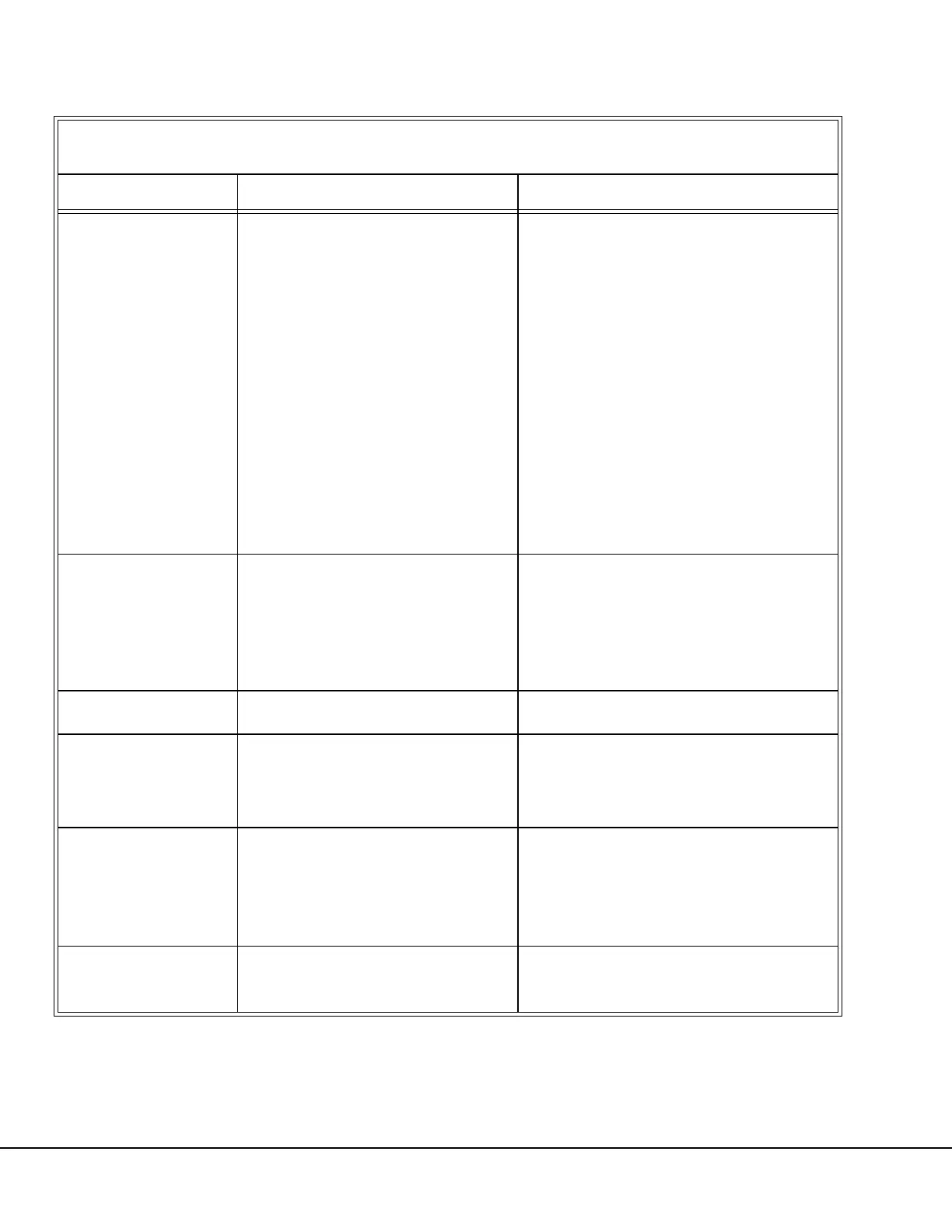
TROUBLESHOOTING CHART
(Hoist Pump)
Trouble Possible Cause Suggested Corrective Action
Visible damage in the
following areas:
• Sandblasted band
around pressure plate
bores
• Angle groove on
face of pressure plate
• Lube groove
enlarged and edges
rounded
• Dull area on shaft at
root of tooth
• Dull finish on shaft
in bearing area
• Sandblasted gear
bore in housing
Abrasive wear caused by fine parti-
cles in oil supply — Dirt (fine contami-
nants, not visible to the eye).
Change hydraulic oil.
Hydraulic filters may need changing.
Verify correct filter elements are being used.
Check hoist and steering cylinders for dents,
scoring, or seal damage.
Entire hydraulic system may require com-
plete cleaning (See “Flushing Procedure” in
the following pages).
Visible damage in the
following areas:
• Scored pressure
plates
• Scored shafts
• Scored gear bore
Abrasive wear caused by metal parti-
cles — Metal (coarse contaminants,
visible to the eye).
Entire hydraulic system may require com-
plete cleaning (See “Flushing Procedure” in
the following pages).
Check other hydraulic system components
for possible source of contaminants.
External damage to
pump
Incorrect installation. Remove and repair as required.
Damage on rear of
drive gear and rear
pressure plate only
Defective pump driveshaft.
Check pump driveshaft.
Check cross and bearings for smooth oper-
ation.
Check for adequate joint lubrication.
Eroded pump hous-
ing or pressure plate
Aeration - cavitation
• Restricted oil flow to pump
• Aerated oil
Check hydraulic tank oil level.
Verify correct oil viscosity.
Check for restriction or air leak at pump inlet
line.
Check for loose fittings, clamps etc.
Excessive wear on
pressure plate and/or
end of gear
Lack of oil.
Check hydraulic oil level.
Check pump inlet hoses for obstructions or
leaks.



 To Next Page