4 . 5 .4 M a x H o l d F unc t io n 35
| www.lakeshore.com
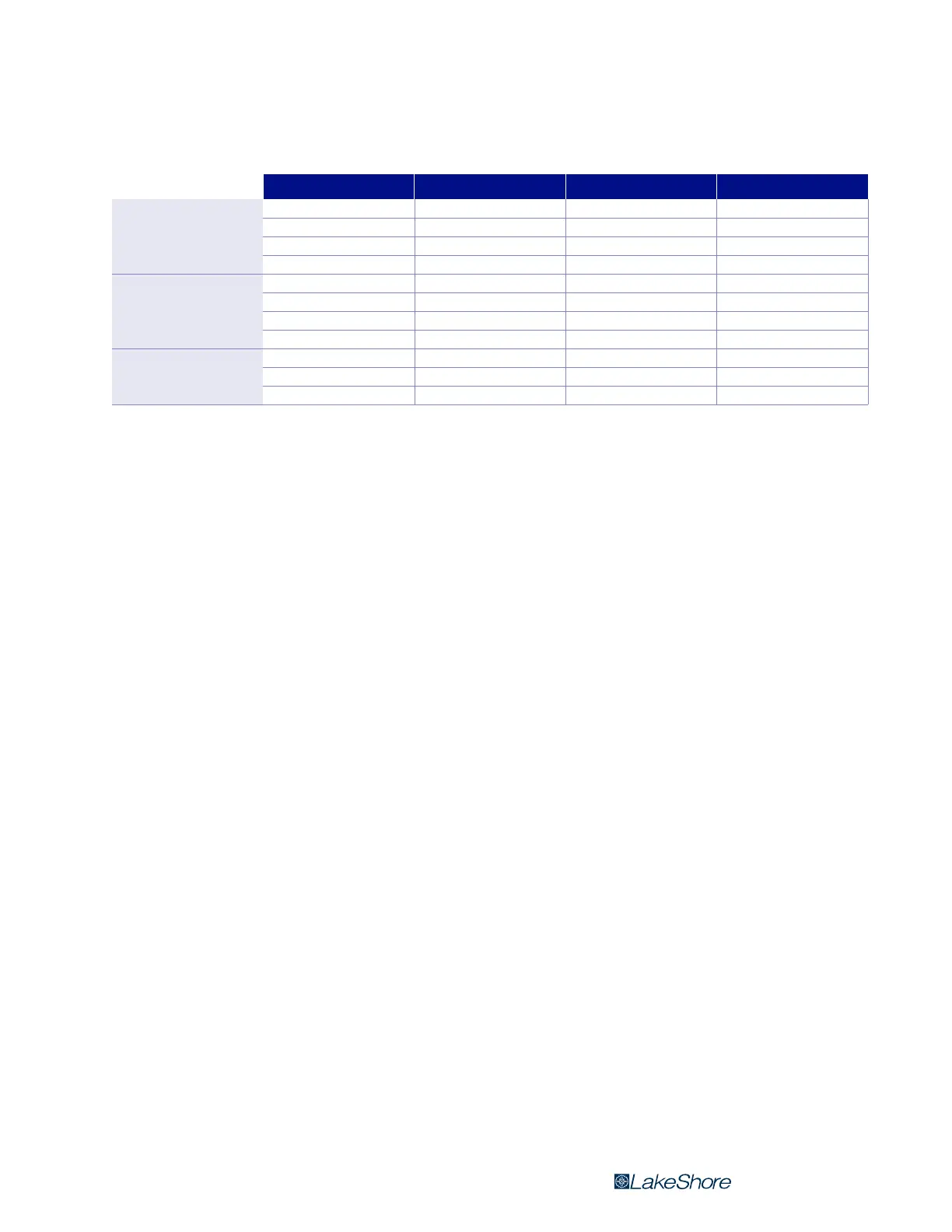
The ranges that are available depend on the probe type: high stability, high sensitiv-
ity, and ultra-high sensitivity. TABLE 4-4 lists full scale ranges for each probe sensitiv-
ity, along with the maximum number of digits of display resolution. Measurement
resolution (noise floor) varies depending on probe and application.
4.5.4 Max Hold
Function
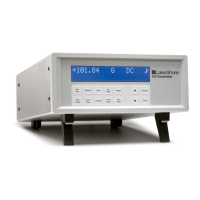
The max hold function captures the maximum field reading in magnitude, with field
polarity (sign) from the time when the function was turned on or from the last
Max Reset press. For example, if the present maximum reading is +2 kG and the new
reading is -3 kG, the -3 kG becomes the new maximum reading because field is larger
in magnitude, and the sign only represents the direction of the field. When the max
hold function is on, the active reading shows on the top line and the maximum read-
ing shows on the bottom line.
Menu navigation:
Max Hold (toggle)
Default: off
Interface command: MXHOLD
4.5.5 Max Reset
Function
If the max hold function is on and the Max Reset key is pressed, the maximum reading
is cleared and reset with the present field reading.
Menu navigation:
(With max hold function on) Max Reset
Interface command: MXRST
4.5.6 Relative Mode
The relative mode allows you to take field measurements relative to a measured ref-
erence field, which acts as the relative setpoint. The relative reading is equal to the
present field value minus the relative setpoint. When the relative mode is on, the rela-
tive reading will appear on the top line of the display including the small delta sign (
°)
signifying the relative display. The relative setpoint is shown on the bottom line of the
display.
The relative mode also interacts with other features. Relative can be used with
max hold to display the maximum relative reading. If the alarm function is turned on,
the instrument uses the relative reading to test for alarm conditions.
Gauss Te sl a Oersted Ampere/meter
High stability probe (HST)
±350.00 kG* ±35.000 T* ±350.00 kOe* ±28.000 MA/m*
±35.000 kG ±3.5000 T ±35.000 kOe ±2.8000 MA/m
±3.5000 kG ±350.00 mT ±3.5000 kOe ±280.00 kA/m
±350.00 G ±35.000 mT ±350.00 Oe ±28.000 kA/m
High sensitivity probe (HSE)
±35.000 kG ±3.5000 T ±35.000 kOe ±2.8000 MA/m
±3.5000 kG ±350.00 mT ±3.5000 kOe ±280.00 kA/m
±350.00 G ±35.000 mT ±350.00 Oe ±28.000 kA/m
±35.000 G ±3.5000 mT ±35.000 Oe ±2.8000 kA/m
Ultra-high sensitivity probe
(UHS)
±35.000 G ±3.5000 mT ±35.000 Oe ±2.8000 kA/m
±3.5000 G ±350.00 µT ±3.5000 Oe ±280.00 A/m
±350.00 mG ±35.000 µT ±350.00 mOe ±28.000 A/m
* Accuracy for this range is not guaranteed for all HST probes
TABLE 4-4 Range and resolution for each probe type


 To Next Page