25 Dynamic DNS
When you want your internal server to be accessed by using
DNS name rather than using the dynamic IP address, you can
use the DDNS service. The DDNS server allows to alias a
dynamic IP address to a static hostname.
This chapter provides you an overview of the Dynamic DNS
feature of the modem and configurationdetails related to it.
Overview
If some host has a dynamic IP address that keeps changing
frequently, it is difficult to keep updatingthe IP record that is
associated with the domain name of this host in the zone files.
This will resultin non-accessibility of this host on the Internet.
Dynamic DNS service allows to keep mapping of adynamic IP
address of such host to a static hostname. Dynamic DNS
services are provided bymany websites. The host needs to
register with some website and get a domain name. When theIP
address of the host changes, it just needs to send a message to
the website that's providingdynamic DNS service to this host.
For this to work, an automated update client needs to
beimplemented. These update clients send update messages
to the servers whenever there is somechange in the IP address
of that host. Then, the server updates the entries for that host
and repliesback with some return code.
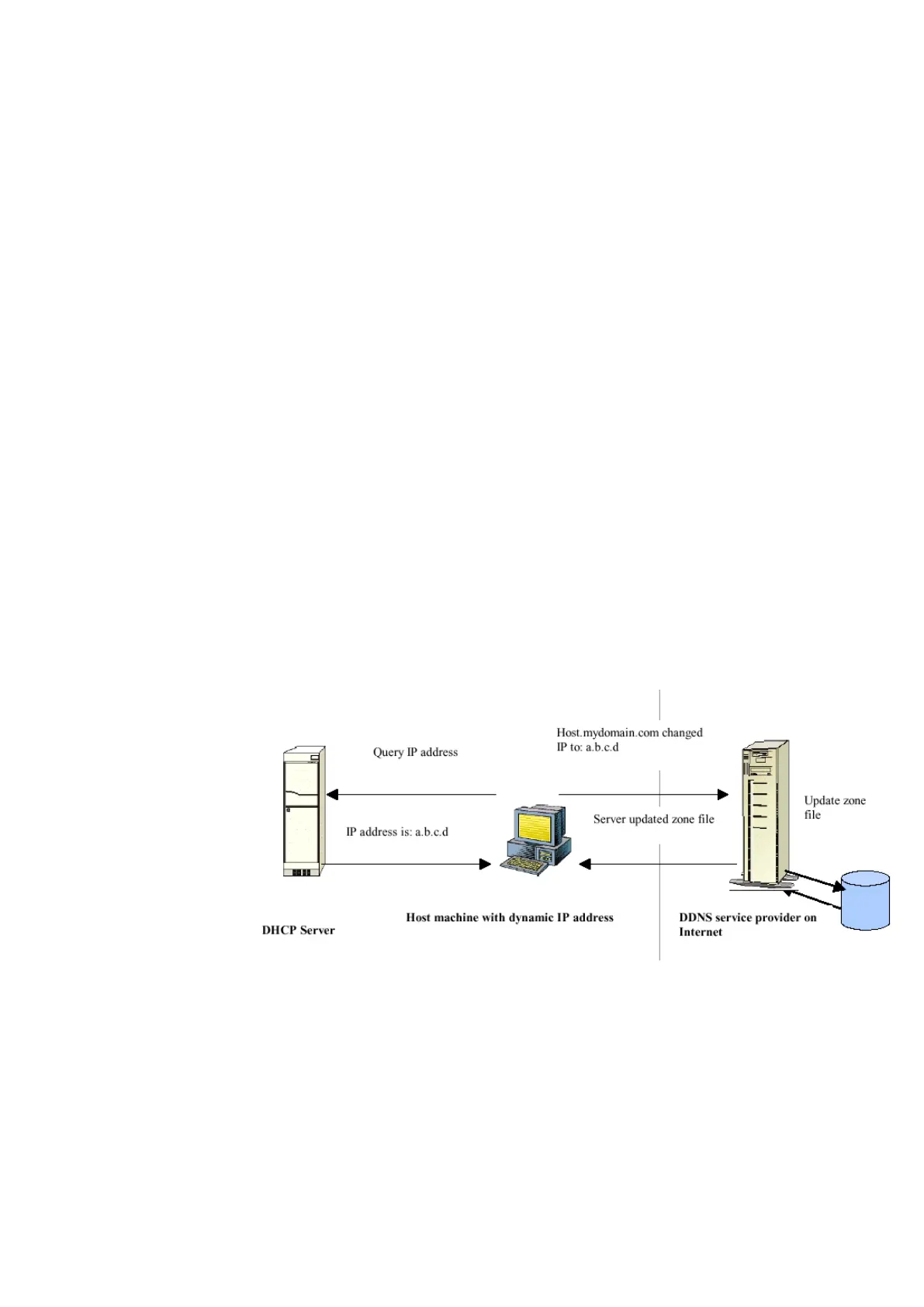
Above Figure explains one such scenario in which a host gets a
dynamic IP address for itself from aDHCP server. As the host
has registered with one of the dynamic DNS service providers
on theInternet, it sends an update message to the service
provider with host name and changed IPaddress. The service
provider updates the new IP address of the host in the zone
files that haveentry for that host name and replies back with
some return code. The return code communicatesthe success
or failure of the update message. This process is repeated
every time the host's IPaddress changes.



 To Next Page