5 -23
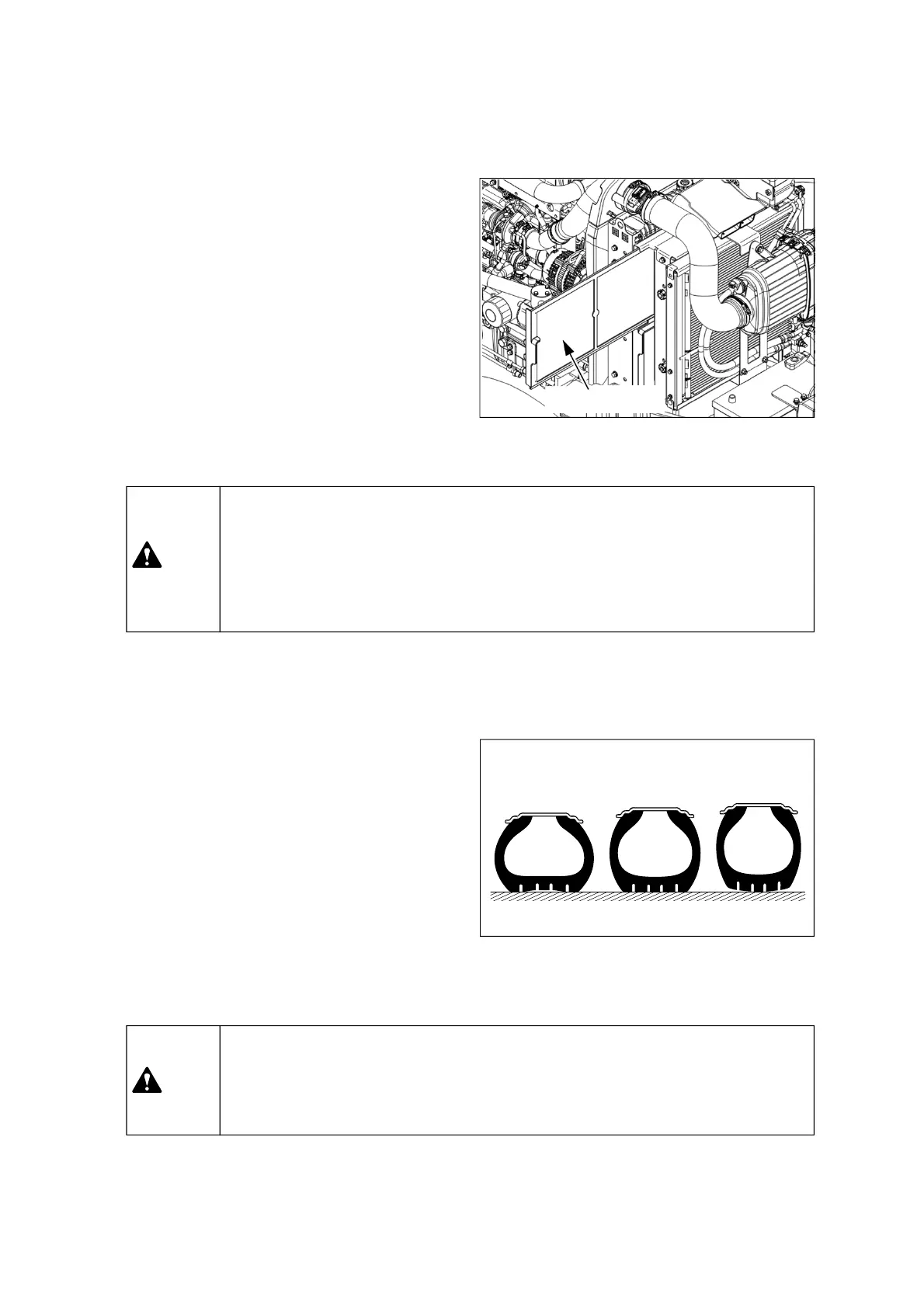
Radiator screen
Low Good Exceed
② Standard air pressure - See chapter 4-5-(5), “Tires and Load capacity” in this manual.
(8) Tire air pressure and damage
① Check
Check the tire air pressure or damage of the tires
on a daily basis. Always use the correct pressure
for each axle, and if the tire is damaged, change
it with a new one.
Ensure the tire air pressures are not lower than
the correct values, to prevent;
-blown tires;
- bead wear;
- internal damage;
- irregular wear and short service life.
Do not over-inflate the tires, as this may cause to damage in the event of impact and, in extreme
conditions, the rim and disk may be deformed or the tires may burst.
▶ The dust and dirt, other debris, and damaged fins can cause that cooling efficiency
of the radiator is reduced and the engine can be overheated.
▶ Clean the radiator only after stopping engine.
▶ If cleaning with water, take care not to spray water to the electric and electronic
parts. If possible, DO NOT USE WATER.
Caution
(7) Cleaning of Radiator and Radiator screen
▶ Do not assemble/disassemble the tires arbitrarily. Only qualified service personnel
should perform this maintenance in a tire repair center equipped with special tools.
▶ When checking tire air pressure, keep the body away from the valve mechanism
or cap. Tire air pressure vary depending on the load weighing on the axles.
Caution
Inspect the radiator and radiator screen for these
items on a daily basis: Damaged fins, corrosion,
dirt, grease, insects, leaves, oil, and other debris.
Clean the radiator and radiator screen, if
necessary.
To access the engine radiator, remove the knobs
and pull out the radiator screen.
When cleaning the radiator with water, let the
water flow from the fan side.
When cleaning the radiator, check and clean the
condenser, TM oil cooler and other radiators
together.





 To Next Page