How to Verif
the Orifice Selection Appendix B: Valve Orifice Selection
56
How to Verify the Orifice Selection
The correct orifice depends on three pieces of information: the upstream pressure, the
downstream pressure, and the flow rate. These instructions assume that you are using nitrogen
gas. If you are using a gas other than nitrogen, you must complete the additional step in Using
Different Gases, page 58.
Note
The valves are not calibrated to match the valve orifice selection graph in
Figure 13, page 57. The graph displays typical valve behavior.
1. Determine the pressure differential (delta P), by subtracting the outlet pressure from the
inlet pressure.
2.
Use the inlet pressure and the pressure differential to determine the valve orifice index
number listed in Table 11.
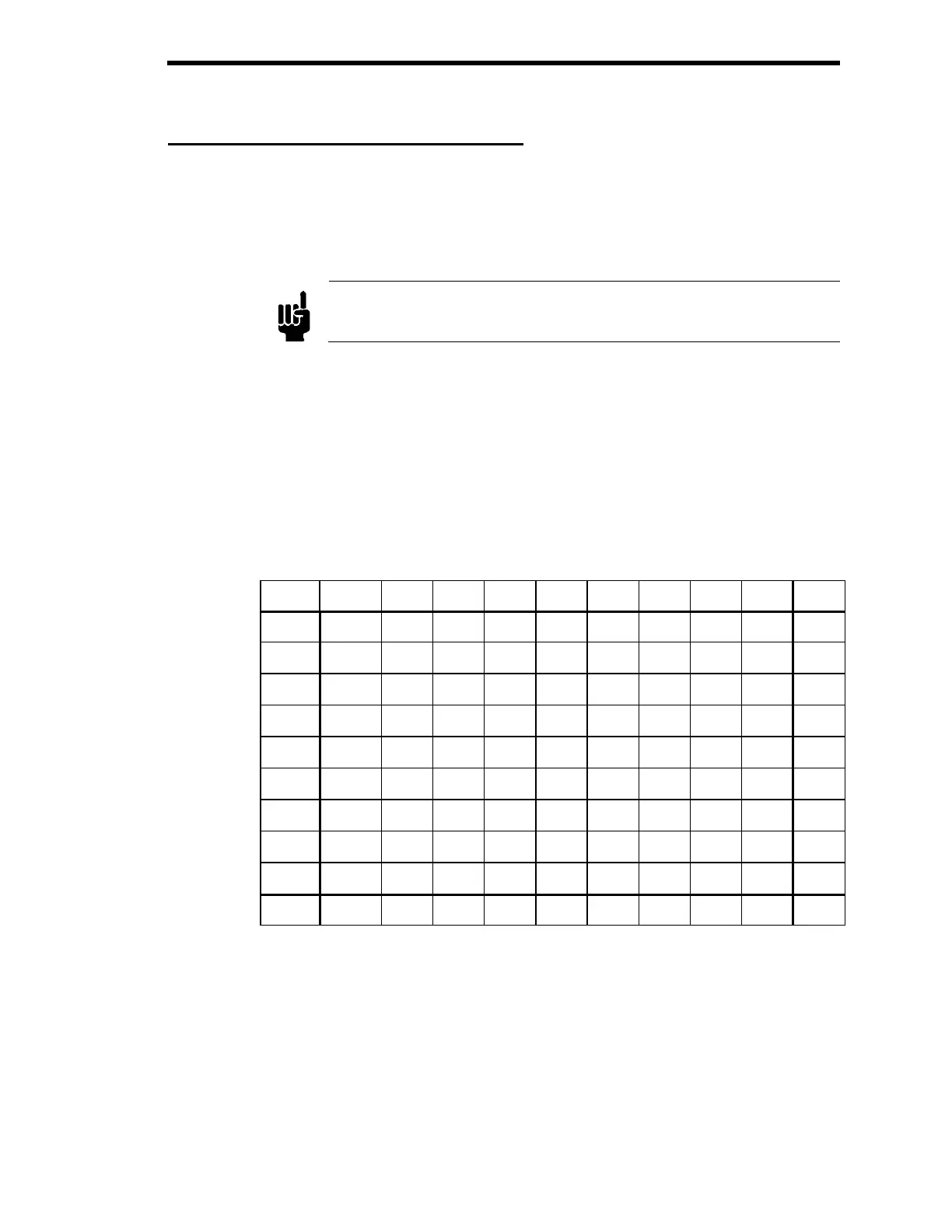
Example 1: Using Nitrogen (N2)
For example, if your inlet pressure is 30 psia and your outlet pressure is at atmosphere
(15 psia), the pressure differential (delta P) is 15 psia. Therefore, your valve orifice index
number would be 175.
Delta Pressure (psia)
>50 50 30 15 8 4 2 1 0.5
100 585 585 480 355 265 190 135 95 65 5170
50
295 295 240 185 130 95 65 50 2585
30
175 175 140 100 75 50 40 1551
Inlet
20
115 110 80 60 40 30 1034
Inlet
Pressure 15
90 90 70 50 35 25 776 Pressure
(psia)
10
60 55 40 30 20 517
(Torr)
5
30 25 20 15 259
2
10 10 9 103
1
6 6 51.7
>5170 5170 1551 776 414 207 103 51.7 25.9
Delta Pressure (Torr)
Table 11: Valve Orifice Index Number


 To Next Page