Shooting Features Page: 53 A (Auto) Mode Explains how to shoot easily with basic operations in the auto mode without detailed settings.
Scene auto selector Explains how the camera automatically selects the best scene mode for simpler shooting.
Portrait Details using the portrait mode for capturing people, including face detection and skin softening.
Landscape Describes using the landscape mode for vivid outdoor scenes with noise reduction or single shot options.
Sports Explains using sports mode for capturing fast-moving subjects with continuous shooting.
Night portrait Details using night portrait mode for low-light portraits, with hand-held or tripod options.
Party;indoor Explains using party/indoor mode for capturing ambient lighting in social gatherings.
Beach Describes using beach mode to capture brightness of beach scenes or sunlit water.
Sunset Explains using sunset mode to preserve deep hues in sunsets and sunrises.
Close-up Details using close-up mode for photographing small objects like flowers or insects.
Food Describes using food mode for taking pictures of meals, with hue adjustment options.
Museum Explains using museum mode for indoor shooting where flash is prohibited.
Fireworks show Details using fireworks show mode with slow shutter speeds for capturing light bursts.
Backlighting Explains using backlighting mode to capture scenes with light behind the subject, including HDR composition.
Panorama Describes shooting panorama pictures using easy panorama or panorama assist modes.
Pet portrait Details using pet portrait mode for shooting dogs or cats with face detection and auto release.
Special effects Explains how to add various digital filter effects to images during shooting.
Using Skin Softening Describes the skin softening feature that smooths facial skin tones in portraits.
Using Preset Manual Guides on measuring and setting white balance manually for unusual lighting conditions.
Metering Explains the different metering methods (Matrix, Center-weighted, Spot) for measuring subject brightness.
Continuous Shooting Details various continuous shooting modes including single, continuous H/L, and pre-shooting cache.
BSS (Best Shot Selector) Explains using BSS to automatically select the sharpest image from a series, especially in low light.
Multi-shot 16 Describes capturing 16 images rapidly and arranging them into a single picture.
ISO Sensitivity Explains how ISO sensitivity affects light sensitivity and image grain, with auto and fixed range options.
Exposure Bracketing Explains how to automatically vary exposure over multiple shots for difficult lighting conditions.
AF Area Mode Explains how to set the focus area for autofocus, including face priority and auto modes.
Manual Describes manually selecting focus position from 99 areas for precise focus control.
Center Explains focusing on the subject at the center of the frame.
Subject tracking Details how to select a subject and have the focus area follow it for moving subjects.
Target finding AF Explains how the camera detects and focuses on the main subject automatically.
Autofocus Mode Explains autofocus modes like single AF and full-time AF for focusing during normal speed movie recording.
Flash Exp. Comp. Details how to adjust flash output compensation to correct over- or under-exposed flash images.
Active D-Lighting Describes the feature that preserves highlight and shadow details for natural contrast.
Zoom Memory Details setting preferred focal lengths for quick zoom adjustments.
Recording and Playing Back Movies Page: 109 Recording Movies Details how to start and stop movie recording, and notes on movie options and aspect ratios.
Maximum Movie Length Lists maximum movie lengths for different resolutions based on internal and memory card storage.
The Movie Menu Introduces the camera's movie menu for adjusting recording settings.
Movie Options Details the types of normal speed movies that can be recorded, including resolutions and bitrates.
Autofocus Mode Explains autofocus modes (Single AF, Full-time AF) for normal speed movie recording, noting potential sound recording issues.
General Camera Setup Page: 115 The Setup Menu Introduces the setup menu for configuring various camera preferences and functions.
Welcome screen Explains how to set a custom image as the welcome screen, with restrictions on certain picture types.
Time Zone and Date Guides on setting the camera's date, time, time zone, and travel destination.
Monitor Settings Details options for displaying shooting information, image review, brightness, and histograms.
Print date Explains imprinting shooting date and time on pictures, with limitations.
Vibration Reduction Explains how to compensate for camera shake and advises turning it off when using a tripod.
Motion Detection Describes enabling motion detection to reduce shake effects by adjusting ISO and shutter speed.
AF Assist Explains enabling or disabling the AF-assist illuminator for low-light focusing.
Digital Zoom Details how to enable or disable digital zoom and its limitations.
Sound Settings Allows adjustment of button sounds, shutter sounds, and startup sounds.
Auto Off Explains setting the time before the camera enters standby mode to save power.
Language Allows selection of the camera's display language from a list of 29 options.
TV Settings Details settings for connecting the camera to a TV, including video output and HDMI options.
Fn Button Explains assigning frequently used shooting menu items to the Fn button for quick access.
Charge by Computer Explains enabling or disabling battery charging when the camera is connected to a computer via USB.
Blink Warning Describes the blink warning feature that detects and alerts users to closed eyes in portraits.
Reset all Explains how to restore all camera settings to their factory default values.
Shooting Menu Lists default settings for shooting menu options like image quality, metering, and ISO.
Movie Menu Lists default settings for movie menu options like movie options and autofocus mode.
Setup Menu Lists default settings for setup menu items like welcome screen, print date, and vibration reduction.
Others Lists default settings for miscellaneous options like paper size, slide show interval, and sequence display.
Technical Notes and Index Page: 221 The Camera Provides precautions for using and storing the camera to ensure its longevity.
The Battery Provides detailed instructions and warnings for using and maintaining the camera's rechargeable battery.
Charging AC Adapter Details precautions for using the AC adapter, including compatibility and safety warnings.
The Memory Cards Provides guidelines for using, formatting, and caring for memory cards with the camera.
Cleaning Provides detailed instructions for cleaning the camera's lens, monitor, and body.
Storage Advises on proper storage conditions for the camera and battery to prevent damage.
Troubleshooting Offers solutions for common problems encountered with the camera's operation.
Shooting Issues Lists common problems encountered during shooting and their respective causes and solutions.
Camera cannot focus. Provides solutions for autofocus issues, including subject distance, AF assist, and manual focus.
Pictures are blurred. Offers tips to prevent blurred pictures, such as using flash, vibration reduction, or a tripod.
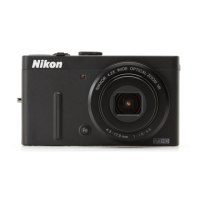
Specifications Lists the technical specifications and features of the Nikon COOLPIX P310 camera.
Index Provides an alphabetical index for quick reference to topics within the manual.


 To Next Page
 General
 Weight and Dimensions