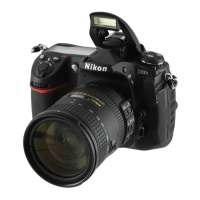
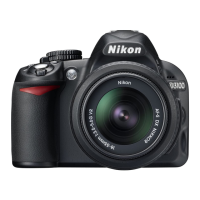
With Dynamic-area AF or Auto-area AF and Focus tracking
with lock-on enabled, I was amused at how adamant the
camera was about staying with the current subject. I’d focus
on a map on the wall and then cover most of the focusing
points with the user’s manual. As long as I allowed at least
one or two AF points to remain uncovered so it could see the
map, the focus did not switch to the manual. I could just hear
the D300S muttering, “Hah, you can’t fool me. I can still see
a little edge of that map there, so I’m not changing focus!”
Only when I stuck the D300S manual completely in front of
the lens, covering all the AF points, did the camera decide to
start timing the Focus tracking with lock-on time-out. After a
second or two, the camera would give up on the map and
focus on the manual instead.
Try this yourself! It’s quite fun and will teach you something
about the power of your camera’s AF system.
Does Lock-On Cause Autofocus to Slow
Down?
Focus tracking with lock-on is an autofocus algorithm that
allows your camera to maintain focus on a subject and ignore
anything that comes between the camera and the subject for a
period of time. It will “lock-on” that subject and track where
it is on the array of AF points in the Viewfinder. Focus
tracking with lock-on is controlled by configuring Custom
setting a4 to a duration period or to Off.
Some misunderstanding surrounds this technology. Since it is
designed to cause the autofocus to hesitate for a variable time
period before seeking a new subject, it may make the camera
seem sluggish to some users.
267



 To Next Page