6. Scroll down to the Attach copyright information line
(Figure 5-29, image 7). Notice that there is currently no
check mark in the little box (see red arrow in
Figure 5-29, image 7). Now scroll to the right toward
Set, and you’ll see a tiny check mark appear in the box
(Figure 5-29, image 8).
7. Finally, scroll back up to Done on the Copyright
information screen. Press the OK button to save your
Artist and Copyright information.
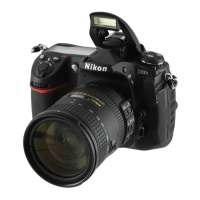
My Recommendation: D300S users, be sure to add your
name in both the Artist and Copyright sections of this
function. With so much intellectual property theft going on
these days, it’s a good idea to identify each of your images as
your own. Otherwise, you may post an image on Flickr or
Facebook to share with friends and later find it on a billboard
along the highway. At least this way, you will be able to
prove that the image is yours and charge the infringer.
Embedding your personal information is not a foolproof way
to ID your images since unscrupulous people may steal them
and strip the metadata out of them.
However, if you do find one of your images on the front page
of a magazine, or on someone else’s website, at least you can
prove you took the image and have some legal recourse under
the Digital Millennium Copyright Act (DMCA). Once you’ve
taken a picture, you hold the copyright to that image. You
must be able to prove you took it. This is one convenient way.
D300 users should add similar information under the Image
comment function mentioned earlier.
489



 To Next Page