lines progressively from the top of what the imaging sensor
captured to the bottom (lines 1, 2, 3, 4 ... 720, etc.).
Interlaced video output displays every even line from top to
bottom, then comes back to the top and displays every odd
line (lines 2, 4, 6, 8 ... 720, then 1, 3, 5, 7... 719, etc.).
Progressive output provides a higher-quality image with less
flicker and a more cinematic look. I’m sure that’s why Nikon
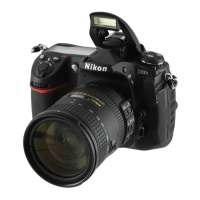
chose to make the D300S shoot progressive video. Now, let’s
set up our cameras and make some D-Movies!
Camera Setup for Making D-Movies
Before you make your first movie, you’ll need to set four
separate things on your D300S:
▪ Setup Menu > Video mode – Encoding method, NTSC
or PAL
▪ Shooting Menu > Movie settings – D-Movie Quality
▪ Shooting Menu > Movie settings – Microphone sound
level
▪ Shooting Menu > Movie settings – Destination memory
card
Which Video Encoding Method?
The D300S allows you to record using either the NTSC or
PAL encoding method. These are two different video
encoding systems. NTSC is the standard in North America,
Japan, some of South America, and a few other areas. PAL is
the standard in most of Europe, Asia, and Australia. There is
604



 To Next Page