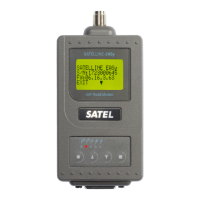
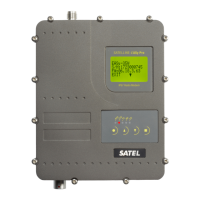
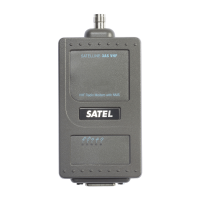
SATEL-EASy+
User guide
Version 1.33
4
RESTRICTIONS ON USE – SATEL-EASy+ (320-380 MHz)
SATEL-EASy+ radio modem has been designed to operate on 320-380 MHz, the exact use of
which differs from one region and/or country to another. The user of a radio modem must take
care that the said device is not operated without the permission of the local authorities on
frequencies other than those specifically reserved and intended for use without a specific
permit.
SATEL-EASy+ is allowed to be used in the following countries. More detailed information is
available at the local frequency management authority.
Countries*: AE, AT, AU, BE, BG, CH, CY, CZ, DE, DK, EE, ES, FI, FR, GB, GR, HU, HR, IE, IS, IT, KR, LT,
LU, LV, MT, NL, NO, PL, PT, RO, SE, SI, SK, JP**
* Codes of the countries follow the ISO 3166-1-Alpha-2 standard
** See sections: Host integration and 6.12 Japan regional specific features
WARNING – RF Exposure!
To comply with RF exposure compliance requirements in Europe, maximum antenna gain is 12
dBi and a separation distance listed in a table below must be maintained between the antenna
of this device and all persons.
MODIFICATION WARNING STATEMENT
Changes or modifications not expressly approved by the party responsible for compliance could
void the user's authority to operate the equipment.
Class B digital device statement
Note: This equipment has been tested and found to comply with the limits for a Class B digital
device, pursuant to Part 15 of the FCC Rules. These limits are designed to provide reasonable
protection against harmful interference in a residential installation. This equipment generates
uses and can radiate radio frequency energy and, if not installed and used in accordance with
the instructions, may cause harmful interference to radio communications. However, there is no
guarantee that interference will not occur in particular installation. If this equipment does cause
harmful interference to radio or television reception, which can be determined by turning the
equipment off and on, the user is encouraged to try to correct the interference by one or more of
the following measures:
• Reorient or relocate the receiving antenna
• Increase the separation between the equipment and receiver
• Connect the equipment into an outlet on a circuit different from that to which the
receiver is connected
• Consult the dealer or an experienced radio/TV technician for help


 To Next Page