SATEL-EASy+
User guide
Version 1.33
81
• other radio modem systems
• PC-related devices (approximately 5 m radius from antenna)
Please note that antennas are always tuned to a specific frequency range when ordering them.
Simple antennas and antennas, which have been constructed of stacked Yagi-antennas, are
typically rather broadband. As the number of Yagi-elements increases the frequency range
becomes narrower.
When designing and installing a system it is advisable to prepare to test the system, and also to
consider serviceability of the system. In particular cabling should be planned to allow easy
access and to allow for maintenance. It is often practical to use long antenna cables, so that the
radio modem can be installed far enough from the antenna itself to a location that is easily
accessible.
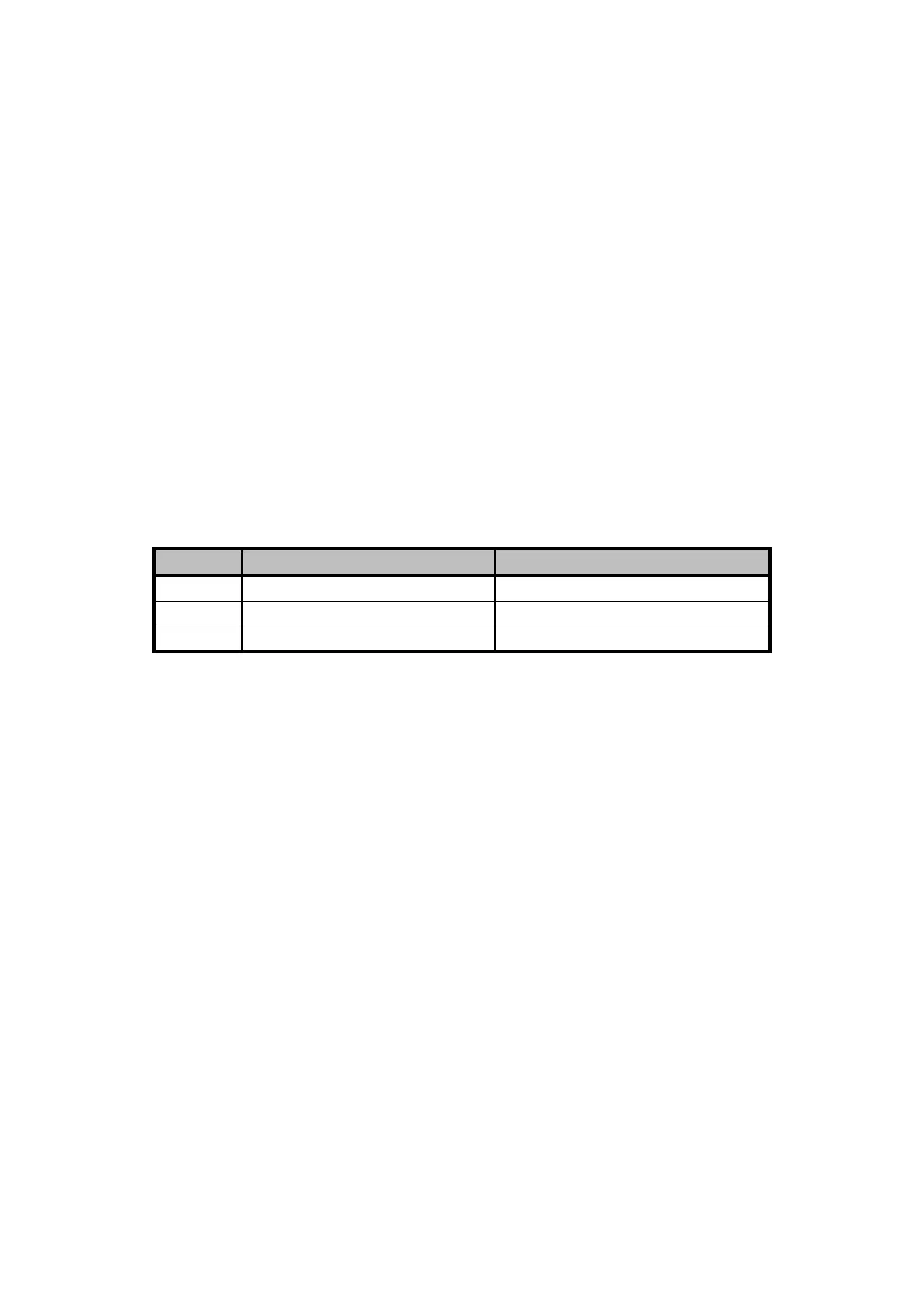
The type of the antenna cable is dependent on the length of the antenna cable, and the
following table can be used to select a suitable type:
If there is a line-of-sight path between the antennas a 6 dB power marginal is usually adequate.
However, if the connection is built on the reflection and/or the knife-edge diffraction the path
loss can vary even 20 dB depending on the weather conditions. In this case a short test can give
a too positive result of the quality of the connection. Thus, the height of the antennas and
topographical obstacles must be surveyed with great care. From time to time a marginal
connection can be used if the data transmission protocol is well prepared for this and the data
transmission that occasionally slows down does not cause any problems to the system.
Vertical polarised antennas (antenna elements are in vertical position) are often used in radio
systems. In a system between a base station and substations vertical polarisation is
recommended. The radio modem antenna cannot be mounted on the same level as the other
substation antennas in the same building. The best way to distinguish from the other antennas
situated in the neighbourhood is to mount the antennas as far as possible from each other on
the altitude level. The best result is generally obtained when all the antennas are in the same
mast. With an extra ground plane between the antennas more distinction can be obtained
between the antennas in the mast.
Horizontal polarisation can be used in data transmission between two points. With the
polarisation attenuation more distinction is obtained to vertical polarised systems. The
influence of the directional patterns of the antennas must, however, be taken into
consideration. If a distinction to another interfering antenna is wanted with the horizontal


 To Next Page