35
SCAIME Manual : NU-eNod4D-ETH-E-0418_216710-E.docx
11.1 Starting conditions
After the reception of a ‘start cycle’ command or the activation (rising or falling edge depending on the logic) of a
digital input assigned to this function, the filling cycle starts as soon as the ‘start delay’ has elapsed. An output
assigned to the ‘cycle in progress’ function is set.
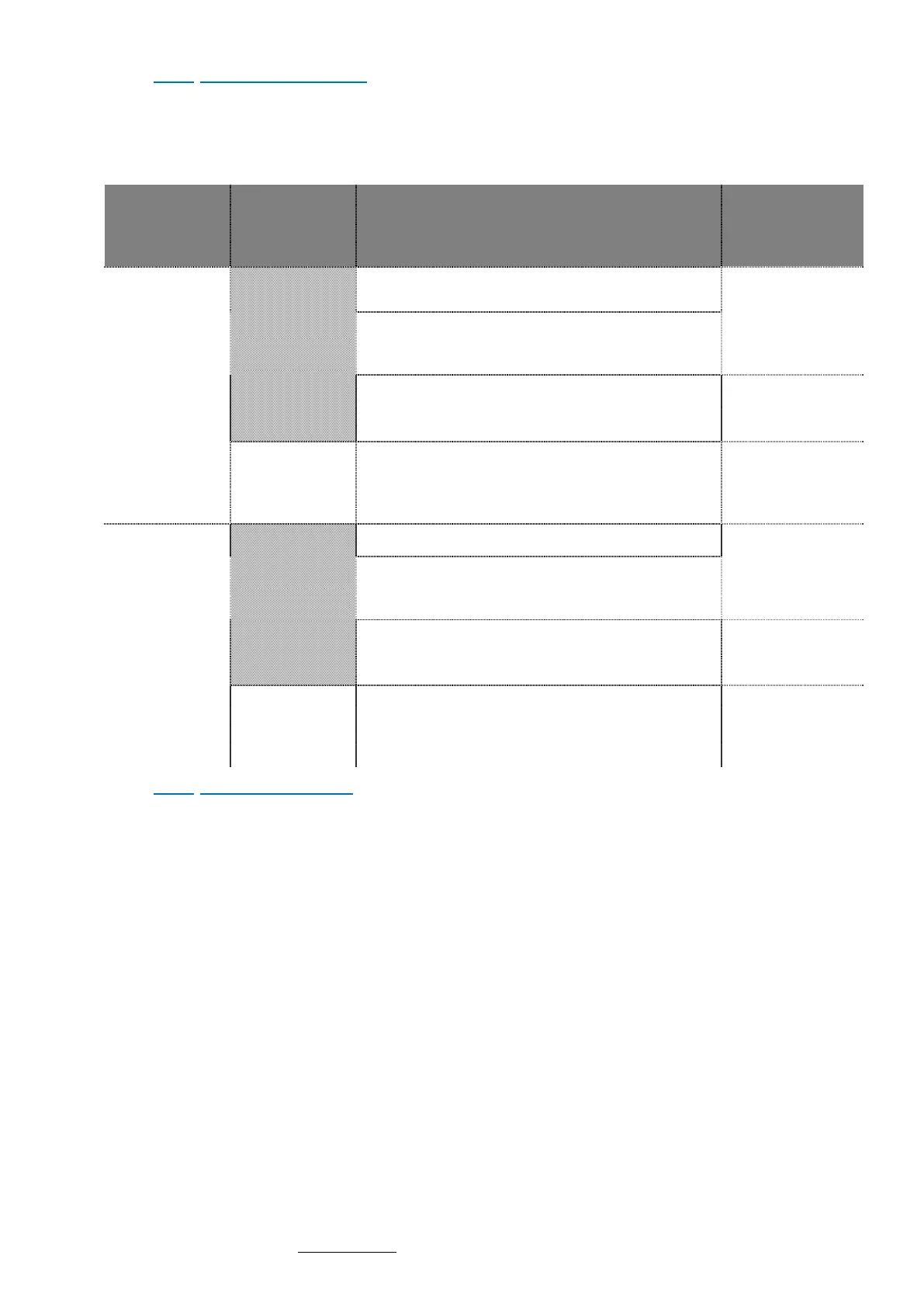
Different situations at the beginning of a cycle:
automatic taring
at start
restart if
suspended
authorization
weight value action
active
min empty weight < gross weight < max empty weight
taring then start
regardless the gross weight value IF
min empty weight = max empty weight = 0
other case
cycle cancelled,
error reporting
allowed
regardless the gross weight value IF last cycle was
suspended
cycle recovery from
last step
(taring possible)
inactive
min empty weight < gross weight < max empty weight
no tare, starting
from the net current
value
regardless the gross weight value IF
min empty weight = max empty weight = 0
other case
cycle cancelled,
error reporting
allowed
regardless the gross weight value IF last cycle was
suspended
cycle recovery from
last step
(no tare)
11.2 Cycle description
11.2.1 Flow rate control (optional)
eNod4-D includes a flow rate control system. It makes possible to check that the flow rate during the cycle is
sufficient. The device controls that the flow rate remains equal or superior to a minimal value. If it is not the case, an
output assigned to ‘dosing failure’ or ‘flow rate failure’ is set and the cycle is suspended if the cycle recovery option is
active else it is stopped.
The flow rate control is defined by two parameters:
a time interval (if = 0, the flow rate control is not used)
a minimal weight variation
11.2.2 Automatic taring at start
If the ‘automatic taring at start’ option is active, as soon as the ‘start delay’ has elapsed, the tare acquisition is done if
measurements are stable. If at the end of the ‘motion time out’ delay time, no stability can be found, the tare value is
equal to the last net current value.
11.2.3 Coarse feed effect neutralization time
This delay defined in milliseconds allows ignoring the effect of the coarse feed starting on the measurement signal and
especially the product impact into the receptacle. During this delay time, the flow rate control and the level
comparisons are inhibited.
11.2.4 Fine feed level
If the level (target weight – fine feed) is crossed the ‘coarse feed’ output is immediately disabled. It is ignored if only
the coarse feed is used.



 To Next Page