This document describes the STILL OCV 01 Multi-function Vehicle, an electric industrial truck designed for order picking and transporting goods on level ground. It is intended for indoor use, particularly in areas where small items need to be picked up or down from heights not easily reached without a ladder.
Function Description
The OCV 01 is an electric multi-function vehicle with a low overall height and platform height, allowing it to be driven through doorways and transported on lifts due to its low net weight. Its primary functions include:
- Order Picking: Designed to pick goods from shelves at various heights.
- Transportation: Capable of transporting small items on its storage table, with a maximum load indicated on the nameplate.
- Lifting and Lowering: The operator can lift and lower the platform from the operating platform. Mechanical emergency lowering is available if electrical functions fail.
- Driving: Features an electronic traction controller for smooth driving and powerful acceleration. The steering controller continuously monitors the steering wheel position, stopping the truck immediately in case of an error.
- Braking: Equipped with a service brake (activated by pulling back the travel switch), an electromagnetic spring pressure brake that acts as both parking and handbrake (electrically released and actuated by spring pressure), and an emergency stop switch.
- Safety Mechanisms: Rounded edges for safe handling, an emergency stop switch that disconnects all electrical functions, and gates that interrupt driving and lifting/lowering operations when open (except for mechanical emergency lowering). A dead man switch must be depressed for driving or lifting. Pressure-sensitive switches monitor the area between the drive system and operator platform, stopping lowering if occupied. The work platform door must be kept closed when raised and can only be opened when the platform is in the back position.
Important Technical Specifications
Based on the technical datasheet, the OCV 01 has the following specifications:
- Manufacturer: STILL GmbH
- Model Designation: OCV 01
- Power Unit: Battery (Lithium-ion, 24V/135AH or 24V/120AH)
- Operation: Order Picker
- Nominal Loading Capacity:
- Q1 (Storage Table): 90 kg
- Q2 (Additional Storage Table): 110 kg
- Q3 (Driver's Weight): 136 kg
- Wheelbase: 1095 mm
- Service Weight (with battery): 800 kg
- Axle Load (with load, front/rear): 590/410 kg
- Axle Loading (unladen, driving side/loading side): 380/420 kg
- Tyres: Solid rubber (drive side) and polyurethane (load side).
- Drive side: Ø210 X 70 mm
- Load side: Ø250 X 100 mm
- Auxiliary wheel: Ф74×48 mm
- Number of Wheels: 1x+2/2 (front/rear, X = drive)
- Track Width:
- Front (driving side): 545 mm
- Rear (loading side): 640 mm
- Dimensions:
- Height of mast, lowered (h1): 1375 mm
- Free lift (h2): 485 mm
- Lift (h3): 3620 mm
- Height of mast, extended (h4): 4100 mm
- Height of overhead guard (cabin) (h6): 1425 mm
- Seat height/standing height (h7): 285 mm
- Stand height, elevated (h12): 3000 mm
- Overall length (l1): 1440 mm
- Overall Width: 750 mm
- Ground Clearance (with load, center of wheelbase): 35 mm
- Turning Radius: 1260 mm
- Travel Speed (with/without load):
- H:0-500mm: 6/6.5 km/h
- H:500-1000mm: 3 km/h
- H:1000-2000mm: 2 km/h
- H:2000-3000mm: 1 km/h
- Lifting Speed (with/without load):
- Q3: 0.22/0.27 m/s
- Q1: 0.038/0.040 m/s
- Lowering Speed (with/without load):
- Q3: 0.31/0.25 m/s
- Q1: 0.040/0.038 m/s
- Max. Gradeability (laden/unladen): 1.8/1.8 %
- Service Brake: Electro-magnetic
- Drive Motor Rating (S2 60min): 0.65 kW
- Lift Motor Rating (S3 15%): 2.2 kW
- Battery Weight: 50 kg
- Energy Consumption (acc. to VDI cycle): 0.387 kWh/h
- Type of Drive Unit: DC
- Noise Level: 74 dB(A)
Usage Features
- Operator Platform: Designed for a single operator. Entry and exit require facing the truck and holding onto the frame. Safety gates close automatically behind the driver and lock when the platform is raised.
- Controls: Ergonomic thumb movements activate drive functions. Display units provide critical information like truck status, faults, battery capacity, and time. Control elements include a key switch, emergency stop switch, travel switch, right dead man switch, sensor switch, and steering wheel.
- Operating Conditions: Intended for indoor use on clean, dry, and even prepared ground (concrete, asphalt). Travel on inclines up to 5% gradient is only allowed if the platform is fully lowered, and with the load facing uphill. Ambient temperature range is +5°C to +40°C, with maximum air humidity of 95% non-condensing. Operation altitude is up to 2000 m.
- Load Handling: Small items can be placed on the storage table. Horizontal forces on the platform should not exceed 200 N. The center of gravity of the operator and load must remain within the vehicle's confines.
- Safety Protocols: Drivers must be trained and authorized, wear protective equipment, and be physically and mentally capable. The truck must not be used for pushing/pulling loads, on uneven ground with the platform lifted, or in outdoor/windy conditions. It is forbidden to climb on side rails or use it as a crane.
- Battery Charging: The lithium-ion battery is charged via an internal charger. The truck must be parked in a designated charging area. The charger cord is plugged into a standard 100V-240V, 3-phase, 50/60Hz wall outlet. The truck will not move while connected to the outlet. Charging indicators show the battery status (red for charging, green for end of charging, yellow flash for charger errors, solid yellow for battery errors).
- Emergency Lowering: The lift platform can be lowered manually in case of electronics failure or power loss by turning a knob located at the lower part of the truck.
Maintenance Features
- Service Intervals: Servicing and inspection operations are performed every 1000 operating hours (or six months) and every 2000 operating hours (or annually). Intervals should be reduced in dusty, temperature-fluctuating, or multiple-shift conditions.
- Daily Checks: Before use, operators must visually inspect the truck for damage, check battery connections, inspect the storage table, ensure load chains are tensioned, check for fluid leakage, inspect wheels, verify decal legibility, and test operating controls, safety gates, brakes, steering, hydraulics, travel function, lighting, and micro switch settings.
- Lubrication: Lubrication points for the hydraulic system (anti-wear hydraulic oil L-HM32 or L-HV32) and gearbox (grease MoS2) are specified. Sliding surfaces (steel channel and rollers, steering gear, large chain gear, chains, storage table rollers, caster, load wheels) also require lubrication.
- Hydraulic Oil: Check hydraulic oil level regularly. Only approved hydraulic oil should be used, and impurities must be avoided.
- Electrical System: Regular insulation testing is required annually according to DIN EN 1175 and DIN 43539, VDE 0117, and VDE 0510. Fuses (e.g., 200A for traction/lift/steer motor, 10A for controller) must be checked and replaced if necessary.
- Battery Maintenance: Lithium-ion battery cell covers must be kept dry and clean. Terminals and cable shoes should be clean and coated with dielectric grease. Non-insulated terminals must be covered with a non-slip insulation mat. Batteries should not be deep-charged and must be charged immediately when the charging signal appears.
- Decommissioning: For long periods of inactivity, the truck must be parked in a frost-free, dry location, jacked up to clear all wheels, cleaned thoroughly, and brakes checked. All non-painted mechanical components should be lubricated. The battery should be removed, recharged monthly, cleaned, and its terminals greased. Exposed electrical contacts should be sprayed with contact spray.
- Disposal: Packaging materials, components, and batteries must be disposed of according to regional and national environmental protection regulations. Lithium-ion batteries are special products and require specific handling for disposal, often involving authorized service centers.
- Spare Parts: Only original spare parts approved by STILL should be used to ensure safety and prevent damage.
- Troubleshooting: A guide is provided to help identify and rectify basic faults, with instructions to contact the manufacturer's service department for complex issues.

 Need help?
 General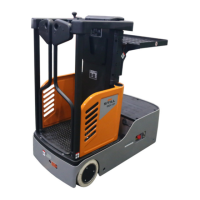

 To Next Page