83-517-000 Rev. A
CAUTION
COM (J1-12), VPGM_RTN (J1-22) and IPGM_RTN (J1-23) terminals of J1 connect
internally to the -Vout potential (-V). Do not connect these terminals to any potential
other than -Vout (-V), as it may damage the power supply.
CHAPTER 6 REMOTE ANALOG PROGRAMMING
6.1 INTRODUCTION
The rear panel connector J1 allows the user to program the power supply Output voltage and Output current
limit with an analog device. J1 also provides monitoring signals for Output voltage and Output current. The
programming range and monitoring signals range can be selected between 0 - 5V and 0 - 10V using the setup
DIP-switch SW1. When the power supply is in the Remote Analog programming mode, the serial communication
port (J3) is active and can be used to read the power supply operating parameters.
6.2 LOCAL/REMOTE ANALOG CONTROL
J1-9 (Figure 4-2, Item 5) accepts a TTL signal or Open-Short contact (referenced to J1-12) to select between
Local or Remote Analog programming of the Output voltage and Output current limit.
In Local mode, the Output voltage and Output current limit can be programmed via the front panel VOLTAGE
and CURRENT encoders or via the J3 RS-232/RS-485 port. In Remote Analog mode, the Output voltage and
Output current limit can be programmed by analog voltage or by programming resistors via J1-9 and J1-10 (refer
to Sections 6.4 and 6.5 for additional details). Refer to Table 6-1 for Local/Remote Analog control (J1-8)
function and Setup DIP-switch SW1-1, -2 settings.
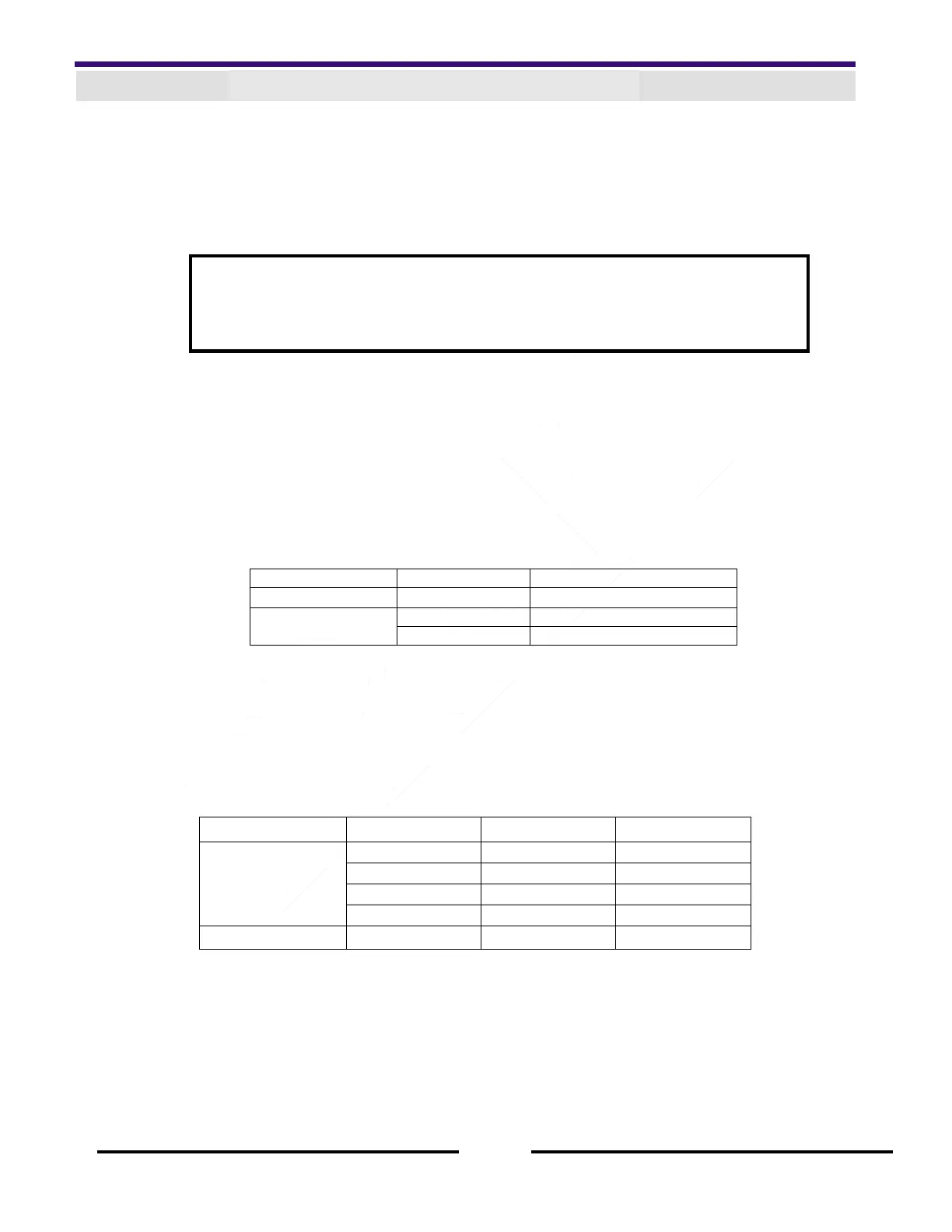
Table 6-1: Local/Remote Analog Control Function
6.3 LOCAL/REMOTE ANALOG INDICATION
J1-21 (Figure 4-2, Item 5) is an open-collector output that indicates if the power supply is in Local mode (front
panel) or in Remote Analog mode. To use this function, connect a pull-up resistor to a voltage source of 30VDC
maximum. Choose the pull-up resistor so that the sink current will be less than 5mADC when the output is in a
low state. Refer to table 6-2 for J1-21 function.
Table 6-2: Local/Remote Analog Indication



 To Next Page