28
4.5 Calibration
Before delivery ‘TERRATEST 4000 STREAM’ and ‘TERRATEST 6000 BLE’ are in standard calibrated accor-
ding to German ‘Technical Test Code for Soil and Rock Mechanics in Road Constructions TP BF-StB Part
B 8.4’. Calibration acc. to Austrian Test Specification RVS 08.03.04 is also available as an option. During
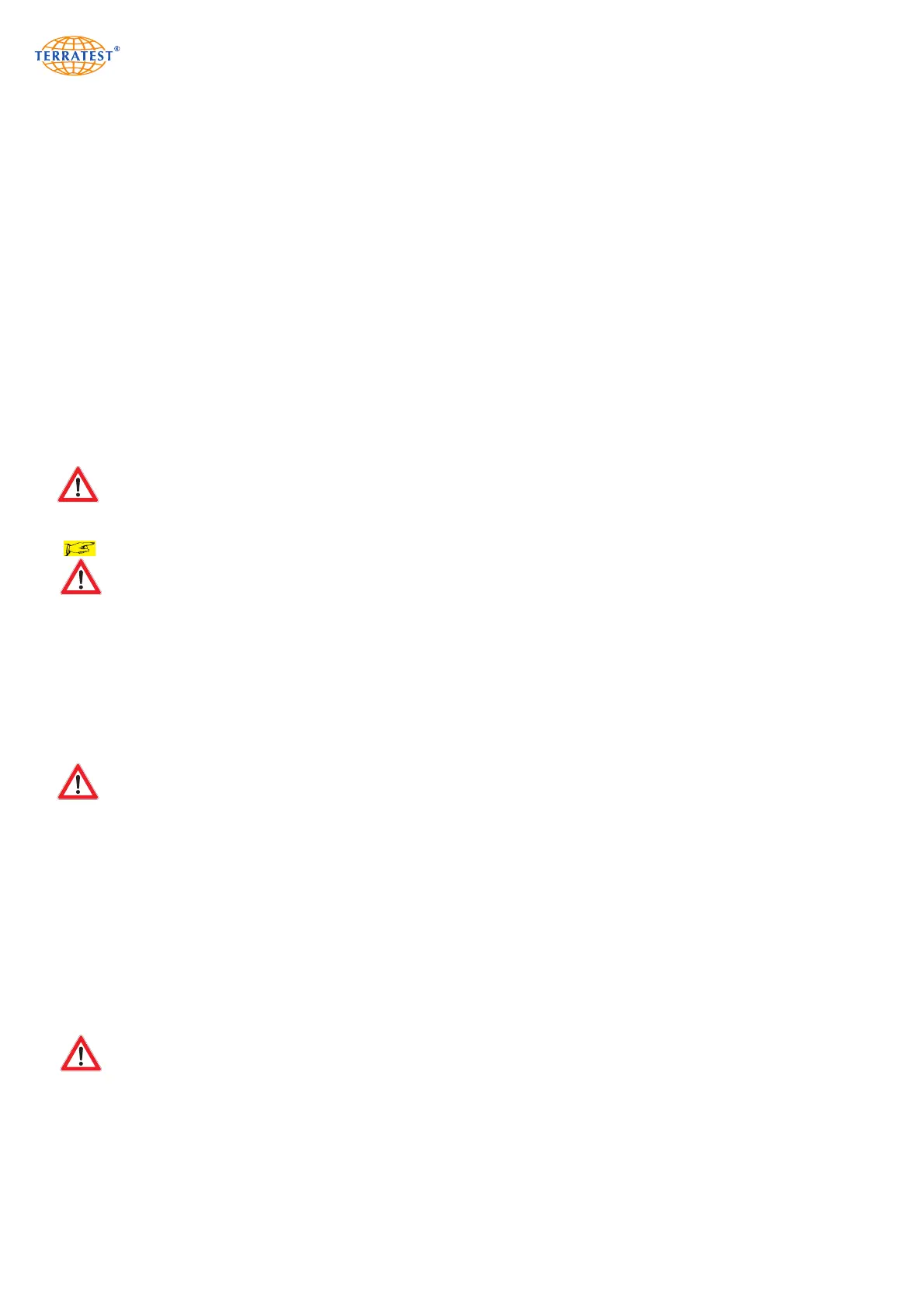
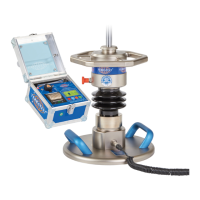
calibration all components of the device, such as the load plate with integrated sensor, the loading
device and the electronic testing computer, are attuned specifically to one another. After successful
calibration, respective calibration tags with the expiry date of the calibration are affixed to the load plate,
the loading device, and the testing computer. These calibration marks also contain the name of the
calibration institute and the BAST registration no. Each device is provided with a calibration certificate
which meets the requirements of the German standard TP BF-StB Part B 8.3. A precise test result can only
be guaranteed if the device is used as a single unit with all its corresponding parts. Identification plates
with the same four-digit serial number are located on the load plate, the drop weight and the testing com-
puter for this purpose. This serial number is also recorded on the calibration certificate. On the identifica-
tion plate of the drop weight the date of the last calibration and the respective drop height of the weight
in cm are also noted.
According to German standard TP BF-StB Part B 8.4 the device must be calibrated at least once a year at a
calibration institute accredited by the German Federal Research Institute (Bundesanstalt für Straßenwesen).
Test results of a device that has not been calibrated, or of a device with an expired calibration date, must
not be used for evaluating the bearing capacity of soil and rock. Abide by the mandatory calibration
intervals and ensure that the device is re-calibrated in due time.
4.6 12 Rules for Proper Use
1. Always perform a correlation measurement with the static plate load test. For every static plate load
test at least three dynamic tests must be performed.
2. The section examined by the device reaches down to a maximum of 40 cm in depth, depending on
backfill materials and subsoil.
3. Remove any loose material from the test area; create a smooth and level surface on which to place the
load plate. Ensure full and even contact between the load plate and the ground. In the case of soil
irregularities, spread a thin layer of sand on the surface and reduce the thickness of the layer by moving
the plate back and forth.
4. Keep the guide rod vertical and make sure that the plate does not move horizontally during the impact.
5. ATTENTION: The transportation lock must be unlocked before each drop. Catch the weight on the side
opposite the lock. No warranty for damages caused by improper use.
6. The decline of the test area must not be greater than 6°.
7. Pull on the plugs only, never on the measuring cable!
8. Never change the position of the release handle!
9. Before each test, make sure that the bottom side of the plate is clean and remove any material stuck to it.
10. The grain size of the material to be tested may be a maximum of 63 mm.
11. If the three settlement curves vary widely, re-compaction has occurred caused by the test.
12. Make sure that latching the drop weight into the release mechanism does not trigger an accidental
reading of the testing computer.
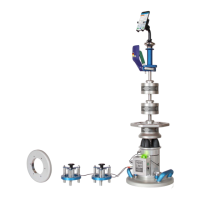
Only transport the loading device when the drop weight is in its ‘rest’ position at the bottom of the guide
rod and the transportation lock is locked. Any other way of transport is prohibited, and carries with it
considerable risk of accident due to the movement of the drop weight.


 To Next Page