The motorhome has been designed to provide the driver and passengers maximum comfort and conven-
ience while travelling safely from one place to another. It is the responsibility of the owner/operator/driver
to review the safety section at the front of this manual and the chassis manual before travelling in the
Review the chassis manual and previous sections of this manual before starting or driving the vehicle.
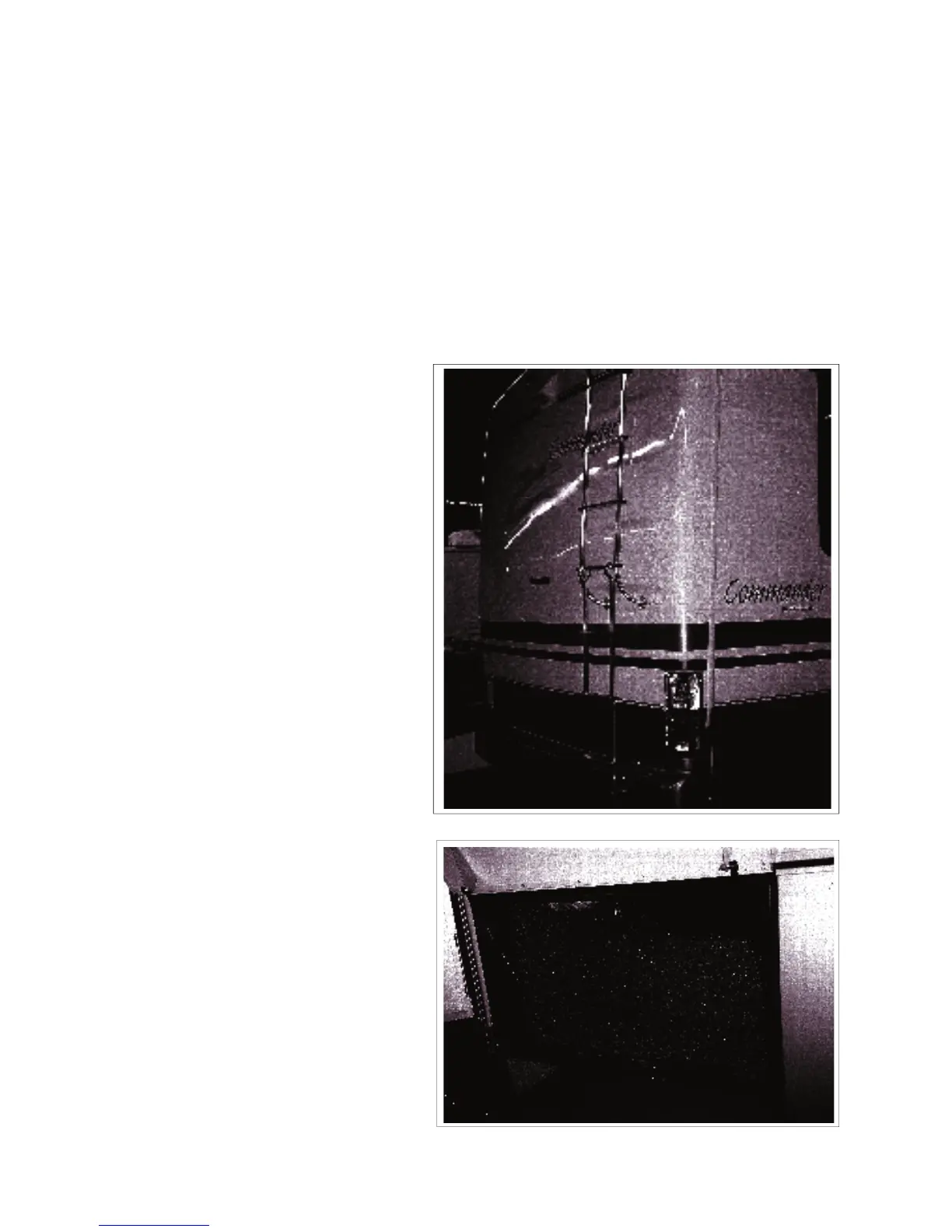
Baggage can be loaded on top of the roof
or in the bottom of the baggage compart-
ment. Do not exceed baggage area loading
or weight capacity and do not exceed vehicle
Your motorhome may be equipped with
an optional roof rack to accommodate light
weight articles. This weight should not
exceed 10 lb. per square foot or a maximum
of 100 lb.. Be sure each item is secured
to the roof rack and that no item extends
higher than the DOT limit (normally 13 feet 6
When the vehicle is parked, a cargo load of
100 lb. plus the weight of a 225 lb. person is
permissible for inspection, loading and main-
Again, the combined loaded weight of the
vehicle should not exceed the GVWR.
The motorhome is equipped with a number of
exterior compartments for carrying or storing
baggage or luggage. Each compartment is
designed with 165 lb. (75 kg) capacity.
Always secure your baggage and keep the
compartment doors locked when travelling.
COMMANDER / EMBASSY
Fig. 7-2 BAGGAGE COMPARTMENTS



 To Next Page