If the engine overheats while driving:
1. Pull off the side of the road and stop immedi-
3. Check for proper coolant level in the recovery
tank. The coolant level should be between the
“full” and “add” marks on the tank.
If the coolant level is low:
a. Check for leaks at hose connections,
throughout the cooling system. Make sure
the belts are tight and that the cooling fan
b. Add coolant to the recovery tank as soon
c. If coolant is being lost due to leaks; if the
fan belt is broken or too loose; if the red
warning light stays on, stop the engine
until the problem is corrected.
5. Check the radiator face for obstructions such
as a build up of bugs. Have a professional
service shop clean your radiator if obstructed.
6. Once the temperature gauge returns to normal,
resume driving, keeping an eye on the gauge.
Do Not resume driving until the problem has
been corrected and the temperature is normal.
Do not tow the motorhome in an attempt to
start it. The powertrain is not designed to
transmit torque to turn the engine over for
If the chassis battery does not have suf-
fi cient charge to start the engine, depress
and hold the battery boost switch to route
the coach batteries energy into the circuit
to start the engine. Release the switch
Refer to Section 8.5 “Jump Starting”.
When the vehicle breaks down, it should be
towed in for repair by an approved towing
service. If the vehicle breaks down on the
roadway, pull off the road and stop. Engage
parking brakes and turn on the hazard warning
lights. Place chocks by the wheels if it is not
Call an approved towing service to come and
get the motorhome. Be sure to tell the towing
service what kind of vehicle it is and its weight,
length, width and height. The towing company
will then dispatch a proper sized tow truck for
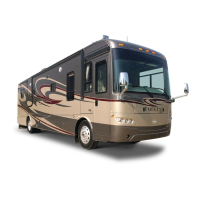
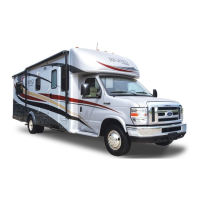
COMMANDER / EMBASSY
The drive shaft must be removed before tow-
ing. Failure to do so will result in damage to the
WARNING
Never remove the radiator cap when the engine is
hot. Scalding fl uid and steam can blow out and
WARNING



 To Next Page