5.1 Refrigerant Piping and Charging
WARNING! Risk of over pressurization of the refrigeration system. Can cause explosive discharge of high
pressure refrigerant, loss of refrigerant, environmental pollution, equipment damage, injury or death. This
unit contains fluids and gases under high pressure. Use extreme caution when charging the refrigerant
system. Do not pressurize the system higher than the design pressure marked on the unit's nameplate.
Consult local building and plumbing codes for installation requirements of additional pressure relief devices when isolation
valves are field installed. Do not isolate any refrigerant circuits from over pressurization protection.
NOTICE
Risk of oil contamination with water. Can cause equipment damage.
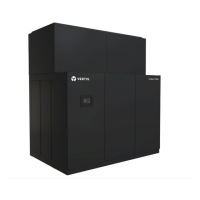
Vertiv™ Liebert® MCV systems require the use of POE (polyolester) oil. POE oil absorbs water at a much faster
rate when exposed to air than previously used oils. Because water is the enemy of a reliable refrigeration system,
extreme care must be used when opening systems during installation or service. If water is absorbed into the
POE oil, it will not be easily removed and will not be removed through the normal evacuation process. If the oil is
too wet, it may require an oil change. POE oils also have a property that makes them act as a solvent in a
refrigeration system. Maintaining system cleanliness is extremely important because the oil will tend to bring any
foreign matter back to the compressor.
Maximum Design Operating Pressure (High Side) 530 psig 3655 kPa Noted on the unit serial tag
Table 5.4 System Refrigerant Pressures
5.1.1 Refrigerant Piping Guidelines for Air Cooled Systems
• Field installed interconnecting piping should be properly selected based on local codes and unit labeling.
• Air cooled units and condensers ship with an inert gas holding charge. Do not vent the charge until all refrigerant
piping is in place, ready for connection to the unit and condenser.
• Use copper piping with a brazing alloy with a minimum temperature of 1,350°F (732°C), such as Sil-Fos. Avoid soft
solders, such as 50/50 or 95/5.
• Use a flow of dry nitrogen through the piping during brazing to prevent formation of copper oxide scale inside
the piping. When copper is heated in the presence of air, copper oxide forms. POE oils will dissolve these oxides
from inside the copper pipes and deposit them throughout the system, clogging filter driers and affecting other
system components.
• A pure dry nitrogen flow of 1-3 ft
3
/min (0.5-1.5 l/s) inside the pipe during brazing is sufficient to displace the air.
Control the flow using a suitable measuring device.
• Ensure that the tubing surfaces to be brazed are clean and that all burrs have been removed from the ends of the
tubes.
• Ensure that all loose material has been cleaned from inside the tubing before brazing.
• Protect all refrigerant line components within 18in. (460mm) of the brazing site by wrapping them with a wet
cloth or with a suitable heat-sink compound.
• Isolate piping from building using vibration isolating supports.
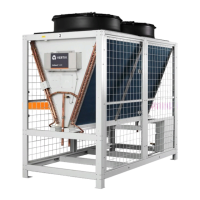
• The Vertiv™ Liebert® MCV heat rejection skid cannot be installed below the evaporator.
18 Proprietary and Confidential ©2024 Vertiv Group Corp. 5 Piping
Vertiv™ Liebert® MCV Installer/User Guide



 To Next Page