INSTALLATION INSTRUCTIONS
TR05A140.B1107
24
4.8 Flue connections
In order to ensure that the appliance functions correctly
and efficiently, only Warmflow-approved flue
components may be used with this appliance.
Traditional flue components cannot be used for
conveying exhaust fumes from condensing boilers.
Coaxial Balanced Flues
Where a horizontal balanced flue system is installed, the flue
must be positioned level, not sloping upwards or downwards.
The exhaust duct and air intake ducts have been designed so as
to minimise the build-up of condensate in the flue and protect
against the effect of the weather or the ingress of foreign bodies.
Twin Pipe Flues
For the exhaust discharge duct of a twin pipe system, the entire
length of the duct must slope upwards towards the exterior in
order to facilitate the flow of condensate back to the combustion
chamber, which has been specifically designed to collect and
drain the acidic condensate;
For the air intake duct of a twin pipe system, the entire length of
the duct must slope downwards towards the exterior to prevent
the entry of rainwater, dust or foreign bodies.
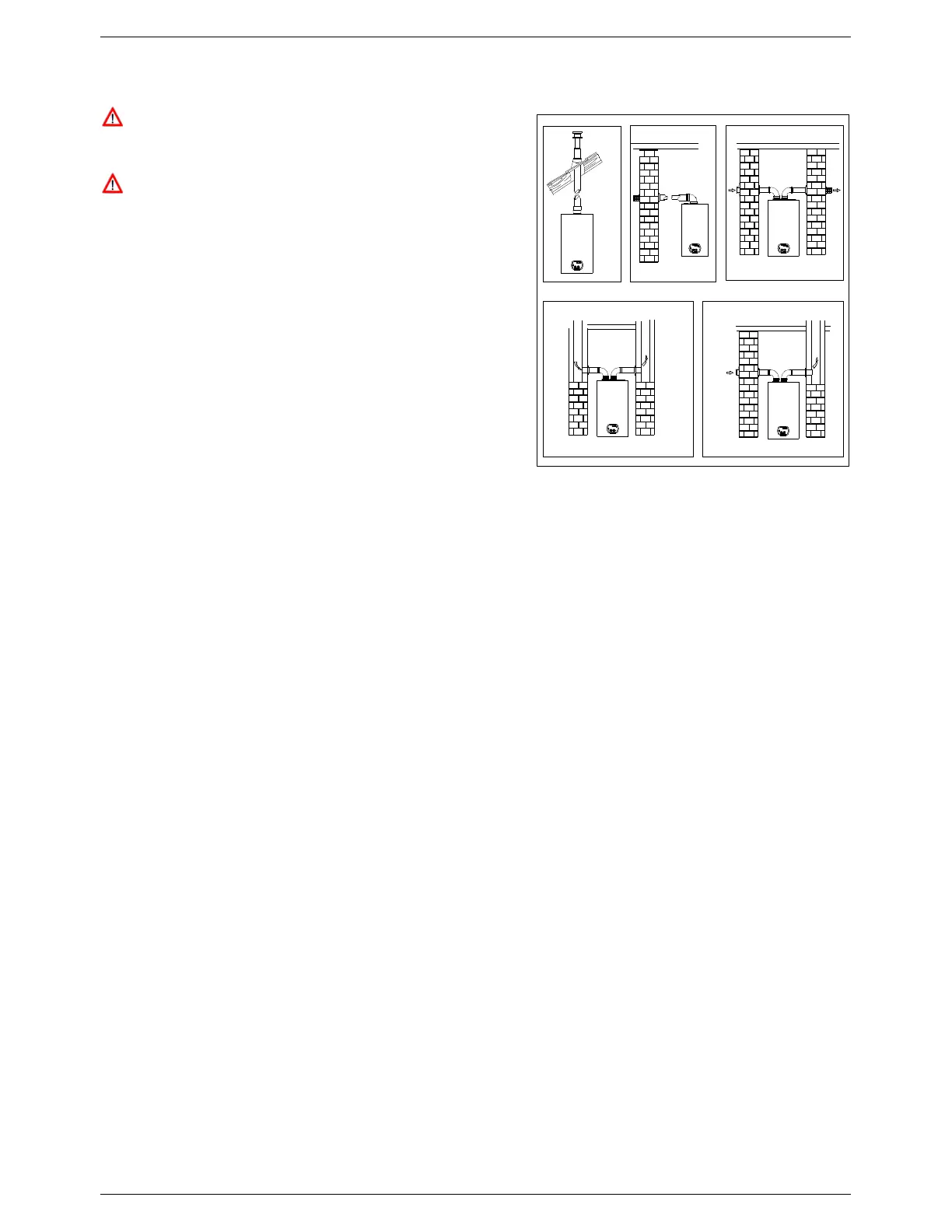
Reference Information – Type C Appliances
Exhaust flues for gas-fired appliances are classified at European level according to the method used for drawing
combustion air to and discharging exhaust fumes from the appliance. This classification applies to gas-fired
appliances in general.
The combustion circuit (air intake, combustion chamber, heat exchanger and fumes exhaust discharge) of Type C
Appliances is sealed off from the room in which the appliance is installed, i.e. room sealed. The combustion air
intake and the fumes exhaust discharge are connected directly to the outside.
40ON 50
0.5
60 70 80
807 060
0.5
50ON 4 0
C43 C83
C53
807 060
0.5
50ON 4 0
C13
40ON 50
0.5
60 70 80
40ON 50
0.5
60 70 80
C33
Figure 16: Appliance and flue types



 To Next Page