Controls / Operation CT Hoods and DD Ventilation
3-3
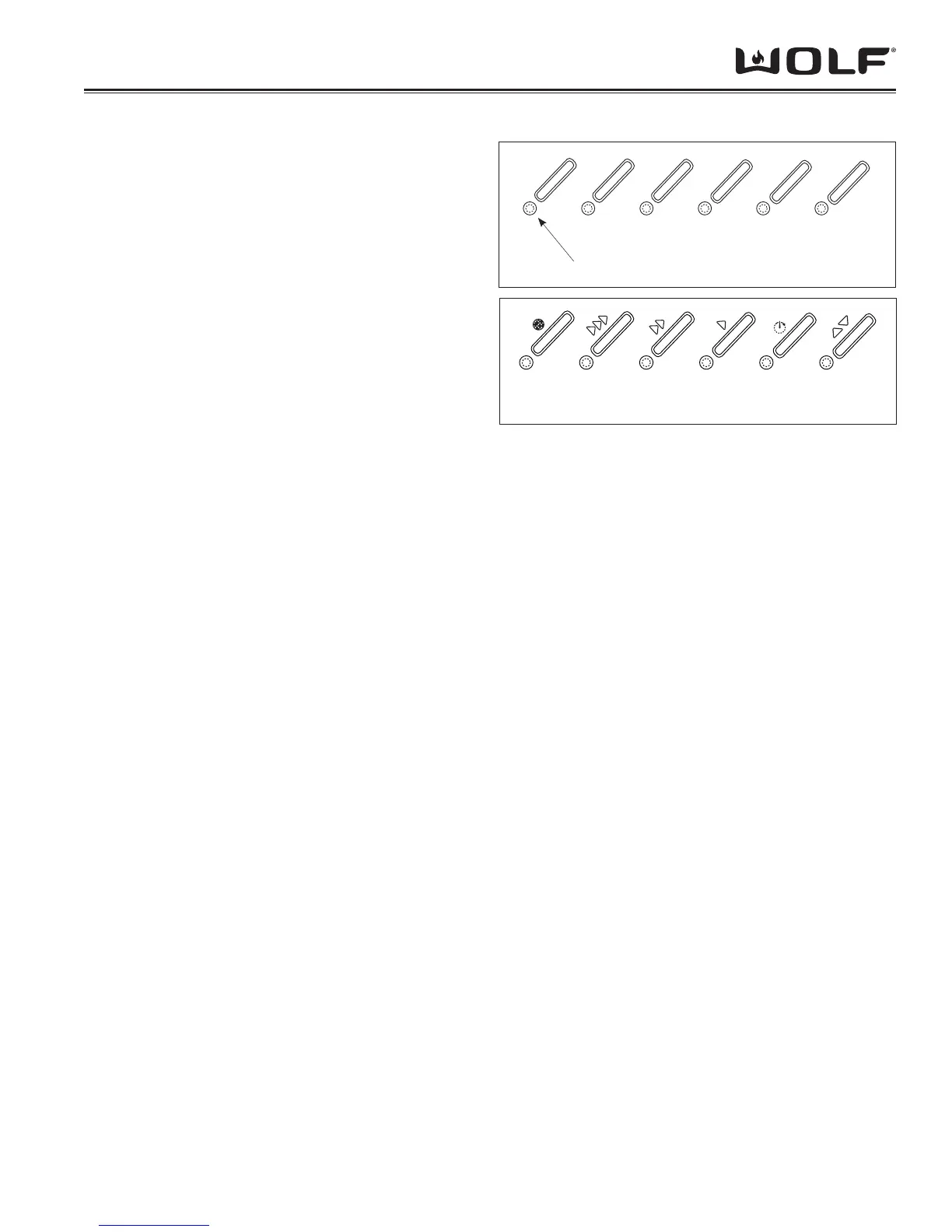
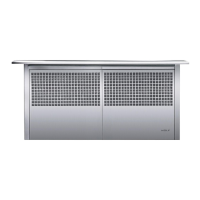
Wolf downdrafts utilize a 6 button control panel with LED
indicators, that is remotely mounted from the downdraft
unit.
Depress the UP/DOWN button (See Figure 2) to raise or
lower the downdraft chimney. The blower will activate at
the last speed used or medium at the initial use.
NOTE: Figure 3-3 describes the function of the internal
cam switches.
The HIGH, MEDIUM and LOW buttons control the op-
erational speed of the remote or internal blower. An LED
indicator below the button indicates the speed of blower
operation. (See Figure 3-2)
To turn the blower off, depress the button over the illumi-
nated LED.
The DELAY button activates the delay feature which
allows the blower to continue running at the selected
speed for programmed time period after the button is
depressed.
NOTE: The downdraft chimney will remain in the up posi-
tion when the delay mode is used.
When in Delay mode both the Delay LED and the corre-
sponding blower speed LED will be illuminated.
If the blower is on high speed when the Delay mode is
activated, the blower will continue to run at high speed
for 5 minutes. The blower will then run at low speed for 5
minutes before turning off.
If the blower is on medium speed when the Delay mode
is activated, the blower will continue to run at medium
speed for 5 minutes. The blower will then run at low
speed for 5 minutes before turning off.
If the blower is on low speed when the Delay mode is
activated, the blower will continue to run at low speed for
5 minutes and then turn off.
If the DELAY button is depressed when the blower is off
or the chimney is down, no action will take place.
If the DELAY button is pressed when the unit is already
in delay mode, the delay mode will be cancelled.
The FILTER button monitors the use of the hood. After
30 hours of use at medium speed the Filter LED will
illuminate. The fi lters should be removed and cleaned.
Depress the Filter button to reset the Filter clean LED.
FILTER
HIGH
MEDIUM
LOW
DELAY
UP/DOWN
LED Indicators
CLEANING
Most surfaces of Wolf ventilation hoods and downdrafts
are stainless steel or aluminum. These surfaces are
resistant to most stains, but are not totally impervious to
damage. Salt and some cooking liquids may pit and stain
these surfaces if not removed immediately.
NOTE: Be careful not to soak the control module. Al-
though the control module is sealed, excessive moisture
may cause damage to the electronic control.
Using a clean cloth or sponge, wipe with warm water
and mild detergent. Rinse and dry immediately. Apply
protective polish, always in same direction as grain.
NOTE: Do not use steel wool pads or abrasive cleaners;
they will permanently scratch the surface.
NOTE: Painted surfaces should be cleaned with warm
water and mild detergent only.
Spray Degreasers: For removing fi ngerprints and greasy
residue. Spray on a cloth and wipe surface. Buff dry im-
mediately to avoid streaking.
Protective Polish: Apply to surface to maintain luster and
to protect from some food stains.
Hard Water Stains: Use white vinegar and water.
FILTER CARE
Most surfaces of Wolf ventilation hoods and downdrafts
are stainless steel or aluminum. These surfaces are
resistant to most stains, but are not totally impervious to
damage. Salt and some cooking liquids may pit and stain
these surfaces if not removed immediately.
NOTE: Be careful not to soak the control module. Al-
though the control module is sealed, excessive moisture
may cause damage to the electronic control.
ELECTRONIC CONTROL FOR DOWNDRAFTS
Figure 3-2 Downdraft Controls
(Domestic)
(International “ICB”)


 To Next Page