2-9
Installation Information CT Hoods and DD Ventilation
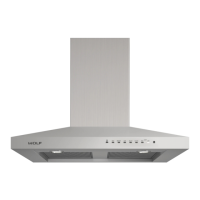
ISLAND HOOD INSTALLATION SPECIFICATIONS
AND PREPARATION FOR
MODEL IH4227
A straight, short duct run will allow 1.
the hood to perform more effi ciently.
Limit the number of elbows and tran-
sitions to as few as possible. Long
duct runs, elbows and transitions will
reduce the performance of the hood.
NOTE: All hoods must exhaust to the
outdoors.
NOTE: There is a possibility of noise is-
sues, if a short duct run is coupled with a
remote blower.
Always use metal ducting. Do not 2.
use fl ex ducting.
Wolf recommends installing a back-3.
draft damper in all installations
(included with hood). In cold weather
installations a back-draft damper is
necessary to minimize the back-fl ow
of cold air into the room.
Wolf recommends the hood be in-4.
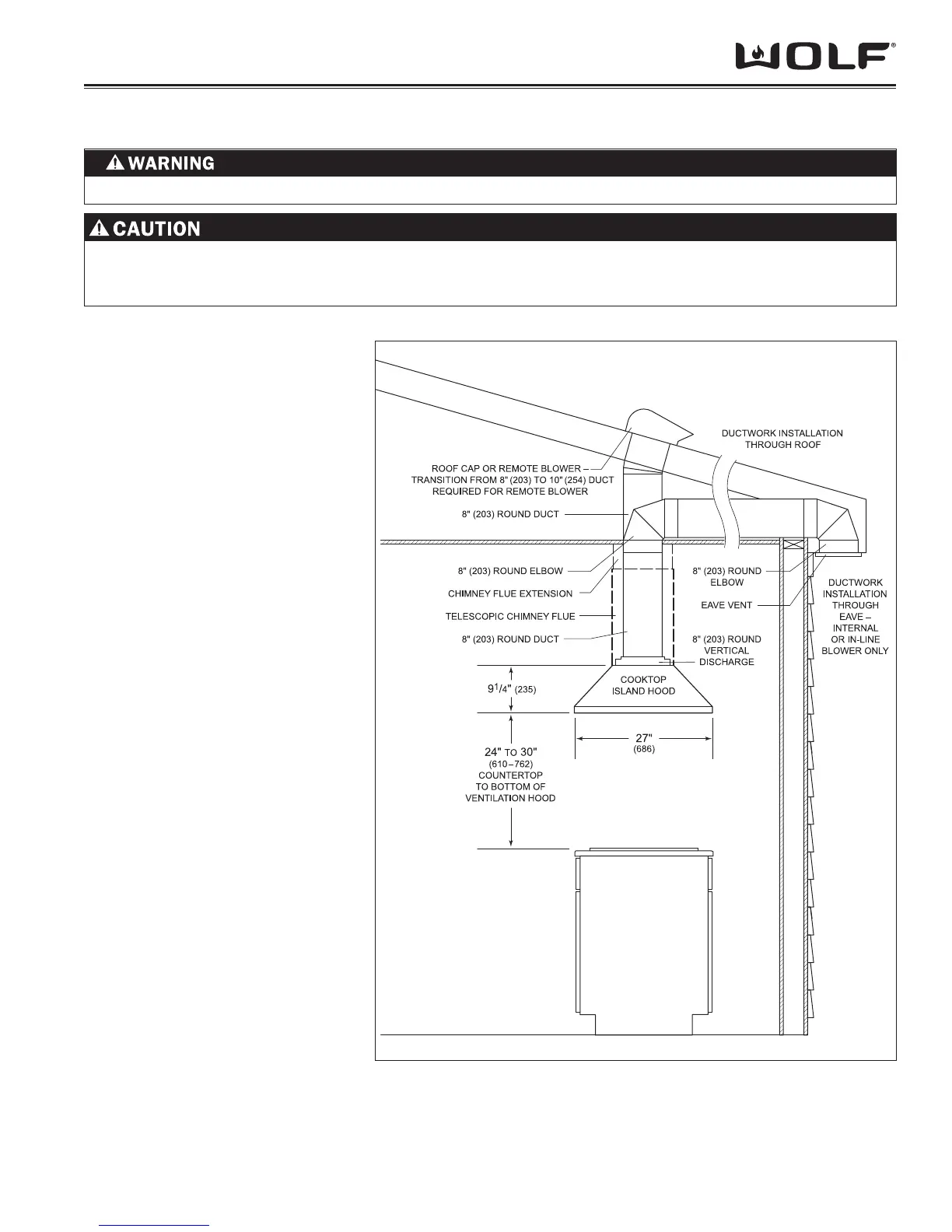
stalled 24” (610 mm) to 30” (762 mm)
above the cooking surface.
NOTE: Local building codes may require
the use of make-up air. Consult a local
HVAC professional for specifi c require-
ments.
ELECTRICAL REQUIREMENTS
Wolf cooktop wall hoods require a
separate, grounded, 110/120 VAC, 60 Hz
power supply. The service should have its
own 15 amp circuit breaker.
NOTE: You must follow all National
Electrical Code regulations. In addition,
be aware of local codes and ordinances
when installing your service.
TO REDUCE THE RISK OF FIRE, USE ONLY METAL DUCTWORK.
COOKTOP ISLAND HOOD INSTALLATION CONSIDERATIONS
TO REDUCE THE RISK OF FIRE AND ELECTRIC SHOCK, THIS VENTILATION HOOD SHOULD ONLY BE
INSTALLED WITH BLOWERS MANUFACTURED BY WOLF APPLIANCE INC. AND SPECIFIED FOR USE WITH
THESE VENTILATION MODELS.
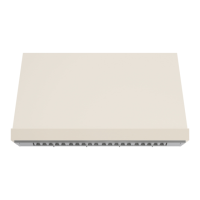
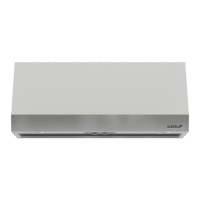
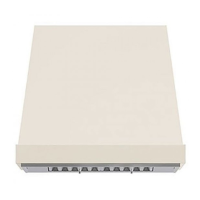
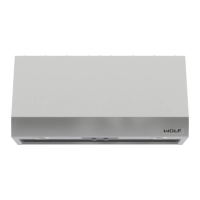
Figure 2-15 Island Hood Installation Considerations


 To Next Page