48 Electrical design and installation Manual Power Quality Filter PQFM
Step 2: Using the cable section A, the cable material and the network frequency as
entry points in Table 17, determine the multiplication factor X.
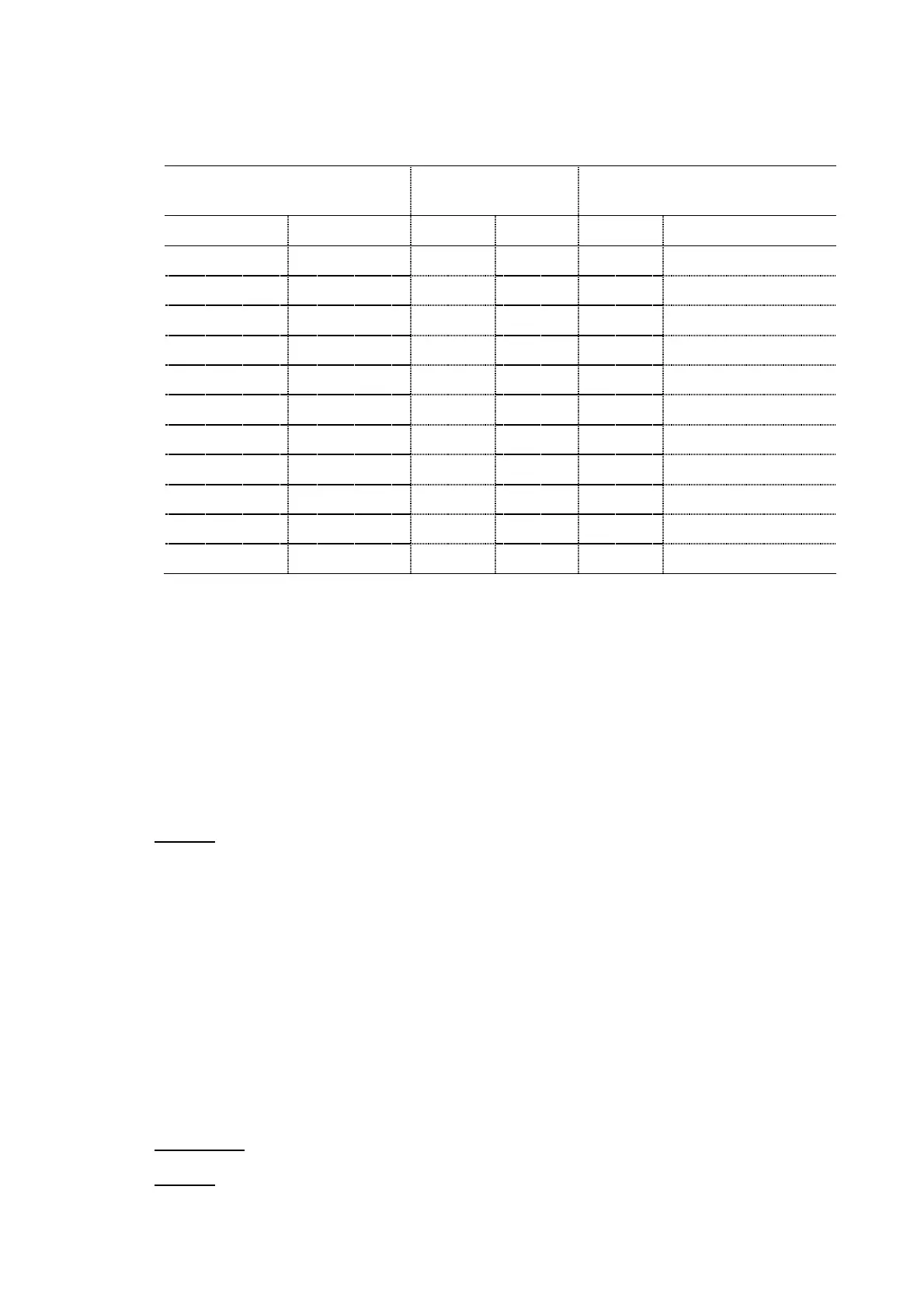
Table 17: Multiplication factors X for different cable sections
50Hz
16 6 1.00 1.00 1.00 1.00
25 4 1.00 1.01 1.00 1.01
35 2 1.01 1.01 1.01 1.02
50 1-1/0 1.01 1.03 1.02 1.04
70 2/0 1.02 1.05 1.03 1.06
95 3/0 1.04 1.08 1.05 1.10
120 4/0 1.05 1.11 1.07 1.14
150 300MCM 1.08 1.14 1.1 1.18
185 350MCM 1.11 1.19 1.13 1.23
240 500MCM 1.15 1.25 1.18 1.29
300 600MCM 1.19 1.31 1.23 1.36
Step 3: Determine in a conventional way the cable section A2 (mm²) for the current
rating found by multiplying Irms by X.
If the new cable section A2 is equal to the initially found cable section A, the right cable
section taking into account the skin effect has been found.
If the new cable section A2 is bigger than the initially found cable section A, steps
2 and 3 have to be repeated with the new values until the cable section A2 found is
equal to the cable section A.
Remark: During this process it may be found that more than one cable per phase is
needed. The process then has to be applied to each cable.
As an illustration of the cable sizing process consider the following example:
For a filter at 100 A/60Hz, cable material: Cu (copper)
Step 1: I
N
= 100A à cable section = 25 [mm
2
]
Step 2: multiplication factor for a 25 [mm
2
] copper cable at 60 Hz = 1.01
Step 3: I = I
N
x 1.01 = 100A x 1.01 = 101 A
Step 4: I = 101A à cable section: 25 [mm
2
]
This section is equal to the section found in the previous step.
Conclusion: one copper cable of 25 [mm
2
] per phase is sufficient.
Remark: The cable sizing process discussed in point 2 above only takes into account
the skin effect. Any further derating due to local standards and/or installation
conditions (e.g. distance between cables, number of cables connected in parallel …)


 To Next Page