ENGINEERING ETHE RNE T
1VLG5 00007 E 53
3.5.2 Technology
Metal cabling
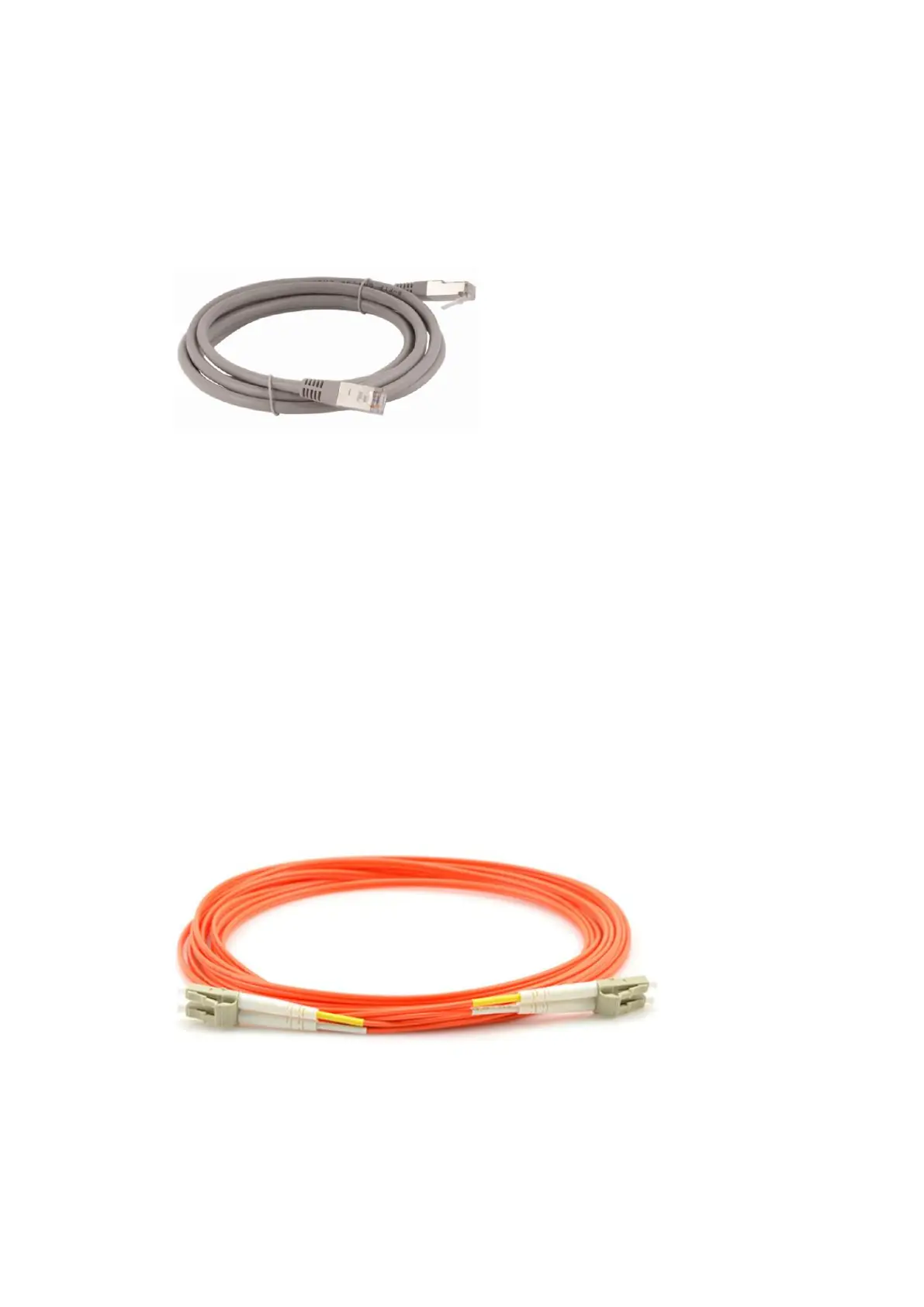
Metal cabling consists of four twisted pairs terminated with RJ-45 (not ruggedized) connect-
ors. The cabling should be shielded CAT6 S / FTP or better. In general, metal cabling is sus-
ceptible to electromagnetic interference, therefore should be only used inside the panels /
switchgear.
Figure 70: FTP patch cable terminated with RJ-45 connectors
Fiber Optic
The ABB standard for fiber optic in substations is the multi-mode fiber cable 50 / 125 µm, 1
300 nm. Multi-mode communication links are generally the most common due to the low cost
of fiber cabling and transceivers. When forming a multi-mode link, multi-mode transceivers
must be used as well as multi-mode cabling. Multi-mode fiber cable 50 / 125 µm embodies a
core size of 50 µm in diameter and a cladding size of 125 µm. 62.5 / 125 µm cabling is
generally the most popular one. The name “Multi-mode” comes from the fact that the light
used to transmit the data travels multiple paths within the core.
Patch cords
A patch cord or patch cable is an electrical or optical cable used to connect (“patch-in”) one
device to another one for signal routing. The patch cord is terminated by connectors on both
ends. Interconnections between protection relays and the Ethernet switch and between
Ethernet switches inside the substation are made with the help of patch cables. Patch cables
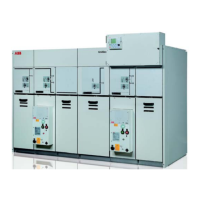
should be duplex; they have two fiber optics, one used for data transmission and the other
for data reception.
Figure 71: Fiber optic patch cable terminated with LC connectors



 To Next Page