56Alvium USB Cameras User Guide V4.6.1
Compliance, safety, and intended use
Product safety
To prevent material damage, read the following and understand how to safely
handle and operate the camera. Get helpful details about electrical connections
and learn how to optimize camera performance.
Electrical connections
ESD
Follow these instructions to avoid damage to the camera, including possible
damage to the sensor, see Possible damage to image sensors due to electrostatic
charge on page 60. ESD is dangerous for electronic devices, especially when tools
or hands get in contact with connectors and electronic components. We
recommend measures to avoid damage by ESD:
• Unpacking: Remove the camera from its anti-static packaging only when your
body is grounded.
• Workplace: Use a static-safe workplace with static-dissipative mat and air
ionization.
• Wrist strap: Wear a static-dissipative wrist strap to ground your body.
• Clothing: Wear ESD clothing. Keep components away from your body and
clothing. Even if you are wearing a wrist strap, your body is grounded but your
clothes are not.
• Bare board and open housing cameras: use a special ESD housing.
Cable connections
Micro USB 3.0 ports are intended for use in office applications. The USB3 Vision
Standard enhances the USB 3.0 Standard by adding a screw-locking mechanism to
better suit industrial applications. We recommend using only screw-lock USB
cables to avoid damage to cameras, enhancing the durability and performance of
cameras, and ensuring a seamless experience.
• Fasten screw-lock connectors before you start camera operation.
• Provide sufficient strain relief for all cable connections to avoid camera
damage.
PCBAs
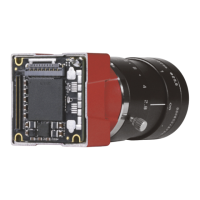
Alvium USB cameras enable access to PCBAs. Keep away from camera electronics
to avoid damage.
Compatible USB 3.0 cables
For USB 3.0 interface cables, industrial grade, with screw locks, Standard-A to
Micro-B, see www.alliedvision.com/en/products/accessories.


 To Next Page
 Loading...