Need help?
Do you have a question about the Andover Controls Infinity and is the answer not in the manual?
Explains the two main types of smoke control systems: dedicated and nondedicated.
Details the basic concept of using air pressure differentials to confine and vent smoke.
Discusses dividing a building into smoke control zones for effective smoke containment.
Compares the goals and operational differences between smoke and fire control systems.
Outlines the steps and factors involved in designing a smoke control system.
Explains how to develop a smoke control strategy for each zone in a building.
Covers factors like ceiling height and sprinkler systems affecting required pressure.
Explains the use of smoke barriers like walls, floors, and ceilings for zone separation.
Details requirements for smoke dampers, including UL standards and operational speed.
Discusses considerations for selecting fans and ductwork for smoke control systems.
Addresses critical placement of air inlets and outlets to prevent smoke recirculation.
Explains the use of dedicated systems for specific zones like stairtowers.
Details the design and operation of dedicated smoke control systems for stairtowers.
Provides guidance on allowable pressure differentials across doors for safe egress.
Explains compensated and non-compensated systems for stairtower pressure control.
Discusses challenges and considerations for smoke control in elevator shafts.
Covers the role of fire control systems and detectors in initiating smoke control.
Explains system priorities, manual overrides, and monitoring via the FSCS.
Details the manual controls and override capabilities of the FSCS panel.
Describes the meaning of various indicator lights on the FSCS panel.
Covers additional features like Master Key, Clear Faults, and Lamp Test buttons.
Specifies requirements for custom-building an FSCS panel to meet project needs.
Provides a block diagram and explanation of how system components connect.
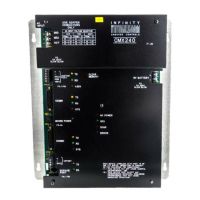
Details the central controller's functions, features, and connectivity.
Describes the SCX920S controller's capabilities for equipment and damper control.
Explains the TCX840 series controllers used for smaller equipment like VAV boxes.
Details the TCX850 series controllers for equipment requiring fewer I/O points.
Covers TCX860 series controllers with built-in motor/gear for damper control.
Describes TCX865 series controllers with built-in motor/gear for damper control.
Explains the network hub for the EnergyNet network and its media interface modules.
Details the repeater and network expander for the Infinet network.
Describes the fiber optic repeater for the Infinet network.
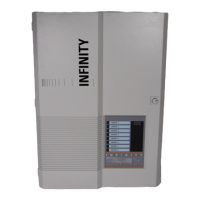
Covers the Firefighter’s Smoke Control Station, its purpose, and features.
Details the manual controls that override system equipment and their priority.
Explains the meaning of status indicator colors and their corresponding states.
Covers additional FSCS features like Master Key, Clear Faults, and Lamp Test.
Provides specifications for building an FSCS to meet system requirements.
Describes the Fire Panel's role in detecting alarms and communicating with the system.
Details how to connect the Fire Panel to the CX9200 using RS-232.
Explains the alternative Zoned Wiring method for connecting the Fire Panel.
Provides instructions for mounting and wiring the CX9200 and its peripherals.
Specifies length and conduit requirements for RS-232 cables connected to the CX9200.
Recommends port assignments for FSCS, Infinet, User Terminal, and Fire Panel.
Explains how to electrically isolate CX9200s using Energylink 2500 for system stability.
Covers mounting and wiring for Infinet controllers and repeaters.
Details specific requirements when using Infinet controllers in smoke control systems.
Outlines requirements for SCX920S in dedicated and non-dedicated smoke control applications.
Covers transformer requirements and wiring for TCX840 and TCX850 series.
Details transformer requirements and wiring for TCX860/865 series.
Specifies cable length and conduit requirements for Infilink 200 RS-232 ports.
Explains using Infilink 210 to electrically isolate Infinet controllers for smoke control.
Provides guidance on mounting the FSCS panel.
Discusses requirements for FSCS location, access, and physical design considerations.
Shows typical internal components of an FSCS panel.
Details the required field connections for installing an FSCS.
Explains how to connect the AC input voltage to the FSCS terminals.
Details how the CX9200 connects to the FSCS via RS-232.
Describes connecting a Fire Panel to the FSCS using Zoned Wiring.
Explains the function of the Q-Card processor for FSCS communications and controls.
Refers to manufacturer documentation for Fire Panel installation and wiring.
Step-by-step guide to accessing the CX9200 system via the Infinity window.
Explains how to interact with the system using commands and the main menu bar.
Details selections in the Main Menu Bar (View, Edit, Connect, Logout) and their functions.
Describes entering commands directly to the smoke control system.
Summarizes keystrokes for navigating Infinity system menus and attributes.
Instructions on how to log off the CX9200 system.
Describes how to assign users, set passwords, and define security levels.
Explains how to set the system date and time across the Infinity system.
Details the configuration of the CX9200's four communication ports.
Specifies settings for COMM1 to interface with the FSCS.
Details settings for COMM2 to connect to the Infinet Network.
Outlines default settings for COMM3 as a user terminal.
Explains how to configure COMM4 for Fire Panel communication using Xdrivers.
Describes the procedure for loading Xdriver files for Simplex or Edwards panels.
Explains how to create and edit system points (variables).
Details defining attributes like type, electrical type, and channel number for I/O points.
Describes creating numeric points, which can be used for various system variables.
Explains creating Xdriver points to get alarm and status info from the Fire Panel.
Covers creating and editing system files like Programs, Functions, and Data files.
Details the process of creating a new program or editing an existing one.
Presents a block diagram of a sample smoke control system for a four-story building.
Lists and describes programs, functions, and data files used by the CX9200.
Details programs for updating FSCS LEDs and reading override switches.
Updates FSCS LEDs and override numerics with Infinet controller point values.
Maps CX9200 numerics to the corresponding LED numbers on the FSCS.
Formats strings sent to the FSCS to update LEDs and the horn.
Processes strings from FSCS override switches and sets CX9200 numerics.
Controls the RS-232 interface between the CX9200 and the FSCS.
Includes functions to check communication status and detect equipment failures.
Checks the communication status of Infinet controllers.
Determines if fans and dampers reach desired states within NFPA 92A time limits.
Covers programs related to smoke control actions and system responses.
Controls the state of the FSCS audible annunciator based on system events.
Clears all faults when the FSCS Master Key is ON and CLEAR FAULTS is pressed.
Determines zones for smoke control and sets FSCS Alarm LEDs based on Fire Panel inputs.
Runs a weekly self-test on dedicated controllers to verify operation.
Describes the main sequencing program and initialization routines.
The primary sequencing program that calls other functions and programs.
Initializes the system after errors or system time changes.
Details how SMKDMPRS (SCX920S) controls smoke dampers on specific floors.
Responsible for controlling smoke dampers on floors 2, 3, and 4.
Checks if any damper outputs are overridden.
Controls the state of smoke dampers based on overrides, smoke, or HVAC modes.
Explains how SCX920S controls fans and dampers in Air Handling Units.
Details AHU1 control for floor 1, used for HVAC and smoke control.
Checks if any outputs of AHU1 are overridden.
Controls the state of AHU1's fans and dampers.
Details AHU2 control for floors 2, 3, and 4, used for HVAC and smoke control.
Checks if any outputs of AHU2 are overridden.
Controls the state of AHU2's fans and dampers.
Explains how TCX853 controls the stairwell fan for smoke control.
Details the control logic for the stairwell fan based on system conditions.
Controls the state of the stairwell fan based on overrides and smoke conditions.
Details control of VAV dampers for different floors using TCX controllers.
Explains VAV damper control for Floor 2 based on system states.
Controls the VAV damper on Floor 2 according to smoke and HVAC modes.
Explains VAV damper control for Floor 3 based on system states.
Controls the VAV damper on Floor 3 according to smoke and HVAC modes.
Explains VAV damper control for Floor 4 based on system states.
Controls the VAV damper on Floor 4 according to smoke and HVAC modes.
Provides generic operating instructions for the FSCS based on example configurations.
Explains the function of the MASTER KEY keyswitch on the FSCS panel.
Describes fan controls, override switches, and status/fail indicators on the FSCS.
Details damper controls, override switches, and open/closed/fail indicators on the FSCS.
Explains the ALARM indicator and override switch for each smoke control zone.
Describes status indicators on Infinet controllers like FAULT and OVERRIDE LEDs.
Details status indicators on the CX9200, including SCAN, ERROR, and programmable LEDs.
Lists status indicators for the SCX920S, including CPU, TD, RD, OVERRIDE, and +24V.
Describes status indicators for TCX series controllers, primarily CPU status.
Details status indicators for Infilink devices, including Power and Port LEDs.
Covers additional FSCS controls like CLEAR FAULTS and LAMP TEST pushbuttons.
Summary of FSCS indicators and controls for framing and adjacent mounting.
Explains the weekly self-test procedure for dedicated controllers and failure handling.
Guides on checking status, making changes, and troubleshooting via the CX9200 user interface.
Details using the Command window for system investigation and program backup.
Shows how to print current values of points and system variables using the 'Print' command.
Explains how to change point values directly from the Command window.
Describes how to halt or restart programs and control point updates for debugging.
Details methods for accessing Infinet controller points via path name or direct connection.
Explains how to save system configuration and reload programs from a file.
Describes how to view system messages, points, inputs, outputs, and other data.
 General
| Communication Protocols | BACnet, Modbus |
|---|---|
| Input Voltage | 24 VAC/DC |
| Operating Temperature | 32°F to 122°F (0°C to 50°C) |
| Memory | 1MB RAM |
| I/O Options | Universal Inputs |
| Controller Type | Building Automation System (BAS) Controller |


 To Next Page