The Fundementals of Smoke Control
Andover Controls Corporation 1-17
TOC
Ensuring Doors Can Be Opened
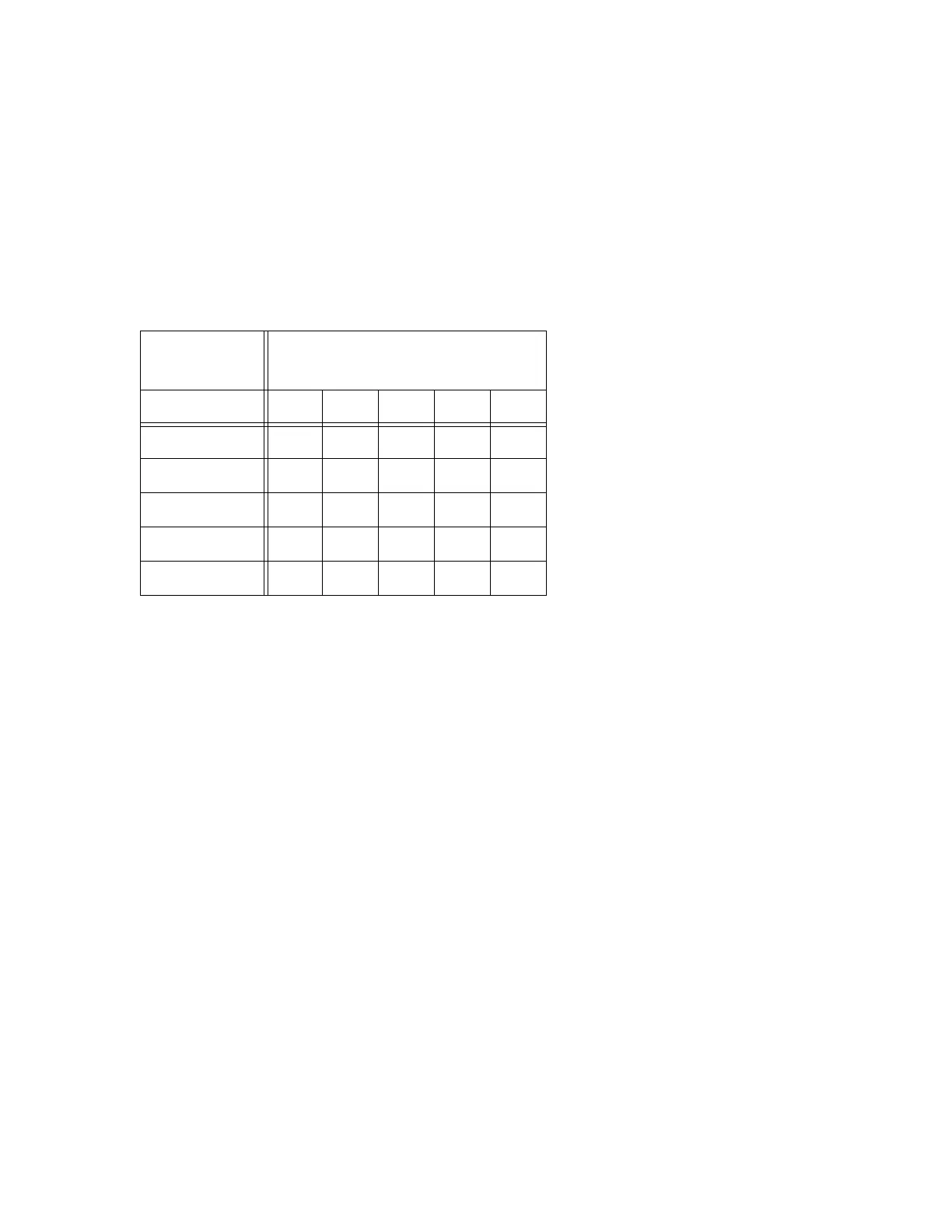
The table below shows the maximum allowable pressure differential
across a door in inches water gauge based on how wide the door is and
how much force the automatic door closing mechanism exerts. At the
pressures shown in the table, the door requires 30 lbf (pound of force) to
open, the maximum limit suggested by the NFPA Life Safety Code.
The table above assumes a door height of 7 ft and a distance from the
doorknob to the knob side of the door of 3 in. If your door does not meet
these requirements, or has opening hardware other than a doorknob,
such as panic hardware, then refer to the ASHRAE publication Design
of Smoke Control Systems for Buildings for a formula to calculate the
proper opening force. The door widths in the table are only valid for
doors that are hinged at one end. For other types of doors, see the
ASHRAE document.
Many door closers vary the amount of force as the door opens. They
provide less resistance in the early stages of opening the door than they
do later, when the door is almost fully open. The force to open the door
shown in the previous table represents the force needed to open the door
only enough to let air flow through the opening. Once air is able to flow,
the force exerted by the difference in air pressure on the door lessens.
Therefore, when calculating the force required to open the door, you
may need to lower the door closer force.
Table 1-2. Pressure Differential Across Doors
Door Closer
Force (lbf)
Pressure Differential for Various
Door Widths (inches)
32 in 36 in 40 in 44 in 48 in
6 0.45 0.40 0.37 0.34 0.31
8 0.41 0.37 0.34 0.31 0.28
10 0.37 0.34 0.30 0.28 0.26
12 0.34 0.30 0.27 0.25 0.23
14 0.30 0.27 0.24 0.22 0.21
Technical Manuals Online! - http://www.tech-man.com



 To Next Page