3. Getting started
3. GETTING STARTED
Overview
• Environmental Condition Check
•BasicWorkflow
3.1 Environmental Condition Check
Environment condition c heck
For installations in environments whe re the device is subject to excessive dust, then it is highly advisable and desirable to have this
dust rem oved prior to it reaching the device clean air supply. Devices or structures to extract or shield excessive dust well away
from the dev ice are a prerequisite; if this is not a f easible solution then measures to r elocate the device to a clean air enviro nment
should b e considered.
It is the customer’s responsibility to ensure at all times that the dev ice is protected from the harmful effects of hostile airborne particles
in the environment of the device. The manufacturer reserves the right to refuse repair if a d
evice has b een subject to negligence,
abandon or improper use .
Ambient temperature conditions
Max. ambient temperature : +40°C or 104°F
Min. ambient temperature: +0°C or 32°F
Storage temperature: - 10°C to +60°C (14°F to 1 40°F)
Humidity Conditions
Storage: 0 to 90% relative hum idity, non-condensing
Operation: 0 to 85% relative humidity, non-condensing
Environment
Do not install the devic e in a site near hea t s ources su ch as radiators or air ducts, or in a place subject to direct sunlight, excessive
dust or hum idity. Be aware that room heat rises to the ceiling; check that temperature near the installation site is not excessive.
3.2 Basic Workflow
Before using CS-100
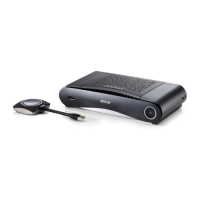
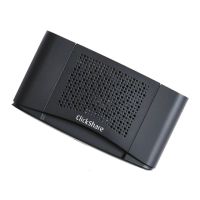
1. Unpack the ClickShare components an d ac cessories from the box.
For a detailed o verview of the content of the CS-100 box, see "About the CS -100", page 5
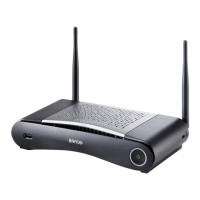
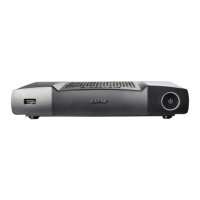
2. Install the Ba se Unit in the meeting room using one of the 2 possible installation methods.
For more information on the installing procedures, see "CS -100 Installation", p age 13
3. Connect the video cable between the Base Un it and the display.
4. Connect the audio from the Base Unit to the m eeting room’s sound system (only r equired for audio via jack).
5. If configuration via a network is needed, connect a network c able betw een the Bas e Unit and the local network (if not yet done
to power the B ase Unit).
6. Connect t he Base Unit to the mains power.
For more information "Power connection", pag e 15,
7. If desired, configure CS-100 via the Con figur ator.
For more information on the different w ays to configure CS-100, see "CS-100 Configurator", p age 21.
For more inform ation on using CS-10 0, refer to the CS-100 User G u ide. This manual can be found on Barco’s
website w
ww.barco.com/clickshare Click on Visit the ClickShare product page and go to tab D ownloads..
R5900022 CS-100 16/02/2016 11



 To Next Page