1-14
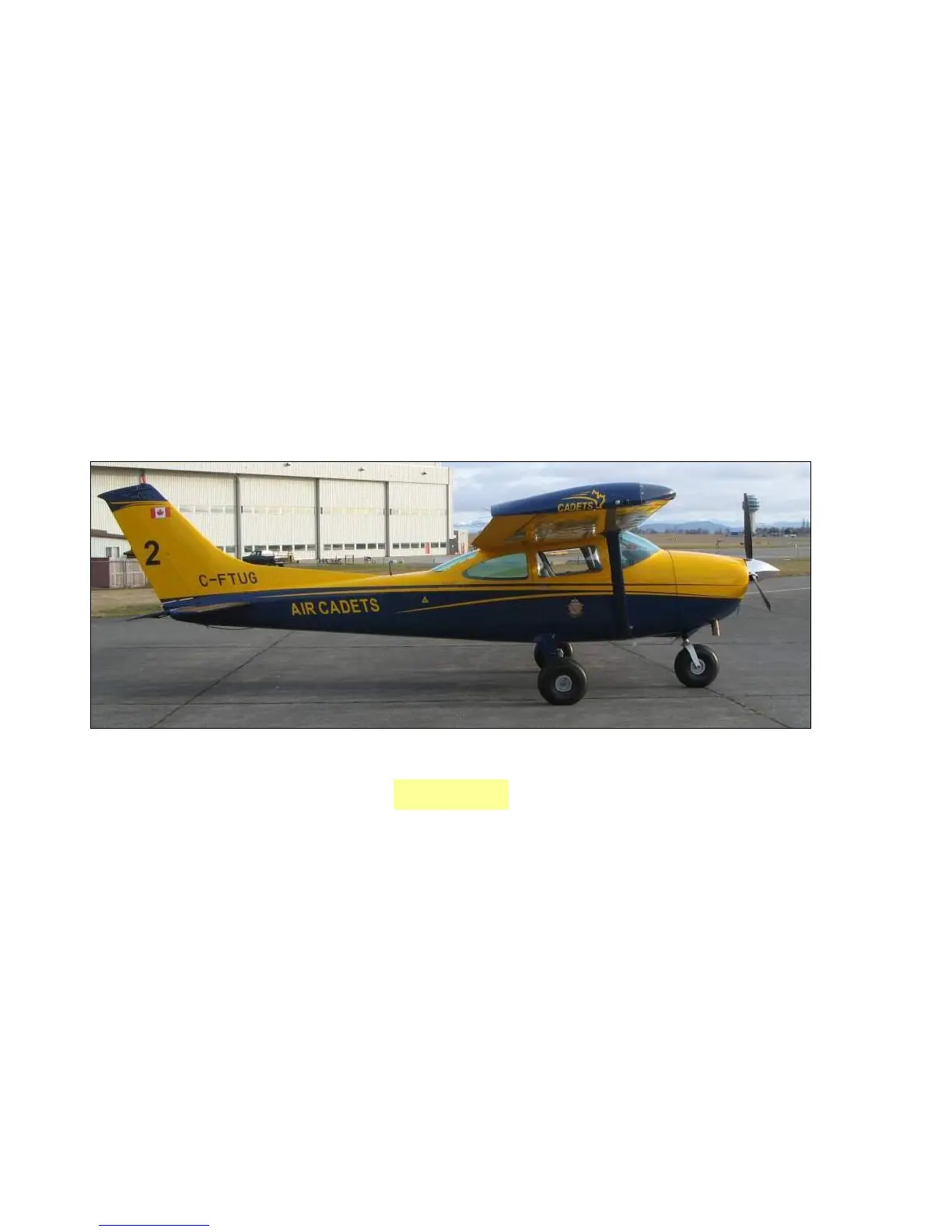
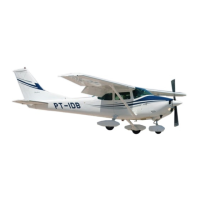
21. The fixed, tricycle landing gear consists of tubular spring-steel main landing gear struts
enclosed by streamlined fairings. The nose gear strut is a conventional air / oil strut
incorporating a shimmy dampener.
22. The aircraft is equipped with an Airglas Inc. nose fork assembly to permit the use of an
8.50-6 tire. This fork increases the length of the nose fork by approximately 4 inches, and does
increase the risk of wheel-barrowing compared to a standard C182. The nose wheel is
steerable through a spring-loaded steering bungee connected to the rudder pedals. The rudder
pedals will turn the nose wheel through an arc of ±11º of centre. By applying brake, the degree
of turn may be increased to a maximum of ± 29º of centre. Through the use of brakes, the
aircraft can be pivoted about the outer wing strut fitting, achieving a turn radius of
approximately 27 feet.
The extended nose fork assembly increases the potential for wheel-
barrowing compared to a standard C182.
23. All three wheels are equipped with 8.50-6 tires with tubes, inflated to 30 psi. The
hydraulic brake system is comprised of two master cylinders, each incorporating a small
reservoir and located immediately forward of the pilot’s rudder pedals, single-disc dual calliper
brake assemblies, and interconnecting brake lines. Brakes are actuated by applying pressure
to the top of the rudder pedal(s).



 To Next Page