 Need help?
Do you have a question about the Crestron IV-CAMHK-12-SLVR-1B and is the answer not in the manual?
 General
| Brand | Crestron |
|---|---|
| Model | IV-CAMHK-12-SLVR-1B |
| Category | Digital Camera |
| Language | English |
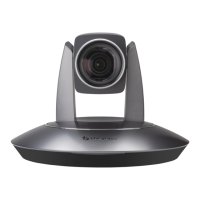
Lists key features like tracking, framing, switching, side-by-side dialog, range, operation, video quality, and audio compatibility.
Explains how the camera uses voice and facial recognition for automatic switching to the active speaking participant.
Details camera compatibility with various audio devices and the echo cancel audio input feature.
Describes the camera's use of a Sony Exmor CMOS sensor for 1080p60 video output via 3G-SDI or HDMI.
Lists compatible conferencing platforms like Microsoft Teams, Zoom Rooms, Cisco WebEx, MediaSite, and Panopto.
Explains configuration of up to 256 pan, tilt, and zoom presets for camera positioning.
Mentions VISCA over IP control and 1B Cam Manager Software for configuration.
Details the camera's connectors and indicators on the front and rear.
Explains the function of DIP switches for overriding OSD and forcing resolution settings.
Describes the software hub for configuring, monitoring, and controlling 1 Beyond IP cameras.
Details image sensor, recommended range, focal length, field of view, focus system, illumination, gain, white balance, exposure, presets, serial control, and protocols.
Specifies the tilt/pan angles, tilt/pan speeds, and optical/digital zoom capabilities.
Lists Ethernet port details and available video output types.
Covers video outputs, signal formats, IP video compression, and streaming resolution.
Details IP audio compression and audio input/output types.
Specifies power requirements (voltage, wattage).
Lists operating temperature range.
Describes mounting options, color, and dimensions.
Provides the physical dimensions of the camera.
Lists the items included in the product packaging, including the camera and accessories.
Guides on installing the camera using the shelf mount for stability and optimal tracking.
Provides guidance on camera placement for optimal face detection and framing up to 25 ft.
Instructions for connecting the camera to power using the provided adapter.
Details the requirement for network connection for initial configuration.
Explains connecting the camera via HDMI or SDI to conferencing devices.
Highlights the need for an echo cancellation signal for proper video conferencing.
Outlines the requirements and steps for integrating the camera with Zoom Rooms software.
Lists the minimum system requirements for the 1 Beyond Camera Manager software.
Guides on setting up the 1 Beyond Camera Manager software on a computer.
Provides steps to download and install the 1 Beyond Camera Manager software.
Describes how to use the HOME button to return the camera to its neutral position.
Explains how to select one of up to four cameras for control.
Details how to adjust focus using the IR remote (Auto, Manual, Close, Far).
Explains how to adjust iris using the IR remote (default, open, close).
Instruction on how to enter/exit the OSD menu.
How to enable/disable the display of pan, tilt, or zoom values.
Instructions for inputting numbers for calling/storing presets.
How to cancel a number input or return to the previous OSD menu.
How to put the camera into or out of standby mode.
Explains the functions of F1 (Enable Tracking) and F2 (Disable Tracking).
How to activate predefined camera movement patterns.
How to activate/deactivate Backlight Compensation.
How to zoom in or out using the IR remote.
How to return to the previous page in the OSD menu.
How to confirm menu selections.
How to control pan/tilt or navigate the OSD menu.
How to call, store, or erase camera presets using numbered inputs.
How to confirm menu selections.
Step-by-step guide to configure Windows Stereo Mix for audio routing to the camera.
Instructions for using Voicemeeter software for audio routing if Stereo Mix is unavailable.
Guidance on routing audio from external hardware like Dante or DSPs to the camera.
How to add cameras to the Camera List within the software interface.
Steps to scan the network for 1 Beyond cameras and identify them.
How to change camera network settings like IP address and connection type.
How to interpret camera connection status messages in the software.
Overview of the Camera Configuration dialog box and its main sections.
Instructions for performing firmware updates on the camera.
Details on configuring network settings like IP, mask, gateway, and ports.
How to adjust video stream settings like resolution, bit rate, and coding type.
Configuration for broadcasting video streams to RTMP destinations.
How to change camera name, password, and manage NTP settings.
Setting up secondary connections and protocols for control devices.
How to view live video streams from the camera in the software.
Using the PTZ controls to manually move the camera.
How to define the area where the camera detects motion for tracking.
How to define areas within the tracking zone to ignore for facial detection.
Setting the default camera position when no presenters are detected.
Setting the default shot switched to when remote participants speak.
Adjusting camera resolution, baud rate, protocols, and device address.
Using debug mode to verify camera operation and detection algorithms.
Limiting the tracking area to specific zones, like side seating, for better performance.
Settings influencing tracking behavior and room environment adjustments.
Controls how quickly facial detection scans and how facial detection occurs.
Determines the camera's distance from framed subjects and adjusts zoom.
Sets the maximum zoom limit for framing distant participants.
Defines camera behavior when no presenters are detected (e.g., return to preset).
Determines if the camera tracks or remains static when powered on.
Network settings for control via external hardware or software.
Adjustments for off-center or misaligned camera shots.
Correcting the alignment of PTZ cameras relative to wide-angle cameras.
Calibrating audio location to correct skewing in acoustically reflective rooms.
Accessing and navigating the camera's integrated on-screen menu.
Detailed breakdown of video and exposure settings available in the OSD menu.
Adjusting white balance modes (Auto, ATW, One Push, Manual) and color settings.
Adjusting camera movement speed and ratio speed.
Enabling side-by-side dialogue view for participants.
Information on serial wiring using RS-485 and RS-232 ports.
Lists proprietary camera functions mapped to fixed presets for backward compatibility.
VISCA commands to start or stop tracking on the camera.
VISCA commands to tilt PTZ cameras backward for privacy when not in use.
Understanding ACK and Completion messages for command execution status.
Identifies power supply issues and their corrective actions.
Addresses insufficient power or mechanical failures and their solutions.
Covers incorrect IP settings or power issues preventing camera visibility.
Solutions for connection failures due to IP settings or network usage.
Addresses device refusal due to firmware issues or cable problems.
Troubleshooting incorrect subnet settings or RTSP stream configuration.
Solutions for video stream issues related to network bandwidth or bit rate.
Rectifying issues with serial communication settings or cables.
Troubleshooting power supply or video cable issues causing signal loss.
Correcting off-center shots through position correction.
Addressing issues where tracking zones are not set or audio positioning is incorrect.
Ensuring tracking is enabled and wide-angle cameras are not obscured.
Solutions for controllability issues related to serial settings or advanced configurations.
Adjusting white balance settings to correct color tints.
Calibrating PTZ cameras or addressing mechanical failures causing off-axis tracking.
Provides links to Crestron's support, resource library, and online help.
Guidance on how to search for product certificates.

 To Next Page