- 123 -
Maintenance Section
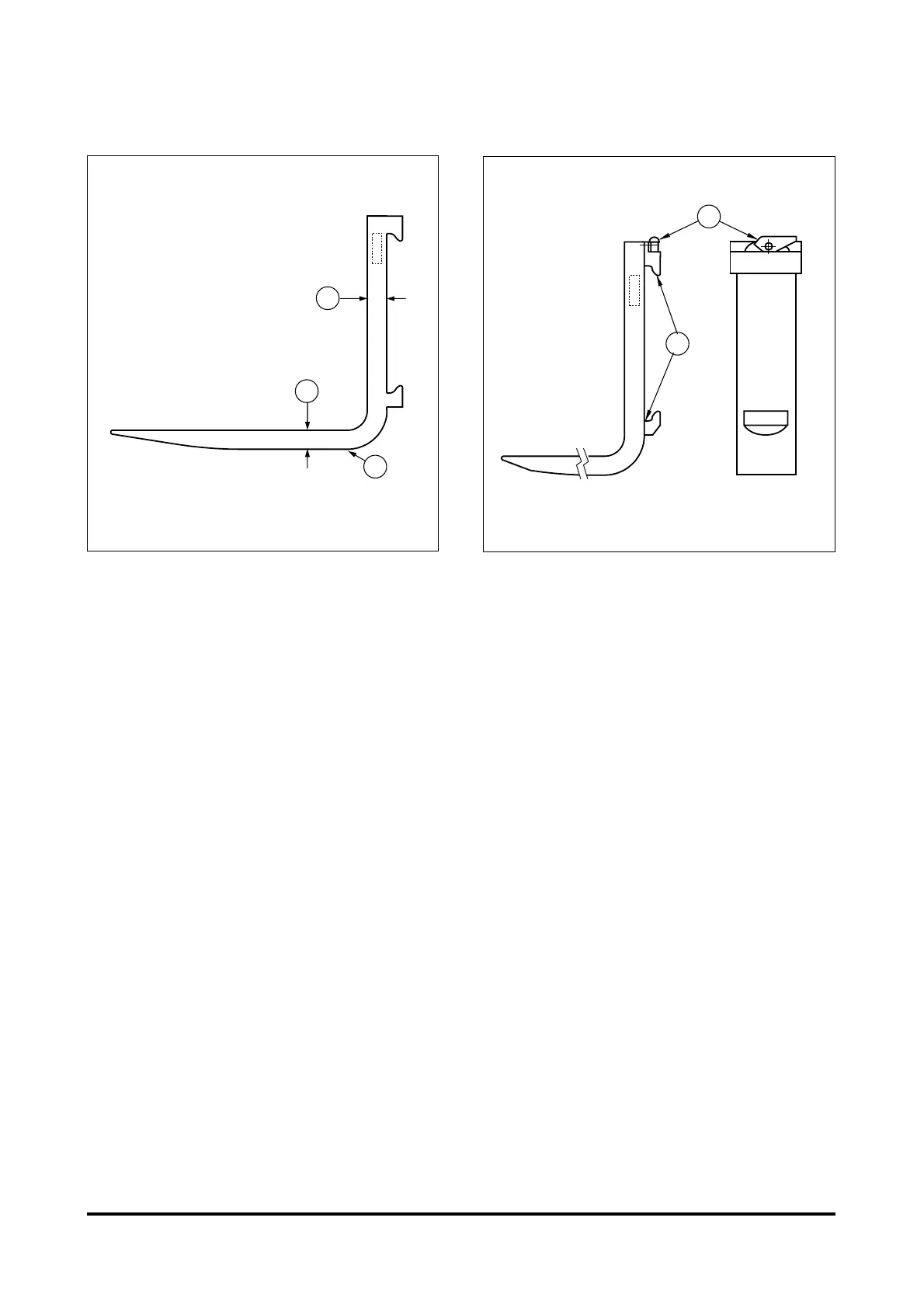
5. Check the fork blade (J) and shank (H) for wear
with special attention to the heel (G). The fork
should be withdrawn from service if the thickness
is reduced to 90 percent or less of the original
thickness.
Fork blade length may also be reduced by wear,
especially on tapered forks and plates. Remove
the forks from service when the blade length is no
longer adequate for the intended loads.
6. Check the fork mountings (K) for wear, crushing
and other local deformation, which can cause
excessive side to side wobble of the forks.
Excessive clearance on hook type forks may allow
them to fall from the carrier. Forks which show vis-
ible signs of such damage should be removed
from service.
7. Check the positioning lock and other fork reten-
tion devices to make sure they are in place and
working.
Hook type forks use a spring loaded pin (M), locat-
ed in the top hook, to engage notches in the top
carriage bar to hold the fork in place.
When adjusting the fork spacing, the forks are pre-
vented from sliding off the end of the carriage by
stop blocks. These stop blocks are at both ends of
the carriage and in the path of the bottom fork
hook. The load backrest extension may be used in
place of the stop blocks in some cases.
Shaft mounted forks may use set collars or spac-
ers on the shaft to either side of the fork. They
may also use U bolts, pins, or similar devices
which engage the fork through the top structure of
the carriage.



 To Next Page