GENERAL DESIGN
Design
The main feature for the success of the Su-27 design is its aerodynamic configuration, known as
'integrated aerodynamic concept' by its designers. This configuration is one with extremely blended
wing and fuselage. The low-aspect ratio trapezoidal midwing is fitted with large leading-edge root
extensions (LERX) and blending into the fuselage creating a single lifting body.
The aircraft has a near-zero static stability and thus require a fly-by-wire system. The SDU-10 pitch-
only fly-by-wire system controls the pitch of the aircraft to ensure stability and controllability for the
pilot, increase aerodynamic performance, limit overload and angle of attack when needed and
decrease the airframe aerodynamic load.
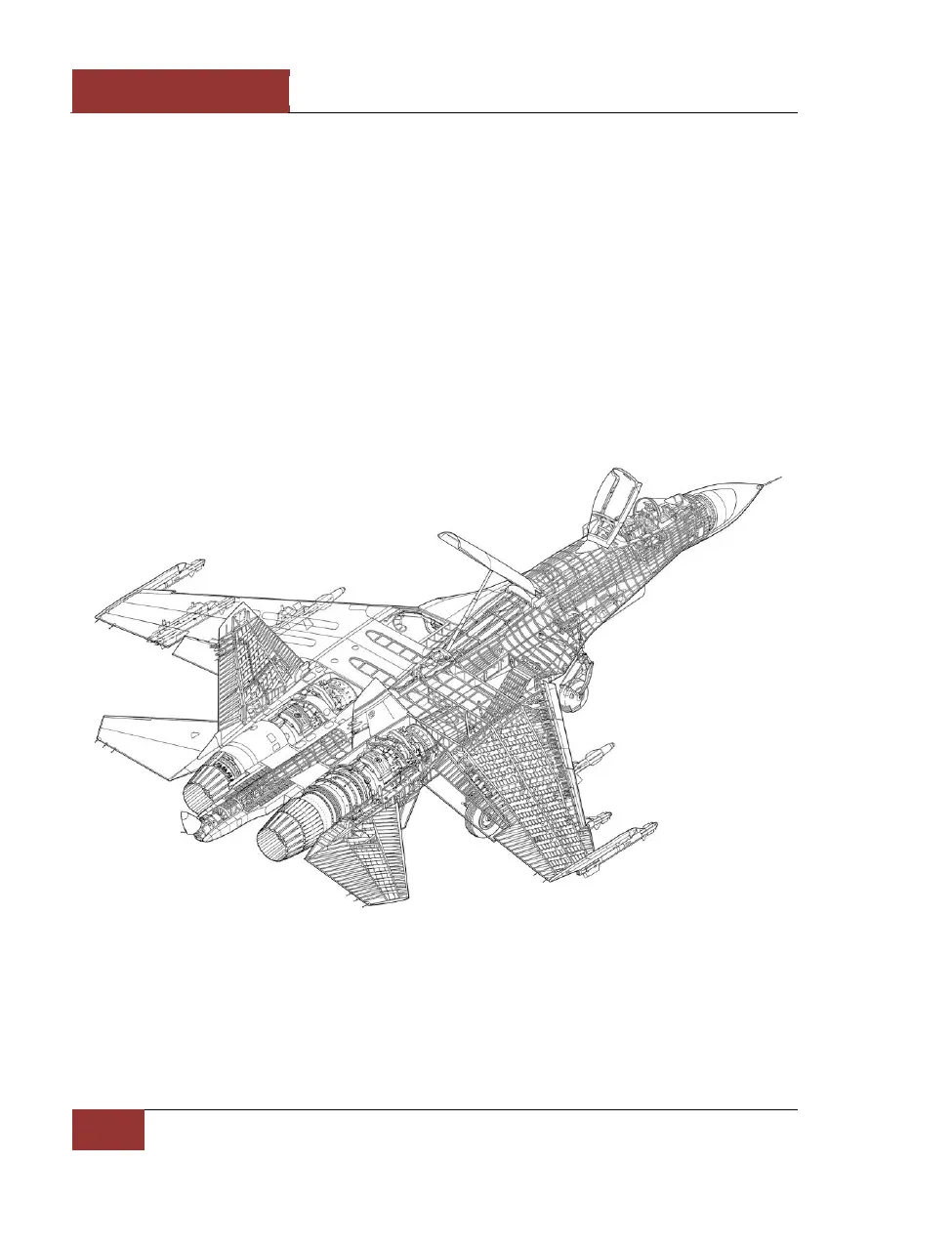
Figure 16: Su-27S cutaway
Two AL-31F afterburning turbofans are placed in seperate, widely spaced engine nacelles that are
mounted under the lifting body. The air intakes are fitted with variable ramps.
The Su-27 has twin vertical fins fitted on the outer sides of the fuselage and twin central fins
underneath. The airbrake is placed in the center of the mid-section of the aircraft behind the cockpit.


 To Next Page