The OEPS-27 electro-optical sighting system consist of the OLS-27 infrared/laser search-and-track
system (IRST) and the Shchel-3UM helmet-mounted target designator and is controlled by the Ts-
100 digital computer. The OLS-27 sensor is placed forward of the cockpit canopy in the centre. The
system acquires and tracks aerial targets by their thermal signatures. The helmet-mounted sight and
the laser range finder of the IRST can also be used to visually acquire and determine coordinates of
air and surface targets.
The SEI-31 integrated indication system provides flight, navigation and sighting data on the ILS-31
head-up display (HUD) and head down display. The EW self-defence systems provides warning to the
crew when illuminated by enemy radar and employs both passive and active countermeasures The
aircraft is equipped with the SPO-15 Beryoza RWR and APP-50 chaff and flare dispenser that is
placed in the tail section between the engine nozels. In addition, the aircraft can carry the Sorbtsiya
active ECM pods on its wingtips.
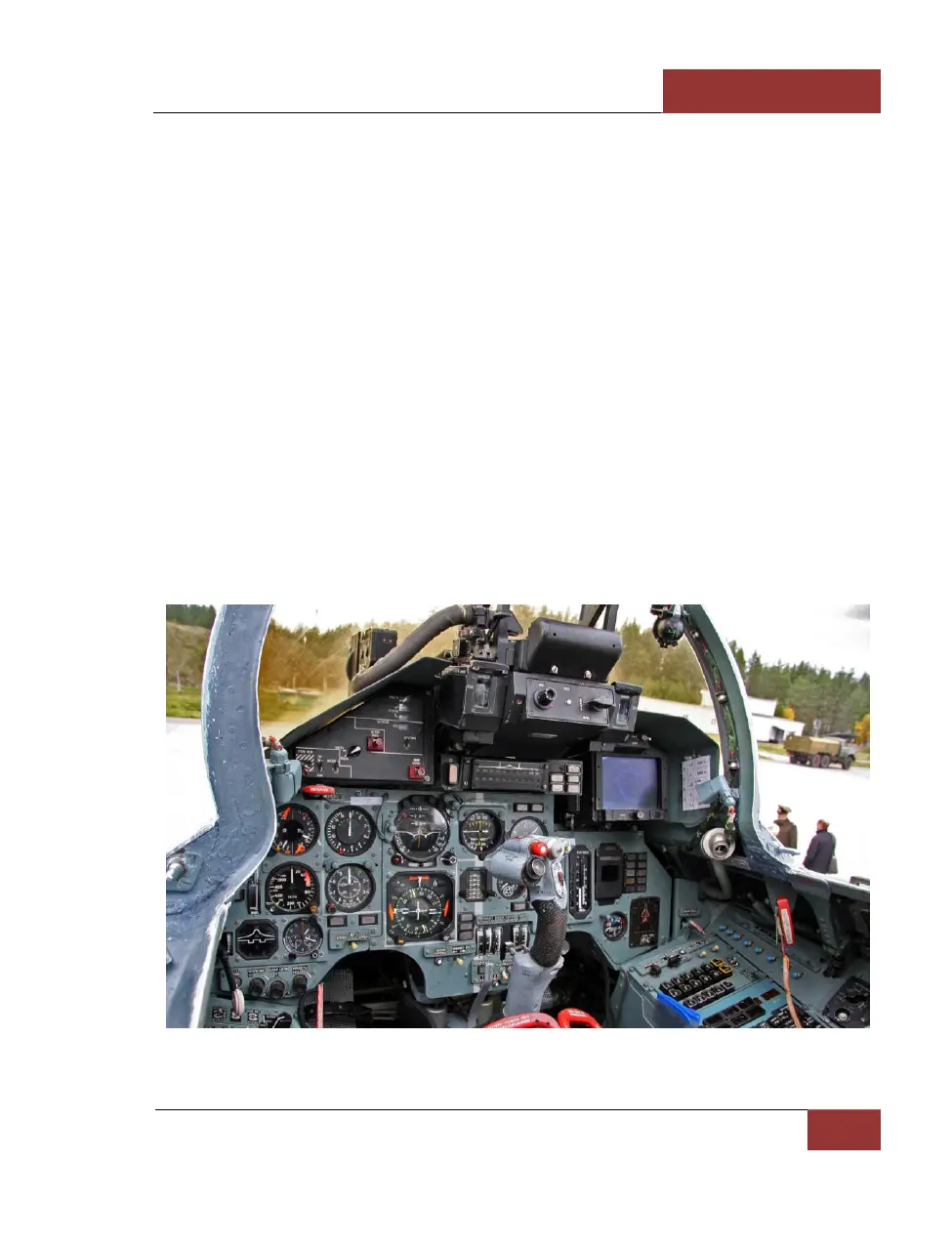
Cockpit
The cockpit is fitted with the K-36DM Series 2 ejection seat. The seat-back is being inclined at an
angle of 17 degrees. In the two-seat Su-27UB version, the seats are placed in tandem with the rear-
seat being elevated to ensure good forward vision. The basic Su-27 cockpit layout consist of
analogue instruments, HUD and head down display to display data from radar and electro-optical
sight (IRST). On both sides of the HUD control panel, there are sensors for the helmet-mounted
target designator system. On the right side below the head down display the RWR indicator is placed.
Figure 20: Su-27P cockpit


 To Next Page