configuration through minor design modifications, fuel capacity increase, etc. Otherwise, Mikhail
Simonov was pushing hard for radical aircraft reworking, since as early as in 1976-77 a team of his
subordinates in cooperation with the SibNIA scientists developed on their own and later tested in the
wind tunnel a new configuration of the airframe devoid of the deficiencies which the previous
configuration had in abundance. Justice should be done to M.P.Simonov (who went to work for the
Aviation Industry Ministry in 1979 to return to Sukhoi as Designer General in 1983) who managed to
persuade the leadership to risk radical change in the configuration of the fighter that had been
already undergoing tests by then. With the passage of time, this decision proved to be right and led
no matter what to building the aircraft that still - almost two decades later - has been regarded as
one of the best warplanes in the world. Having commenced production of the Su-27 in its final
configuration, Sukhoi confirmed its reputation of a world leader of aviation industry in line with its old
tradition of never fielding mediocre aircraft.
From T-10 to T-10S
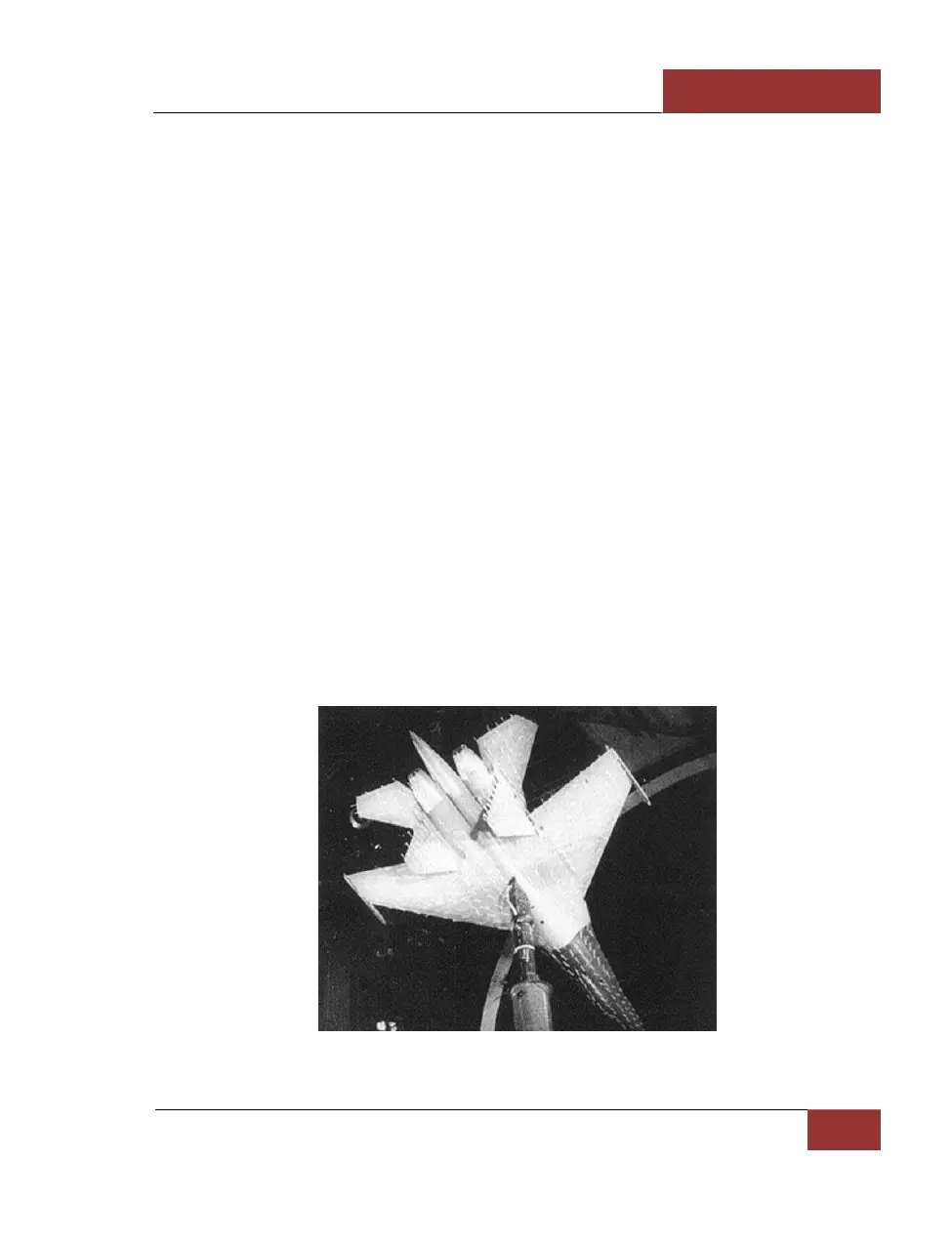
The fighter's version featuring the new configuration was designated T-10S by the Sukhoi design
bureau with its full-scale design work starting in 1979. Preliminary attempts to deal with the first T-10
version's glitches and meet the performance specifications' requirements, made by the design bureau
and SibNIA (in the SibNIA the work was headed by Stanislav Kashafutdinov, candidate of technical
sciences) resulted in setting the guidelines for modifying the initial configuration. With the developing
of those guidelines, differences in design between the T-10S and T-10 became even more obvious.
In the end, it became clear that the designers would have to develop an utterly different aircraft.
According to Mikhail Simonov, the only things the T-10S inherited from its T-10 predecessor were the
main landing gear's wheels and ejection seat. Only general principles set up for the Su-27 by
P.O.Sukhoi himself, such as the integrated airframe configuration, statically unstable design with the
aft centre of gravity, fly-by-wire control system, mounting the engines in isolated engine nacelles
with belly-mounted air intakes, etc., were retained.
Figure 8: T-10-21 (T-10S) mockup in the air tunnel (SibNIA)


 To Next Page