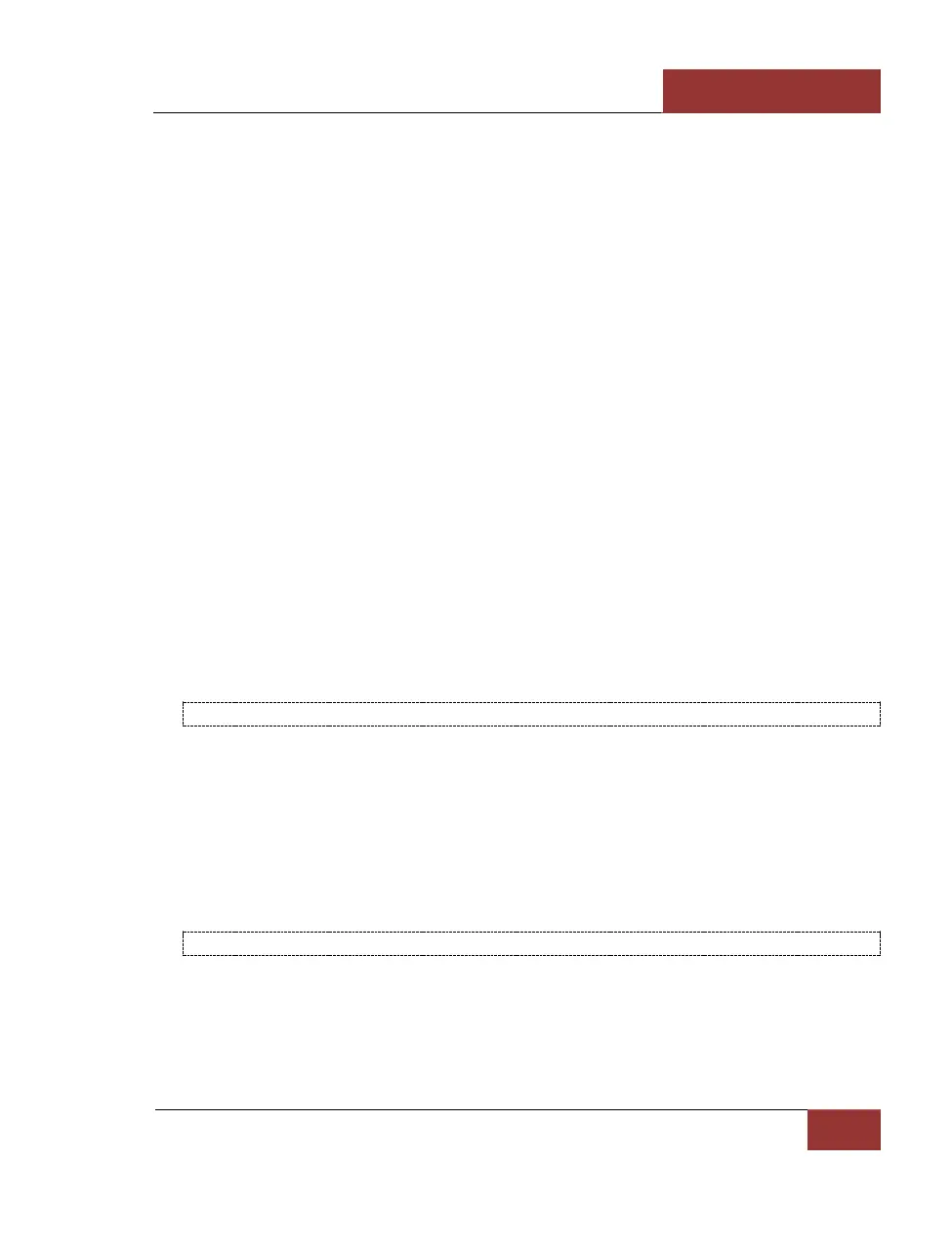
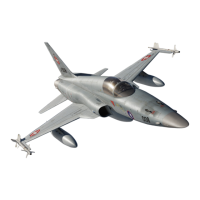
SU-27 WEAPONS
The Su-27 is armed with a single 30 mm Gryazev-Shipunov GSh-30-1 cannon in the starboard
wingroot, and has up to 10 hardpoints for missiles, bombs and rockets. Its standard air-to-air combat
armament is a mixture of R-27 (AA-10 'Alamo') and R-73 (AA-11 Archer) missiles. The Su-27S can
also be armed with bombs and unguided rockets to fulfil a secondary ground attack role.
Air-To-Air Missiles
All modern fighters, and most attack aircraft, are equipped with air-to-air missiles (AAM). Though
possessing significant advantages over cannons, they have many operational limitations. For the
successful launch of any missile, one has to strictly follow defined sequences. There are unique, pre-
launch steps for each type of a missile.
AAMs are a collection of integrated components that consist of the seeker, the warhead, and the
motor. Motor burn can only last for a limited amount of time. This usually ranges from 2 to 15
seconds, depending on the missile type.
At launch, the missile accelerates to its maximum flight speed. After the motor is depleted, the
missile consumes the energy acquired in the acceleration. The higher the initial airspeed at the
moment of the missile launch, the greater the airspeed of the missile and the longer its launch range
will be. An increase in launch aircraft speed corresponds to a longer missile range.
The missile launch range, or missile employment zone (MEZ), is greatly influenced by the aircraft’s
altitude at the moment of missile launch. This is due to the much denser air at lower altitude. If the
flight altitude is increased by 20,000 feet, the maximum launch range is about doubled.
TO INCREASE A MISSILE’S MAXIMUM LAUNCH RANGE, YOU SHOULD LAUNCH FROM HIGH ALTITUDES AND SPEED
Target aspect angle can also greatly influences a missile’s MEZ. The launch range increases when you
and the target are flying towards each other. This is termed a high aspect engagement. When you
attempt to attack a target from behind, the target is flying away from you and greatly reduces a
missile’s MEZ. This is termed a low aspect engagement. To increase the range of your attacks,
attempt high aspect intercepts.
Missiles fly according to the same physical laws as aircraft. When maneuvering, the missile consumes
energy when it pulls G. A maneuvering target can make the missile make significant course
corrections and thereby consume the missile’s energy. This can lead to the missile being incapable of
continuing the intercept.
AT LONG RANGES. SLOW MANEUVERING TARGETS ARE MORE EASILY HIT.
Air-to-air missiles are intended to destroy aircraft. They are divided into several classes, according to
their range and guidance principles. According to the range:
• Short range missiles. Less than 15 km. (R-73, R-60, AIM-9 and others)


 To Next Page